
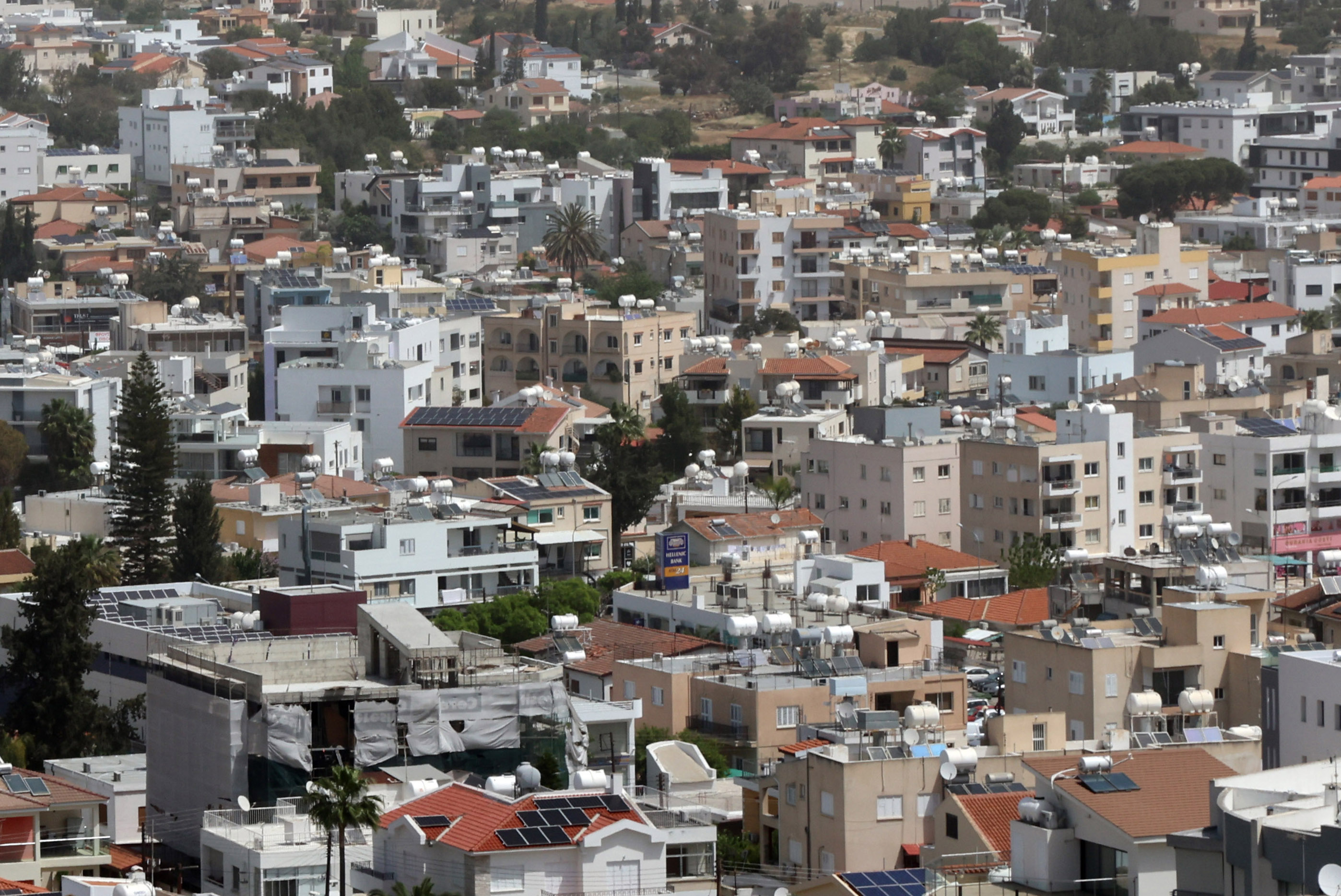
Housing loan instalments have broadly converged with monthly rents over the past three years, prompting a growing number of households to opt for buying rather than renting, according to Interior Minister Constantinos Ioannou.
In a written response to Parliament, Ioannou said official data show a gradual decline in applications for rent subsidies alongside a rise in applications under schemes supporting the purchase or construction of housing.
The shift, he said, reflects market conditions, notably sustained increases in rental prices, which have narrowed the gap between rent and mortgage repayments.
The number of rent subsidy beneficiaries fell to 3,155 in 2024, down from 3,712 in 2023 and 4,509 in 2022, the minister said.
At the same time, subsidy amounts were raised by around 15 per cent at the start of 2024 in an effort to ease pressure on tenants.
The comments came in response to a parliamentary question by MP Christos Senekis, who asked whether the government intends to revise income criteria for the rent subsidy scheme, which have remained unchanged for more than 15 years.
Senekis argued that socio-economic conditions have shifted materially since the last revision, leaving many potential beneficiaries excluded.
He also raised concerns that outdated criteria may explain why part of the scheme’s budget remains unallocated, requesting data on fund absorption over the past three years.
Ioannou said the scheme, administered since 2009 by the Special Service for the Care and Rehabilitation of Displaced Persons, is currently under review.
A bill has already been submitted to the legal service, he said, with the aim of repealing outdated provisions of the rental housing law and introducing a new framework based on evaluation criteria rather than rigid income thresholds.
Once approved, the new criteria, including revised income calculations, will be submitted to the Council of Ministers.
The objective, Ioannou said, is to expand the pool of eligible beneficiaries and ensure more accurate targeting of support.
Despite the fall in the number of recipients, the minister said budget execution remains high.
On average, more than 90 per cent of the rent subsidy budget was absorbed over the past three years, reaching 93.54 per cent in 2022, 93.76 per cent in 2023 and 85.39 per cent in 2024.
Any savings, he added, are not left unused but redirected to other housing schemes, particularly those supporting home purchase, construction or renovation, where demand has exceeded initial budget allocations.
The review comes as Cyprus’ rental market continues to tighten, with rents rising sharply across the country.
Data from the Department of Lands and Surveys point to sustained increases over the past three years, intensifying concerns over housing affordability.
Against this backdrop, the Interior Ministry is reassessing the effectiveness of its housing programmes.
According to information, the Renovate-to-Rent scheme, as well as incentives targeting mountainous and rural areas, are expected to be reviewed with a view to expanding beneficiary numbers.
By contrast, urban development incentives and schemes implemented through Cyprus Land Development Corporation (Koag) are expected to continue unchanged into 2026, while the housing plan aimed at young people up to the age of 41 is not expected to be renewed.
In related news, Koag’s budget for 2026 is set to almost double compared with 2025, while projected revenues are expected to more than double, reflecting a sharp scaling-up of activity across housing and urban development projects.
Koag budget was approved by the Council of Ministers on December 16 and submitted to the House of Representatives last week, during the final plenary session before the Christmas recess.
According to the introductory report submitted to Parliament, Koag expects revenues of €41.95 million in 2026, broadly matching projected expenditure of €41.96 million.
By comparison, the revised budget for 2025 foresees revenues of €16.15m against expenses of €22.98m.
The increase on the revenue side is driven primarily by housing activity. Receipts from the sale of houses and plots are estimated at €20.93m, while income from urban planning incentives and other development projects is expected to reach €8m.
In addition, Koag plans to draw €6.4m from loans, including financing linked to the affordable housing project in the Municipality of Limassol.
Further income is projected to come from a €6.22m grant from the Ministry of the Interior, interest receivable of around €290,000 and €108,000 from other sources.
On the expenditure side, capital spending accounts for the bulk of the 2026 budget, amounting to €33.17m.
Staff costs are estimated at €2.84m, while fees and other benefits are budgeted at €855,500.
Administrative expenses are expected to reach €888,700.
Provision has also been made for €3.1m in loan and debt repayments, including refunds linked to the low-wage scheme.
A further €1m is earmarked for payments by Koag in its role as the implementing body of the renovate-to-rent scheme, while €100,000 has been set aside for unforeseen expenses and reserves.
Despite the sharp rise in spending, Koag is expected to maintain a stable cash position.
Taking into account cash reserves at the start of 2025 and flows during the year, the organisation is forecast to close 2025 with a surplus of €15.15m. The cash surplus is estimated to stand at €15.14m at the start of that year.





Click here to change your cookie preferences