
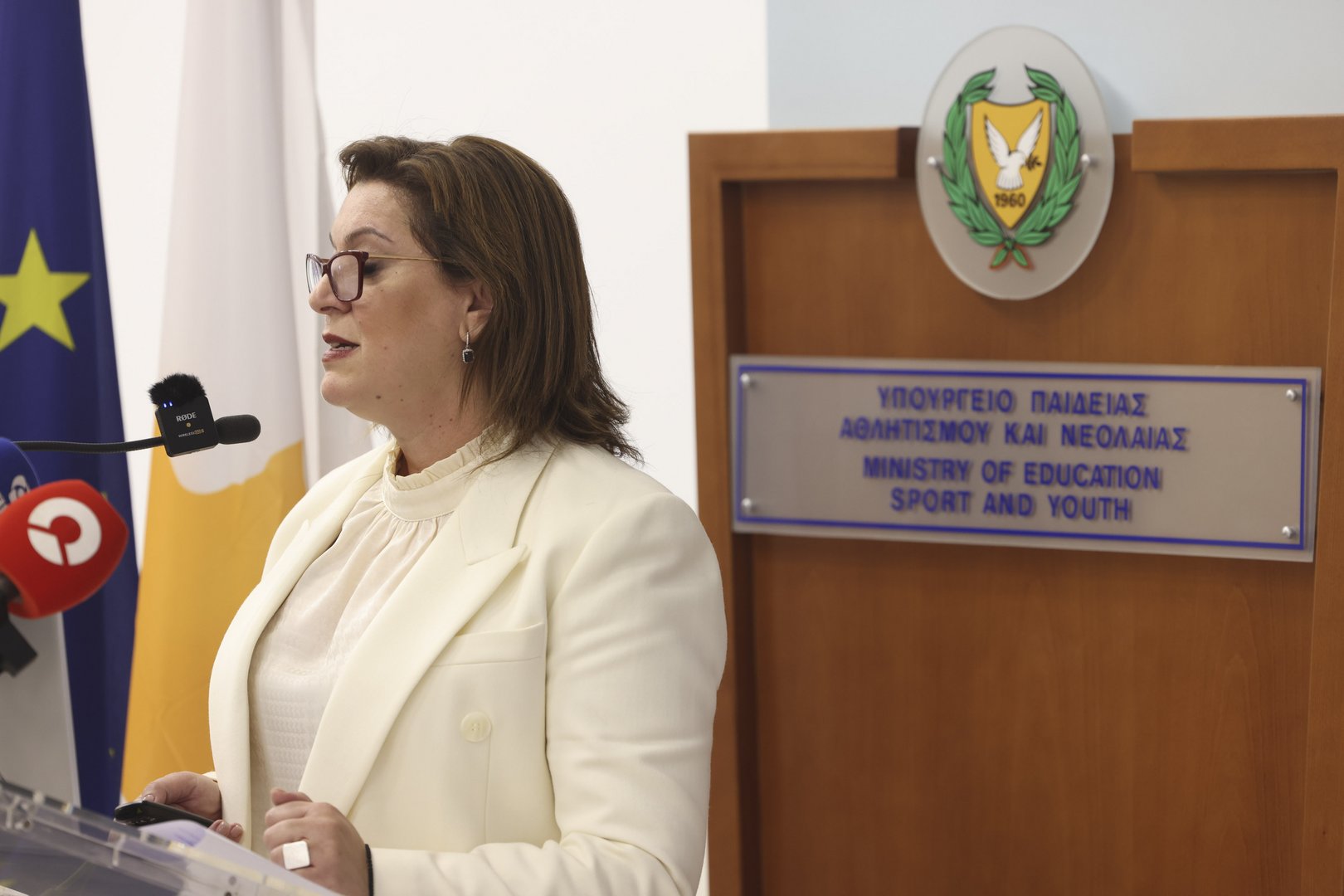
Teacher evaluation reform and the rollout of air conditioning in public schools will dominate the education ministry’s agenda in the coming year, following approval of key legislation.
The implementation of the new teacher evaluation system now moves to centre stage after its approval by parliament.
The reform, the most extensive in over 50 years, replaces an educational framework widely regarded as failing to assess performance or ensure accountability.
The ministry has identified the rollout of the evaluation plan as its primary objective.
Mandatory training for all teachers will begin in the coming months, forming the first step of a three-year transition period.
Participation is required by law, with officials warning that any attempt to obstruct the process would be unlawful.
The ministry reiterated that the law will be implemented as approved, despite continued opposition from trade unions, arguing that postponement would ‘entrench a system no longer fit for modern educational needs’.
An outstanding issue linked to the evaluation framework concerns assessment criteria for senior teachers.
Parliament’s education committee has set March as the deadline for concluding this issue.
At the same time, the education ministry affirmed that the installation of air conditioning in public schools shall continue as planned, to address the impact of high temperatures on students.
Installation has purportedly been completed in all school units in Famagusta, while Nicosia however continues to lag behind in implementation, presenting the largest logistical challenge due to the number of schools involved.
The education ministry admitted that schools in Troodos will not be prioritised in the initial phase, with focus now being given to the capital.
The project is being assessed over a three-year period, with completion expected within the current timetable.
Special education reform, despite previous insistences by Education Minister, Athena Michaelidou, is not being advanced as a central priority at this stage.
While consultations have taken place, the ministry has acknowledged a lack of consensus on proposed changes.
Measures already adopted in special education have focused on practical support, including increasing the number of chaperones and moving their training to the start of the school year.
Broader proposals, such as abolishing special units in favour of fully individualised programmes, have not progressed due to strong and opposing views.
The ministry signalled that it will not open new legislative fronts in this area in the immediate term, opting instead to concentrate on reforms already approved by parliament.


Click here to change your cookie preferences