
“You can do so much more than you think. Dream big. Remove the barriers you set for yourself.”
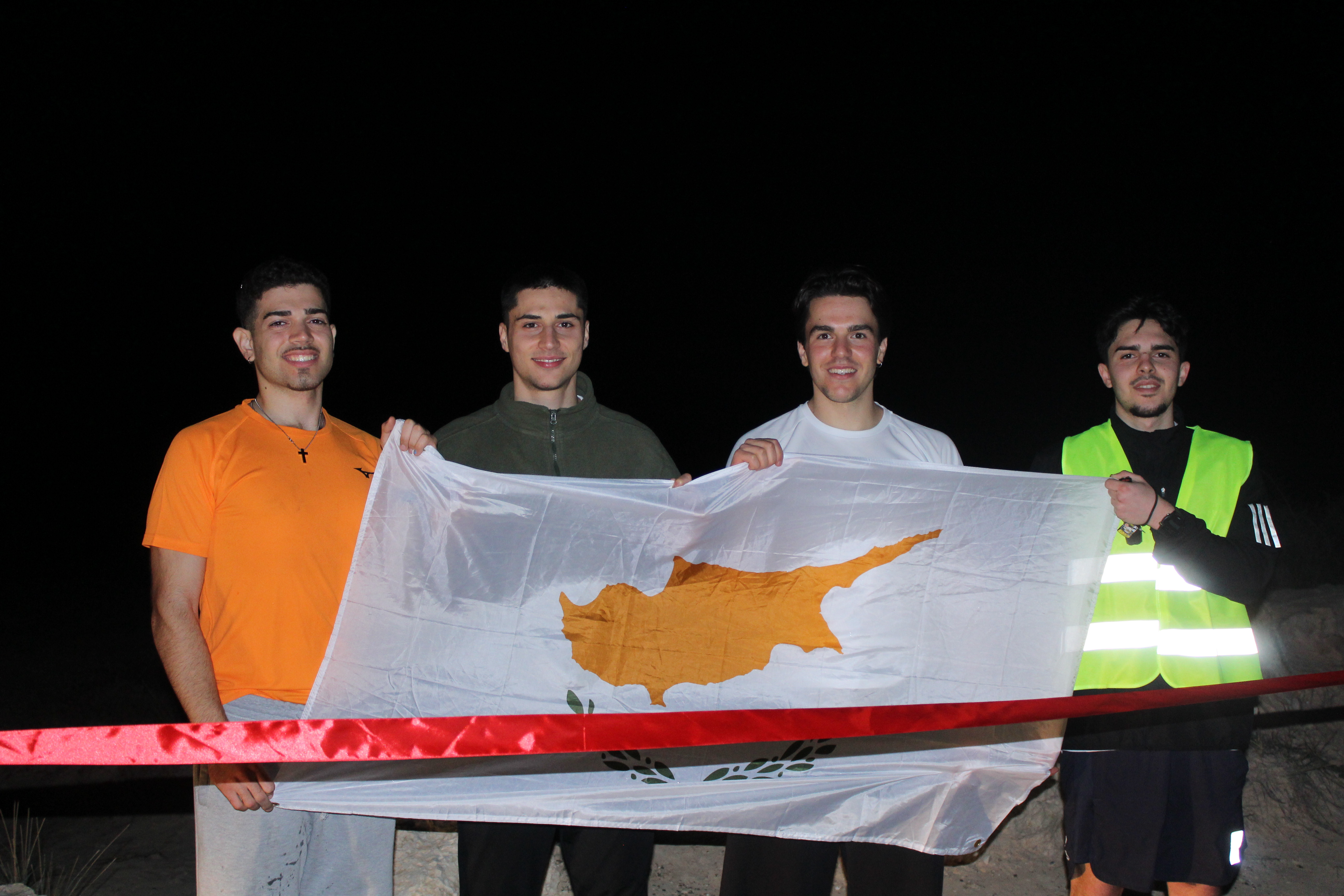
That was the mindset of four university students in their twenties who completed a 227-kilometre relay run across Cyprus in under 24 hours, setting an island-first record.
The team, Anghelo George Eleftheriou, Panos Alepis, Constantinos Psaras and Petros Loizou, set out to challenge themselves by running 240 kilometres across the island.
The relay was originally scheduled to begin at midnight on December 21 at Ayios Kokonas church in Akamas, with the team aiming to reach Cape Greco by 11.59pm the following day, swapping runners every 20 kilometres.
As the day approached, the group gathered for a final dinner before heading to the start line. Nearing Paphos, however, they made a last-minute decision to move the starting point to Polis Chrysochous, hoping to avoid the remote and demanding terrain of Akamas.
“The maths worked out. The distance was the same,” said Anghelo.
Halfway to Polis, doubts crept in. The new route would force them onto mountain roads with cars speeding past at 80 km/h while they ran in the service lane.
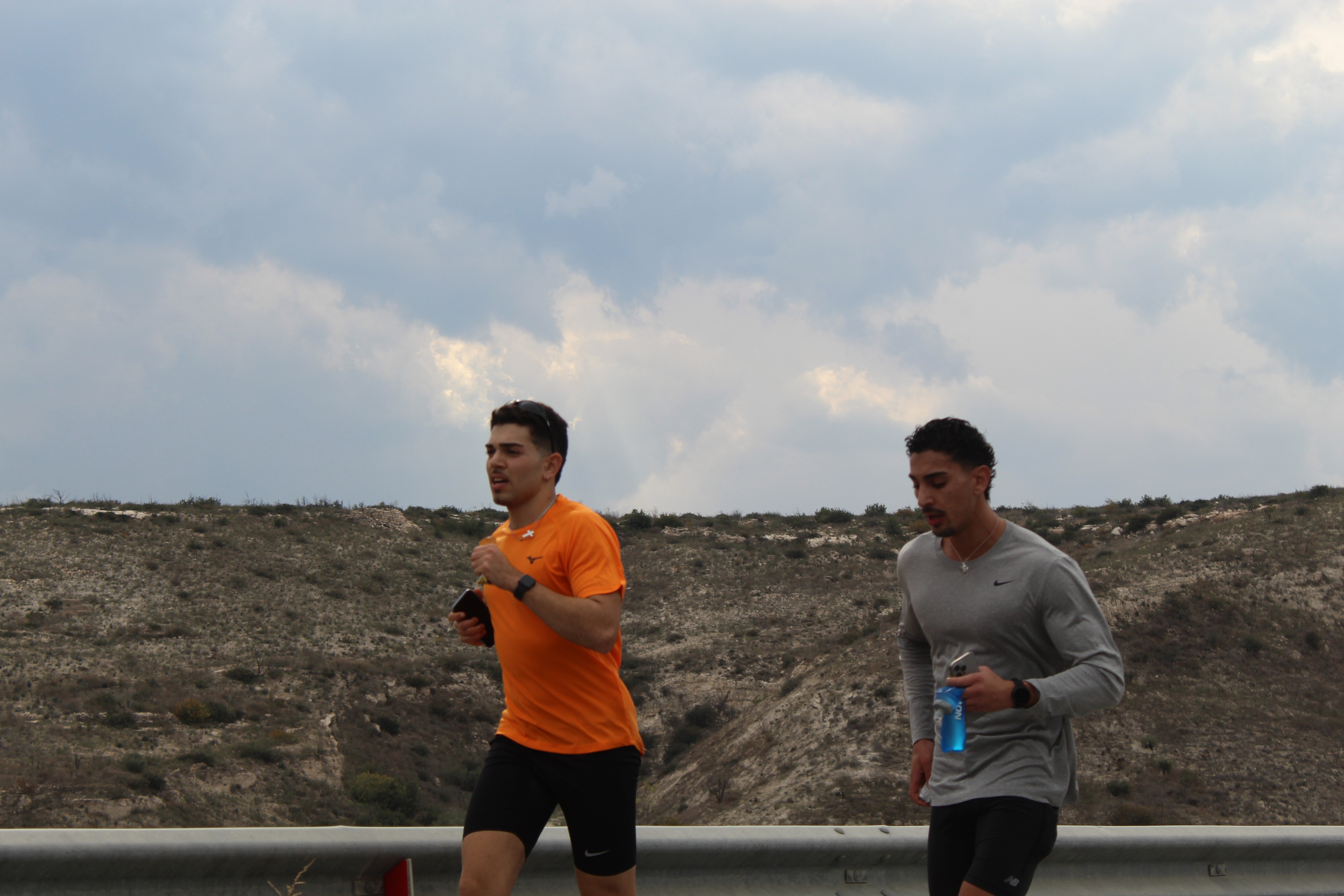
Reflecting on the situation, the team reminded themselves that conditions are rarely ideal, but progress requires moving forward. Ultimately, at 10.37pm, they decided to revert to their original plan. “It was simply too dangerous,” Anghelo said.
He began the first leg at 12.27am.
“Akamas was pitch black.” he said. “My only guides were the torch in my hand and the headlights of the support vehicle cutting through the darkness behind me.”
He faced relentless obstacles, ones for which he was completely unprepared: from unexpected road closures that forced him onto sand, to a flooded main path that left him slipping through mud and water.
Unfortunately for him, making it out of the tough terrain, did not mean he could rest, as another 18 kilometres still lay ahead.
“Running at 2am all alone in Paphos in the dark you really understand what kind of person you are,” he reflected. “I had a lot of self-doubt, and I didn’t know if I was going to make it.”
As he explained, “in a typical running race, you’re running against other competitors, you have supporters cheering you on from the sides but this…this was different. You are all alone, it’s you and your thoughts. It’s you against you.”
Anghelo believes that pressure and adrenaline bring out a different side of people. “Without it none of us would be where we are today,” he added.
He emphasised that taking on difficult challenges involves pain, whether physical or mental, but it is important to accept the tough moments while recognising they will not last forever.
“It takes away the mental load and allows you to focus on what needs to be done,” he said.
The baton then passed to Panos, who ran the second night leg along a narrow three-metre service lane, with his father following closely in the support vehicle, hazard lights flashing to warn oncoming traffic.
Panos said fear, rather than exhaustion, drove him forward, with adrenaline helping him complete the leg faster than expected.
As the sun rose, Constantinos took on the toughest elevation gain of the relay, climbing 298 metres. Lifted by daylight and passing cyclists, he said he “flew on autopilot” and enjoyed the route.
Petros followed, running from Episkopi to the Four Seasons area in Limassol. His leg was a flat, downhill stretch through city streets, where he gained nearly a minute per kilometre on their expected pace.
Despite the strong progress, conditions worsened. By the second rotation, sleep deprivation set in, and each runner still had at least 25 kilometres remaining.
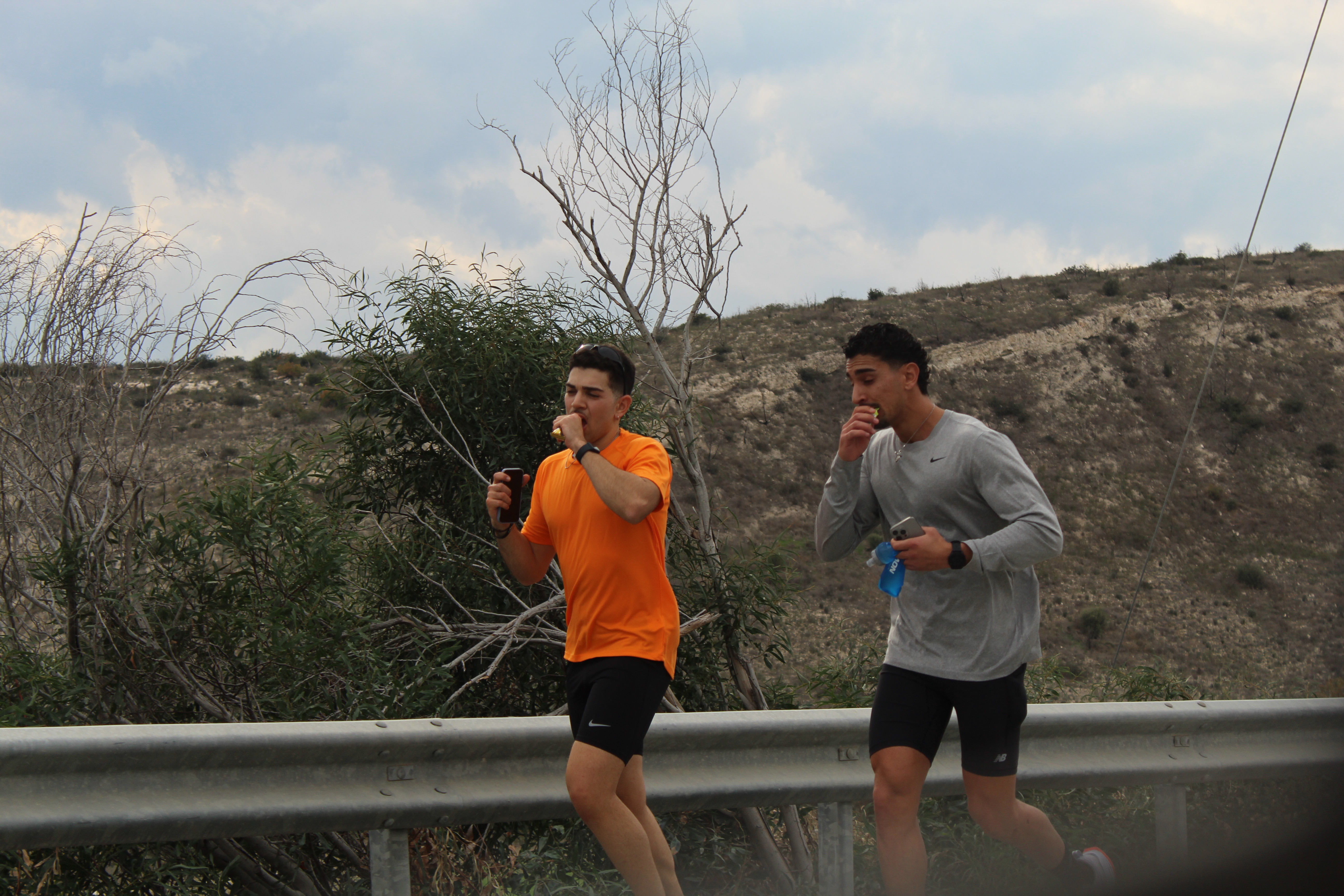
“For my leg to Zygi, my body was failing,” Anghelo said. “Blisters were forming and my legs felt heavy. Then I saw my family. I’d forgotten they were tracking us live. Seeing them there, and a friend who jumped in to run with me, changed everything. I ran that last leg with a smile.”
Panos was next to hit the “pain cave,” battling a headache and severe cramping over his final seven kilometres. The arrival of six friends, who ran 10 kilometres alongside him, helped push him through.
Constantinos ran past Larnaca airport and Dhekelia, where an initially flat and enjoyable stretch became difficult due to road closures and poor lighting as night fell again.
“Running across Cyprus was never going to be easy, especially with the island’s elevation and terrain,” Anghelo said. “But as night approached, our belief grew stronger.”
Petros tackled the final leg at 9pm, running alone through colder, windier and rainy conditions towards Ayia Napa and Cape Greco.
With 9.7 kilometres remaining, he found his teammates and admitted, “I don’t know how much I have left to give.”
They knew he was struggling, as they all were by then. Reminding him of the 10-kilometre runs he’d crushed before, they fuelled him with energy gels, water and moral support.
He reached Cape Greco shortly after.
The team completed 227 kilometres, just short of their original target, but still achieved an island-first by finishing a relay run across Cyprus in under 24 hours.
For Anghelo, the experience proved that emotional support can carry people further than physical strength alone. Beyond breaking a record, the team said their goal was to inspire others.
“We didn’t just run across Cyprus to cover distance,” he said. “We did it to show that barriers are often self-imposed. Physical and mental pain is temporary. When you accept the struggle and focus on the next step, you can achieve more than you ever thought possible.”




Click here to change your cookie preferences