
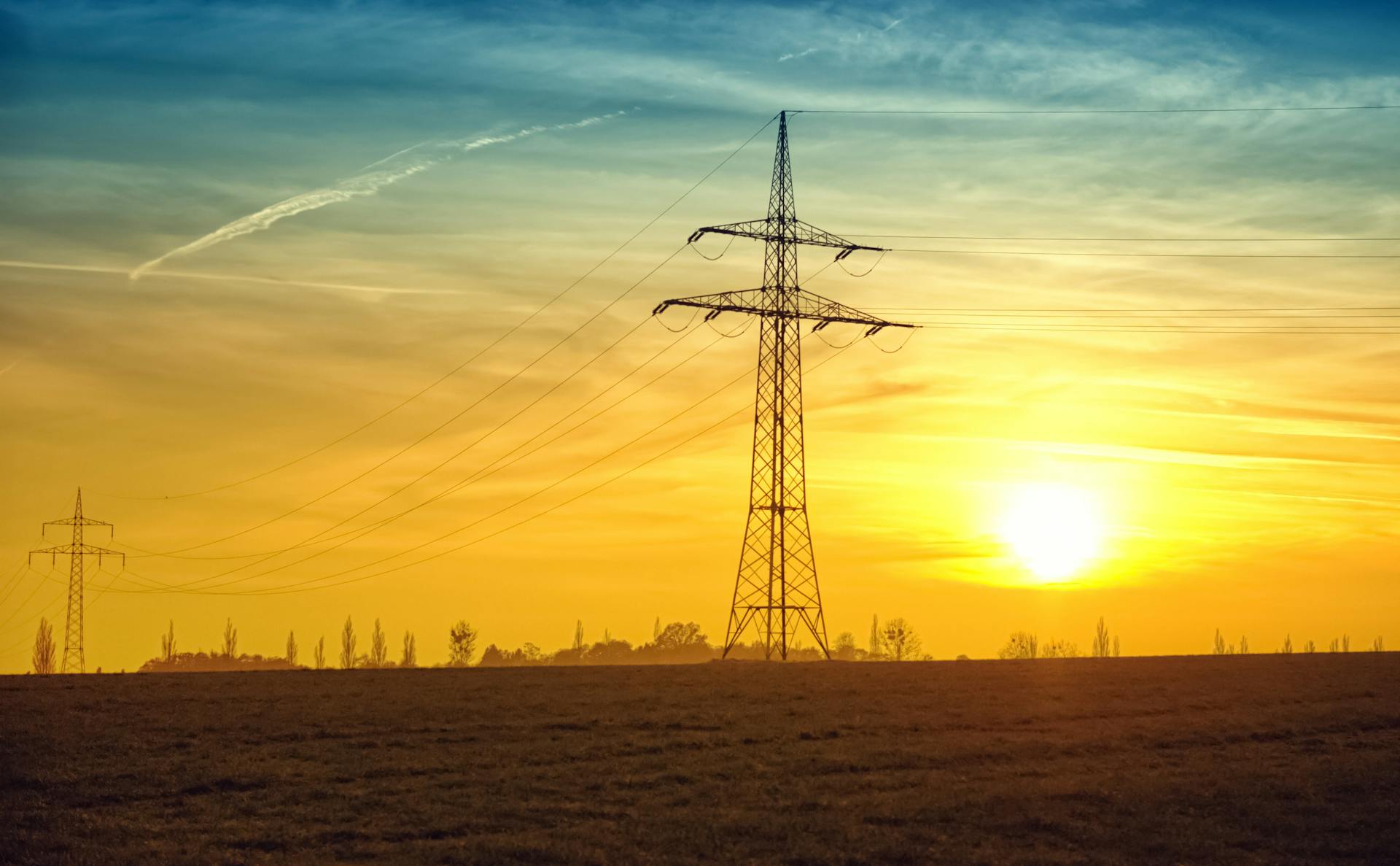
The European Union’s new European Grids Package offers Cyprus a practical roadmap to escape energy isolation, cut electricity costs and curb wasted solar power if it is implemented decisively, according to former Cyprus Energy Regulatory Authority chairman Andreas Poullikkas.
“The European Grids Package is a comprehensive reform package for how Europe plans, licenses, finances and operates its electricity networks,” Poullikkas said, explaining that it spans everything from transmission systems to distribution grids.
“For Cyprus, this is not a generic European text, but a practical roadmap,” he said, arguing that proper use of the package could help the country reduce electricity prices and stop the curtailment of solar energy.
Poullikkas explained that the package is structured around four core areas covering European grid planning and energy corridors, licensing and connection rules, financing and cost sharing, and digitalisation, security and storage.
“At its core is the finding that the EU will be short by around 88 gigawatts of cross-border transmission capacity by 2030,” he said, warning that without aggressive investment and smart management, neither climate targets nor lower electricity bills can be achieved.
He said the package changes the philosophy of European grid planning by giving the EU a more active role in shaping a single long-term development scenario through to 2040 and 2050.
“This long-term scenario will underpin the ten-year European network development plan,” Poullikkas said, adding that it places special emphasis on projects of common interest and new energy corridor projects.
Among eight strategic energy corridors, “the Greece–Cyprus–Israel electricity interconnection is classified as a project of critical importance,” he said, referring to the Great Sea Interconnector.
“It is the only way for Cyprus to stop being the last unconnected EU member state from the internal electricity market,” Poullikkas explained.
He stated the package introduces deep changes to how grid projects and renewable and storage connections are designed and approved.
“The introduction of the ‘first-ready first-served’ principle in connection queues is crucial,” Poullikkas mentioned, explaining that clear maturity criteria and timelines would help remove speculative projects that tie up capacity without being implemented.
He added that the package foresees faster licensing through simplified procedures, the possible application of “positive silence,” and the creation of single digital portals for all renewable energy, storage and grid permits in every member state.
“The package also tackles the sensitive issue of financing and cost allocation,” Poullikkas said.
He further stated that the EU recognises that more than €580 billion in network investments will be required by 2030 and that blindly passing these costs on to consumers is neither politically nor socially sustainable.
“For this reason, it proposes greater transparency and fair cost-benefit sharing in cross-border projects,” he explained.
He added that it also supports bundling projects into special purpose schemes and better use of tools such as the Connecting Europe Facility and private capital.
Poullikkas mentioned that digitalisation, flexibility and security are elevated to pillars equal to traditional investments in lines and substations.
“Before investing in new cables, we must exhaust the capacity of existing networks,” he said, pointing to grid-enhancing technologies, smart meters, dynamic flow limits and tariffs that send the right signals to users.
He said physical and cyber security are explicitly integrated into network planning, with funding for resilience measures available through the Connecting Europe Facility.
“This aims to reduce dependence on high-risk suppliers and strengthen protection against cyberattacks,” Poullikkas said.
Within this European framework, he explained, Cyprus cannot remain a passive observer.
“Cyprus must radically revise its ten-year transmission and distribution network development plan,” Poullikkas said, stressing that it must fully align with the European scenario and the requirements of the European Grids Package.
He referred to a 2019 regulatory decision by CERA on redesigning the Cypriot electricity system and said that despite delays in its implementation, immediate action is needed.
“We need an active, preventive grid capable of integrating high renewable penetration, widespread heat pumps, electric mobility and storage systems,” Poullikkas said.
He stated the European requirement for better coordination between transmission and distribution planning provides an ideal opportunity to fix today’s bottlenecks in the Cypriot grid.
“The second and fundamental priority is the acceleration and safeguarding of the Greece–Cyprus–Israel interconnection,” Poullikkas said.
He said Cyprus also needs meaningful reform of its licensing regime and connection queues by using the tools provided by the European Grids Package.
“The establishment of a transparent ‘first-ready first-served’ system with clear stages, deadlines and penalties will free up space for serious storage projects,” Poullikkas said.
He added that a single digital platform for all renewable, grid and storage applications would address long-standing criticism over delays.
Poullikkas stressed that Cyprus must also translate European guidance on digitalisation and smart grids into a concrete national investment programme.
“The roll-out of smart meters, dynamic network tariffs, central flexibility and storage management systems and stronger cyber security cannot remain at pilot stage,” he said.
He explained that the package sends a clear signal and offers access to European funding, making inaction unjustifiable.
“At the same time, national regulatory decisions must ensure these investments do not automatically translate into higher network charges,” Poullikkas said.
He said they must instead deliver measurable benefits through reduced renewable curtailment, improved reliability and restraint of wholesale prices.
Poullikkas stressed that linking grid strategy to tackling energy poverty and strengthening economic competitiveness is critical.
“Better, more interconnected and smarter grids can reduce the overall system cost,” he said, by limiting waste, reducing the need for fossil fuel backup and lowering exposure to international fuel prices.
“In a country where solar curtailment is rising and energy poverty is worsening, alignment with the European Grids Package is not a technical luxury,” he said.
“It is a core social policy,” Poullikkas said.
“Every kilowatt-hour of renewables not lost in the grid and every euro saved at system level can pass through to household and small business bills,” he added.
He said the European Grids Package acts as a mirror for Cypriot energy policy.
“While Europe is attempting a leap towards an interconnected, digital and resilient energy system, Cyprus must decide whether it will remain an isolated, expensive and technically fragile island,” Poullikkas said.
“Or it can use the new European framework to transform its networks,” he said.
Poullikkas said this choice requires political will, institutional seriousness and technical competence, as well as greater honesty with society.
“Cheaper, cleaner and safer energy will not come through slogans,” he stated.
“It will come through continuous investment and upgrades in networks, substations, software and rules,” Poullikkas continued, stating that this is precisely where the European Grids Package now provides the tools.




Click here to change your cookie preferences