
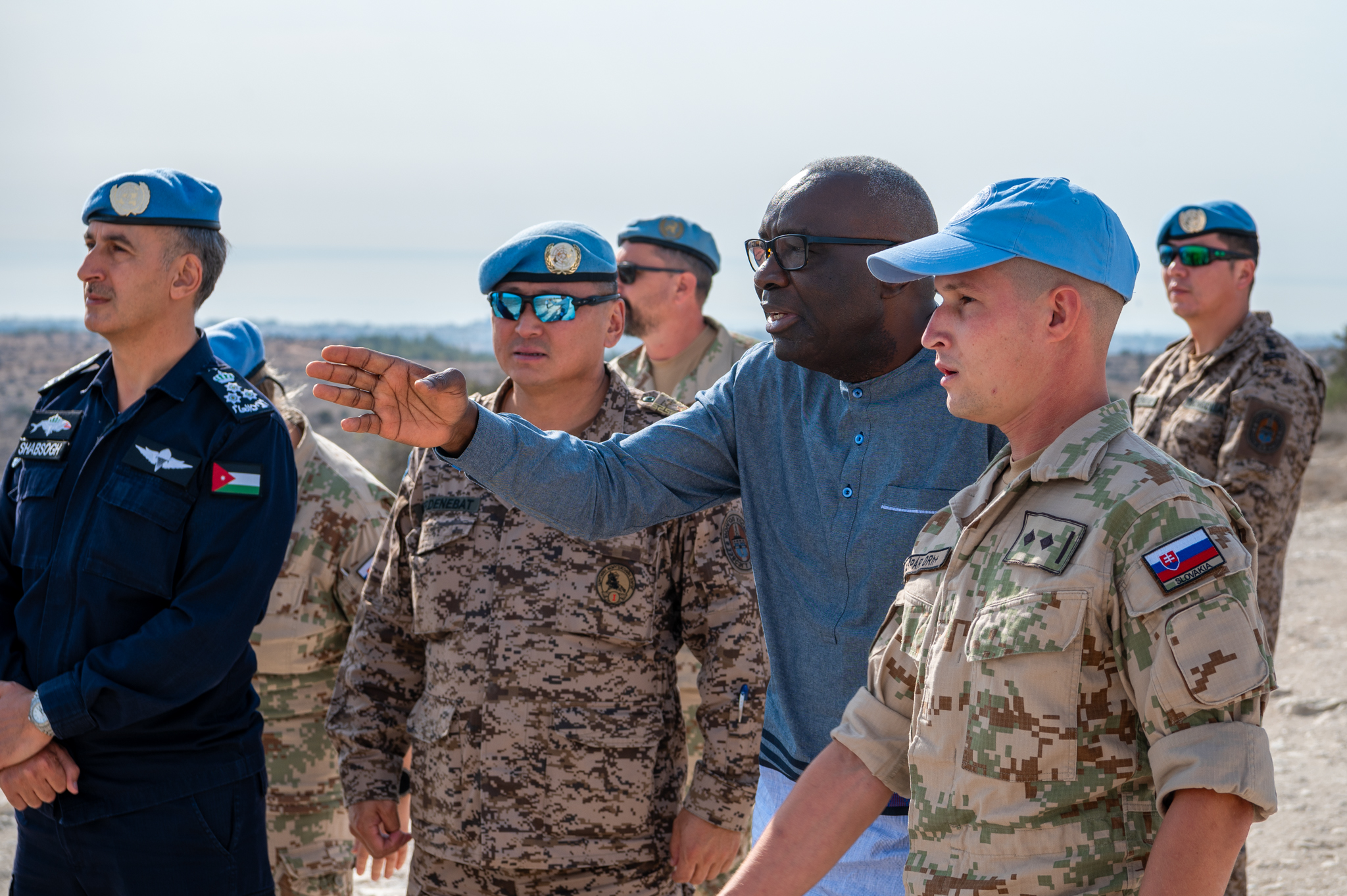
United Nations special representative in Cyprus Khassim Diagne is late on Tuesday expected to brief representatives of countries which contribute personnel to the UN’s peacekeeping force on the island (Unficyp) in a series of behind-closed-doors meetings in New York.
The meetings will mark his first engagements held in New York ahead of a planned vote at the UN security council over whether Unficyp’s mandate should be extended at the end of this month.
In addition to his meetings with representatives of countries which contribute to Unficyp, he is also expected to meet Secretary-General Antonio Guterres and undersecretary-general for peacekeeping operations Jean-Piere Lacroix in the coming days, before briefing the security council on Thursday.
Unficyp has a rolling one-year mandate which was most recently extended on January 31 last year, with all 15 security council members at the time, including guarantor powers Greece and the United Kingdom, voting in favour of the motion, which also took stock of the state of the Cyprus problem.
This year, it is expected that the vote to renew its mandate will take place on January 29.
Ahead of that vote, Abukar Dahir Osman, the permanent representative to the UN of Somalia, which took over the security council’s rotating presidency at the beginning of this month, said that no problems are foreseen regarding the renewal of Unficyp’s mandate.
“I do not think there will be any problem. The security council continues to support the secretary-general [Antonio Guterres]’ good offices and remains committed to an approach based on dialogue and de-escalation,” he told the Cyprus News Agency.
He added that the security council “has consistently called for dialogue, restraint and a peaceful, negotiated settlement within the framework of the United Nations”.
Additionally, he stressed the importance of “respecting the existing regime in the buffer zone” which separates Cyprus’ two sides and described Unficyp’s role to this end as “stabilising”.
He also called for “de-escalation initiatives” and “confidence-building measures which reduce tensions”.
Next week’s briefing will be Diagne’s first since taking office last year, replacing retired Canadian diplomat Colin Stewart, who had six months ago told the security council of a “deep distrust” between the island’s two sides, which constituted “an obstacle to any agreement”.
Last year, the security council had stressed its “full support” for Guterres’ efforts to find common ground, and said it “reiterates the importance of openness, flexibility and compromise in finding common ground with the goal of returning to formal negotiations”.
Additionally, it said the security council “urges the sides to renew their efforts to achieve an enduring, comprehensive, and just settlement based on a bicommunal, bizonal federation with political equality”.
That endeavour will likely be aided by the fact that Tufan Erhurman has replaced Ersin Tatar as Turkish Cypriot leader in the intervening year.
Erhurman was elected in a landslide victory in October, and favours a federal solution to the Cyprus problem, with his election marking a departure from a five-year period in which Tatar and Turkey had advocated for a two-state solution.


Click here to change your cookie preferences