
“This is a celebratory event – I do understand. It’s not my intention to make it all doom and gloom,” joked Boris Erg of IUCN (International Union for Conservation of Nature), one of the speakers at the ‘European Conference of Sustainable Tourism – 20 Years of CSTI’ that took place on Friday, underlining the unspoken tension that ran through the conference.
On the one hand, it was indeed a celebration, a prestigious event marking 20 years of the Cyprus Sustainable Tourism Initiative (CSTI) and its dynamic executive chairman Philippos Drousiotis, including testimonials and a video showcasing many of CSTI’s accomplishments.
On the other, the conference – featuring some 400 participants, and two EU commissioners among the speakers – was also an alarm call, and a forum for uncomfortable truths.
One of the slides put up by another speaker – Jeremy Sampson, CEO of The Travel Foundation – laid it out bluntly: “The tourism system we have is not fit for the climate reality”.
Yet another speaker, Dr Christina Anagnostopoulou from the Aristotle University of Thessaloniki, pointed out some harsh realities.
Mediterranean countries get 360 million international visitors annually – yet the region is warming 20 per cent faster than the global average. The number of days with temperatures over 37 degrees is expected to double by 2050, while “water availability is decreasing by 25 per cent”. Extreme heat and discomfort isn’t the experience most tourists want on their holidays.
“The traditional summer-peak model is becoming riskier,” she concluded.
Others mentioned emissions from tourism, pressure on local communities, and plastic pollution. “The Mediterranean is already a repository of 1.2 million tonnes of plastic that have accumulated,” said Erg. “And plastic does not dissolve that easily”. The number is projected to at least double by 2040, unless action is taken.
Unfortunately, no-one really grasped the nettle and dared to say the unsayable.
Sampson was perhaps the most fiery speaker, calling for a total redesign of the system. “20 years ago, sustainability was gaining traction, but still largely on the periphery of the important conversations,” he recalled. “We focused on guidelines. We focused on pilot projects. We focused on voluntary standards…
“And I’m here to say that I don’t believe that world, of 20 years ago, exists any longer… Treating sustainability as a sideshow, or a parallel workstream, is no longer enough.”
Yet, a few minutes later, he added: “This is not about shrinking tourism. I don’t come here with a message that is opposed to growth”.
It might be a hard thing to say to a roomful of industry professionals – yet it also seems clear that sustainability ultimately must be about ‘shrinking tourism’. You can’t have it both ways. Indeed, if there’s one thing we can definitely say about the current model of endless, year-on-year growth, it’s that it isn’t sustainable.
Instead, every speaker tried to strike an optimistic note, with companies taking pains to establish their progressive credentials.
“Sustainability is our main target as a local authority,” said Larnaca mayor Andreas Vyras during a panel discussion, while George Paschalis, CFO of Hermes Airports, affirmed that it’s “a core part of our strategy” and Farah Shammas, managing director of the St. Raphael Resort & Marina, said she wants her establishment to be “the leading sustainable hotel on the island”.
That was another tension running through the conference, the one between sounding the alarm and insisting that everything is already being done – and there was another one too, between fine-sounding words and the situation on the ground.
“Is there a way to get the authorities to actually do their job and clean up what they need to clean up, especially in tourist areas?” Vyras (who’s also president of the Union of Cyprus Municipalities) was asked by an audience member, suggesting that virtuous strategies often stumble when it comes to enforcement.
Τhe mayor’s reply was defiant, admitting that local authorities could do more but adding that “if we don’t understand in Cyprus that 95 per cent of the job depends on us – that we have to take the garbage and put it in the bin, and not leave it on the beach, or [dispose of] our cigarette in the right place and not under the sand – we will not manage to solve the problem… The first thing we have to do, as a country, is to change our attitude and our culture”.
That’s the biggest takeaway – and quite fitting, given that CSTI began as an initiative to change the way we do things on the island. Again and again, the conference showed how our carefree local model of rampant development, indifference to the environment, and ever-higher tourist numbers is out of step with prevailing wisdom.
In a video message, Apostolos Tzitzikostas, European Commissioner for Sustainable Transport and Tourism, said the EU’s aim is “shifting from volume to value”. Anna Karamanli, Greece’s deputy minister of tourism, echoed his words, saying her country isn’t “just trying to get more visitors” but ones who’ll spend more, implicitly on a higher-quality experience.
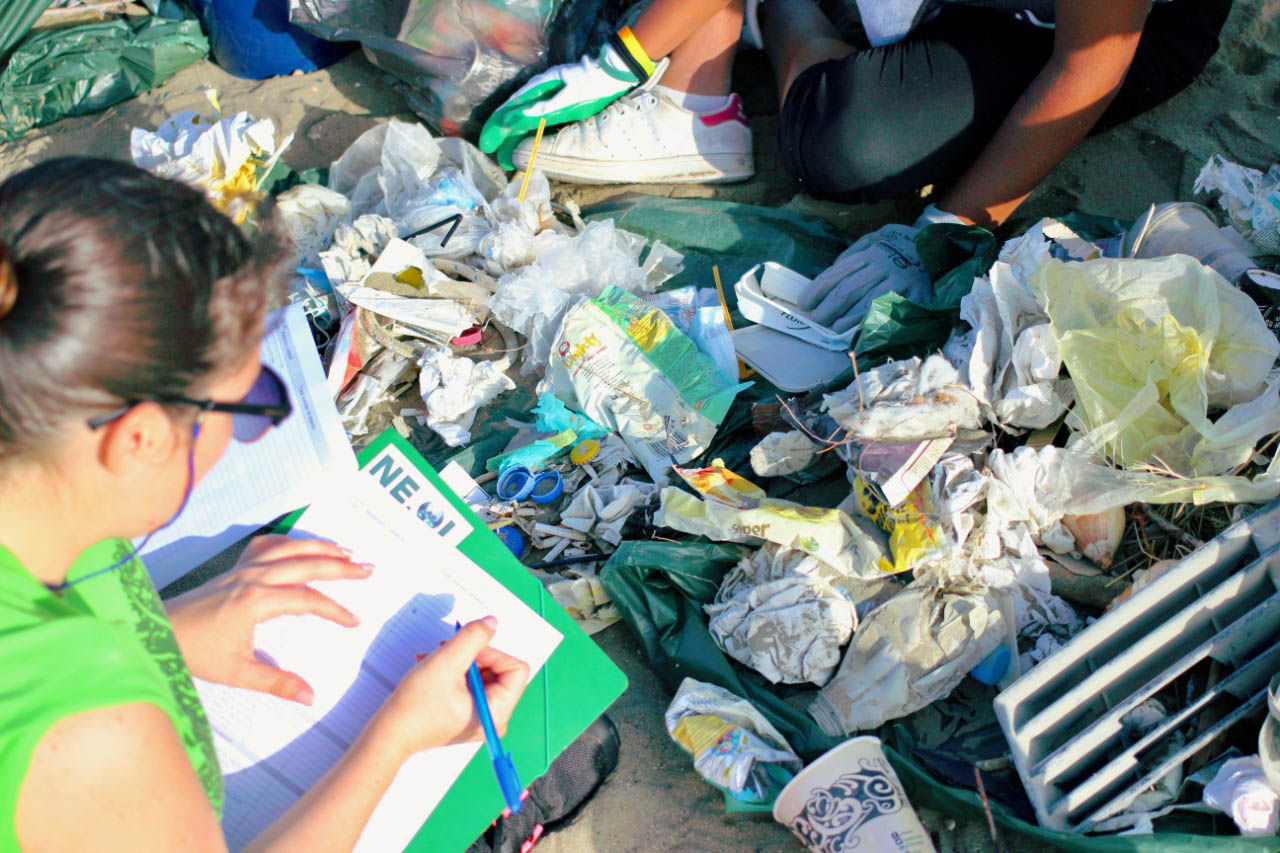
Meanwhile, Haris Papacharalambous of the Association of Cyprus Travel & Tourism Agents echoed Vyras, saying a change of mentality is key in Cyprus: “My vision is that hopefully someday we won’t need to be going and cleaning plastics off our beaches, because people will just not leave them there to start with. That should be our main goal”.
The mood was again celebratory when various activists took the podium – including Helen Caron of the TUI Care Foundation whose work in Cyprus (one of nine projects worldwide) includes the aforementioned beach clean-ups.
They’ve collected around 1,500 kilos of waste, established several “plastic-free beaches” and – not least – used social-media strategies like ‘beachfluencers’ and Instagrammable upcycled artwork (installed on the plastic-free beaches) to raise awareness, and create what she calls “the eco-champions of the future”.
They’re also developing a “waste-mapping app,” she told the Cyprus Mail, which will enable people to identify waste pollution – illegal fly-tipping, most obviously – and share the location with municipal authorities. Even if some, like that frustrated audience member, may be dubious that the authorities will do much about it.
The conference, which can be viewed in full on the CSTI YouTube page, was an odd experience, both lament and pep talk. Most provocative was perhaps Sampson’s proposal about “aligning finance with tourism resilience” – which appears to mean that investment will be leveraged (by whom?) towards eco-friendly projects, and away from irresponsible ones.
One thing, however, was unambiguous, namely the affection everyone expressed for CSTI in general, and Drousiotis in particular.
“I can’t believe [it’s been] 20 years,” raved Shammas.
“Everyone thought it was going to be a bunch of hippies trying to make Cyprus sustainable… And here we are!”

Click here to change your cookie preferences