
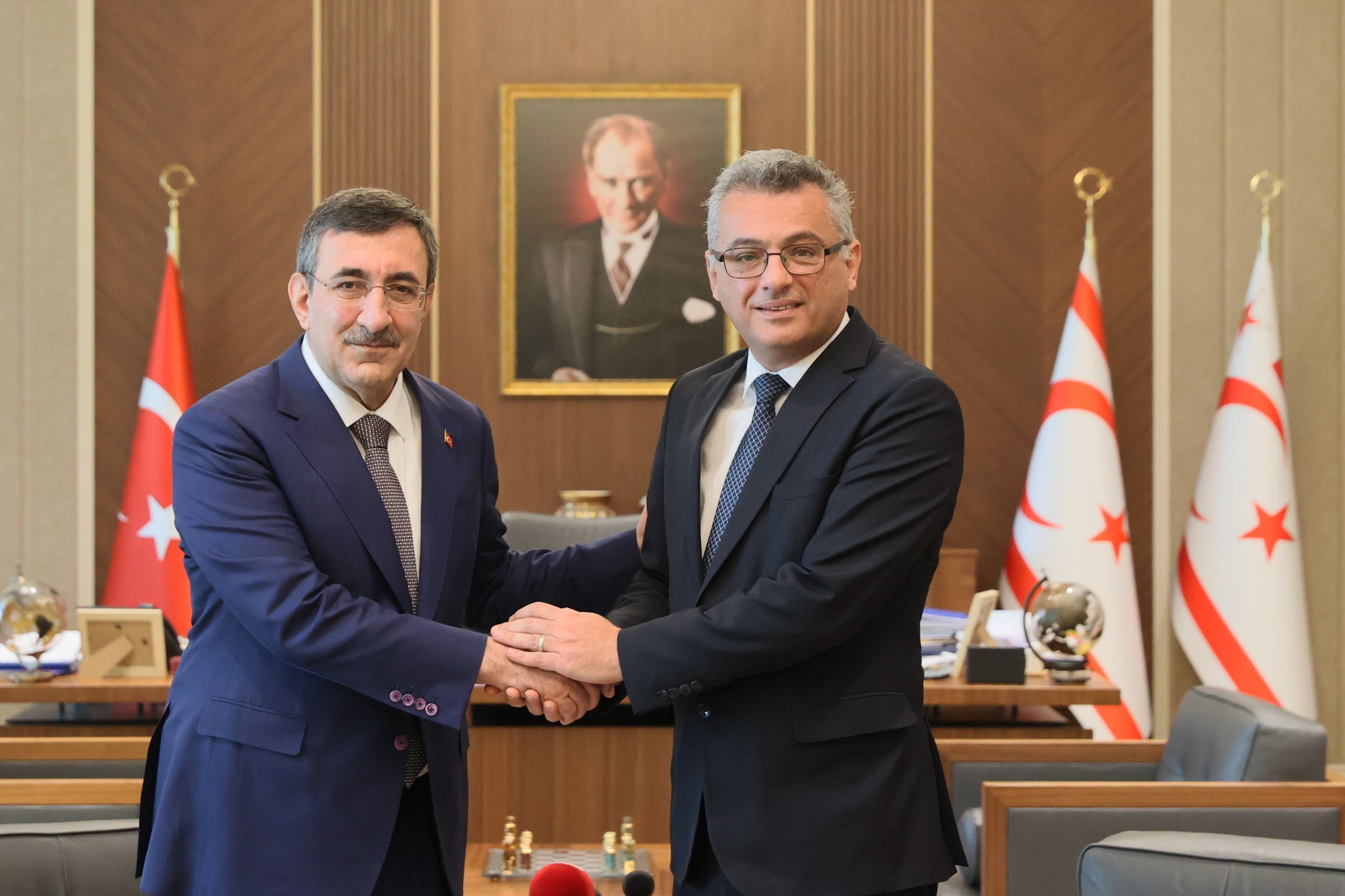
Turkish Cypriot leader Tufan Erhurman and Turkish Vice President Cevdet Yilmaz on Friday reaffirmed their shared position that participation in talks does not imply any retreat from demands for equal sovereignty, as Ankara once again restated its support for a two-state solution during Yilmaz’s visit to the north.
Speaking after a meeting at the ‘presidential’ palace in Nicosia, Erhurman said the Turkish Cypriot side had never avoided dialogue but stressed that “being at the table does not mean giving up on rights, interests and political equality”.
He underlined that Turkish Cypriots are one of the island’s two equal founding partners and warned that violations of what he described as their equal sovereign rights, particularly on the ground, would not be tolerated.
Erhurman also criticised recent positions taken by the Republic in the context of the EU presidency, calling some approaches increasingly unacceptable.
Yilmaz, for his part, said the sovereignty rights of Turkish Cypriots were non-negotiable, adding that “those who cannot accept the concept of equal sovereignty should not talk about a solution”.
He argued that the realities of the island were clear, referring to “two peoples and two states”, while maintaining that this did not preclude cooperation in areas of mutual benefit.
He described such cooperation as a test of sincerity and rejected criticism of the Turkish military presence, claiming it had brought stability and security to both communities.
Yilmaz said Turkey would continue to support the development of the north through financial cooperation programmes, reiterating that “Turkish Cypriots are never alone”.
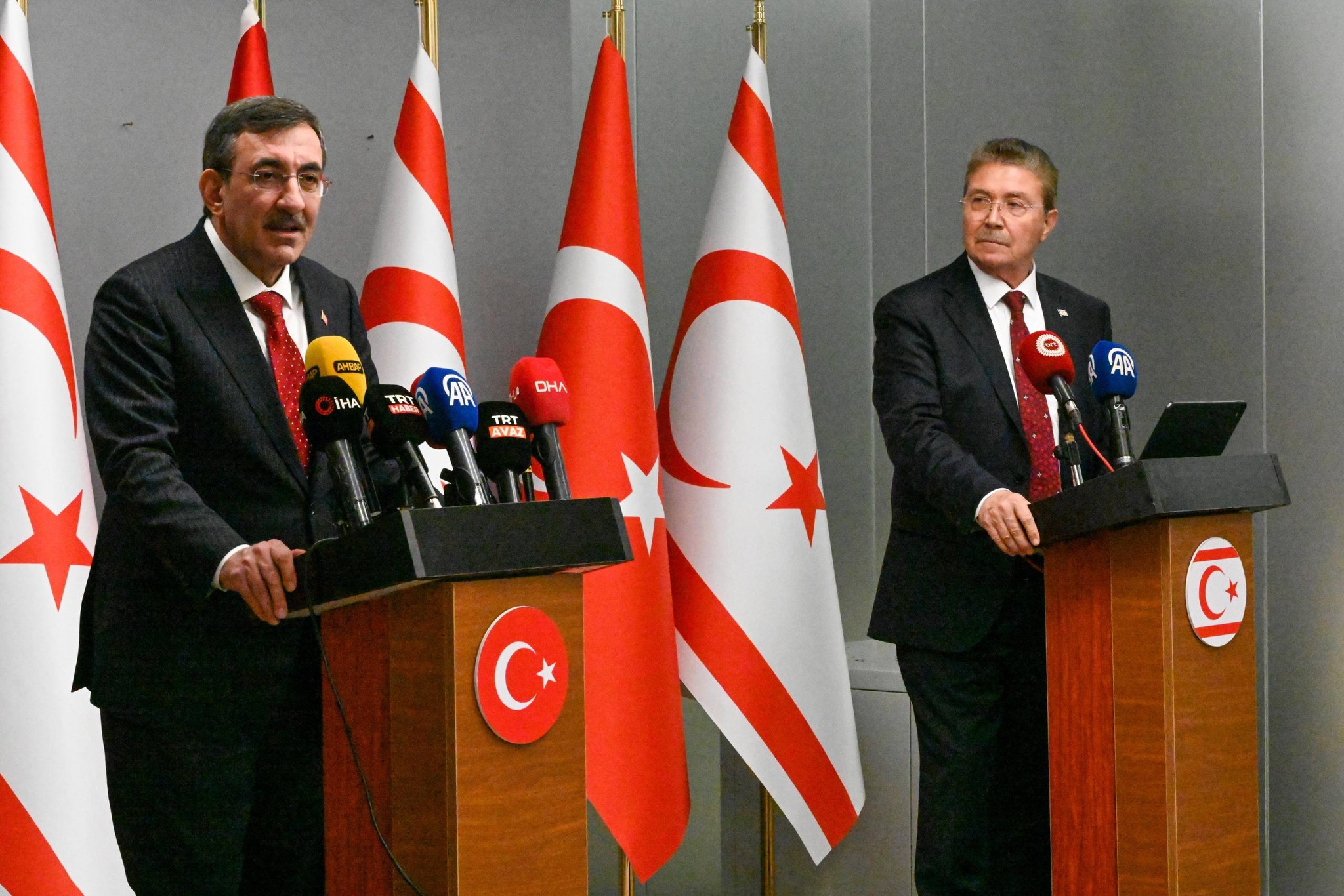
Earlier, speaking on arrival at Tymbou (Ercan) airport alongside Turkish Cypriot ‘prime minister’ Unal Ustel, Yilmaz restated Ankara’s position that the Cyprus issue could only be resolved through the coexistence of two separate states.
He described this as the most realistic and sustainable solution and again called for an end to what he termed the isolation of the Turkish Cypriot community, including demands for direct flights, trade and international contacts.
Yilmaz also pointed to the 2025 economic and financial cooperation agreement between Turkey and the north, which he said provides around 21 billion Turkish lira for infrastructure and tourism-related projects.


Click here to change your cookie preferences