

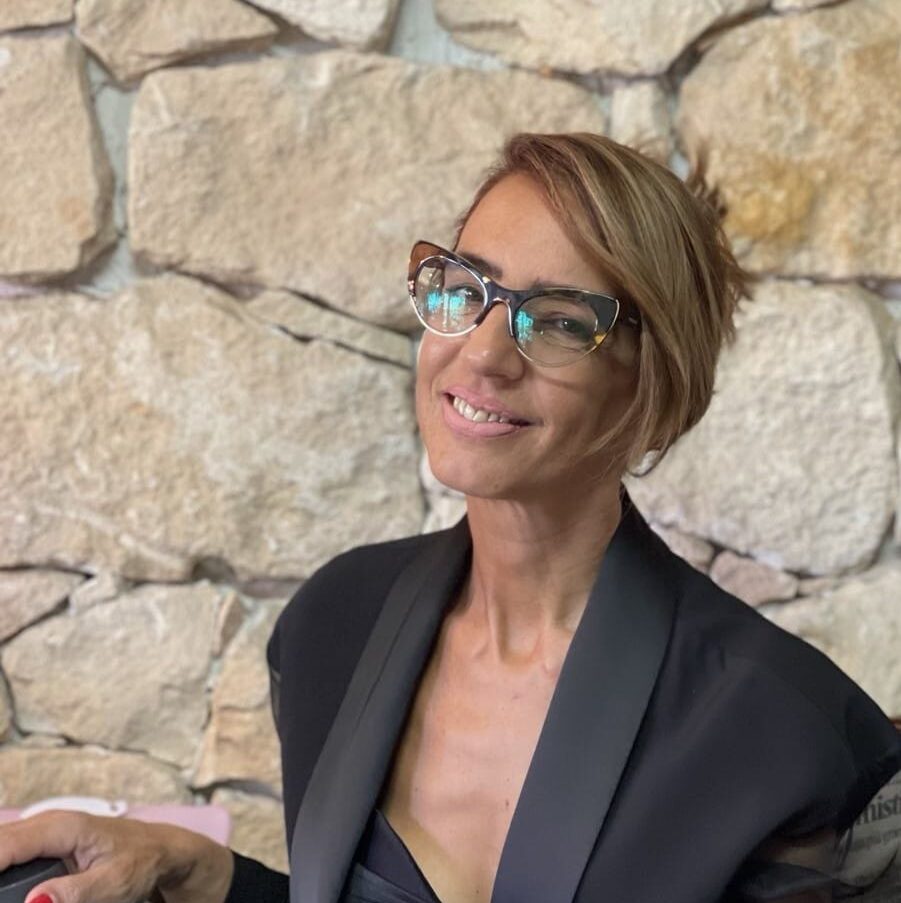
Cyprus’ Shipping Deputy Minister Marina Hadjimanolis was in London this week for meetings linked to Cyprus’ role at the International Maritime Organisation (IMO), while also setting the groundwork for the country’s EU Council presidency.
Speaking on LGR 103.3 FM Greek Radio London with host journalist Vasoula Christodoulou, she said she wanted to be there in person, recalling her student years in the UK when Greek radio “made us feel like we were in our homeland”.
Against that personal backdrop, she explained that Cyprus’ frequent presence in London is closely tied to the IMO, where the country continues to be elected to the Council.
During this visit, she held a bilateral meeting with her UK counterpart, Keir Mather, where discussions focused on further strengthening relations between Cyprus and the United Kingdom, while also addressing the broader challenges facing global shipping.
At the same time, she said she briefed him on the priorities of the Cyprus presidency of the Council of the European Union, expressing confidence that cooperation between the two countries will continue and be further strengthened over the coming six months.
In parallel, she met with IMO Secretary-General Arsenio Dominguez, where discussions centred on current developments linked to the presidency, as well as on additional events being planned during Cyprus’ term.
Later in the week, Cyprus is hosting a reception at its High Commission in London, marking both its re-election to the IMO Council and the assumption of the EU presidency.
In this context, Hadjimanolis stressed the importance of the Cypriot and Greek diaspora, describing them as “our ambassadors here in the United Kingdom” and emphasising that their presence and interest help amplify Cyprus’ message internationally.
Shipping, she noted, remains one of the country’s most important economic pillars, contributing more than 7 per cent to GDP.
To make that more tangible, she said this corresponds to around €2.5 billion.
“Sometimes we talk about percentages, but people do not understand the amounts,” she said, adding that shipping continues to open doors for young people while also driving Cyprus’ economy forward.
Looking back at her personal journey, Hadjimanolis spoke about her roots in Famagusta and how her family was displaced after the Turkish invasion, eventually settling in Limassol.
She said she has no direct memories of Famagusta, having grown up instead with the stories shared by her grandparents and parents.
These, she said, were “beautiful stories, beautiful childhood”, which were deeply engraved in her soul and continue to shape her philosophy.
She added that she hopes efforts initiated by President Nikos Christodoulides will lead to a solution that allows displaced families to return to their occupied cities and villages.
That sense of history and responsibility, she suggested, has followed her throughout her life.
After studying law in the UK and qualifying at Lincoln’s Inn, she returned to Cyprus to complete her training and practise law, later specialising in international trade law.
However, her engagement with public life began much earlier.
She recalled becoming involved in social and political issues at the age of 14, influenced by her father’s involvement in politics and driven by a belief that words and ideas could shape society.
That experience, she said, ultimately led her to law and later to public office.
She was elected as a municipal councillor in 2016, a position she held until 2023, when she was appointed Shipping Deputy Minister following a proposal by the President.
She described the appointment as a great honour, noting that her professional background helped prepare her for the role.
Alongside her professional path, she said volunteering and charitable work have always been part of her life, something instilled by her mother from an early age.
She recalled cooking and sharing meals with people in need, learning that “we must walk together in life”.
That experience, she said, later shaped her desire to set an example for her own children.
Turning to the state of Cypriot shipping today, Hadjimanolis said the past three years have been marked by strong growth, both in terms of revenues and activity.
More importantly, however, she stressed that progress has also been made in improving quality, safety and reliability, as well as the level of services provided by the Deputy Ministry of Shipping.
At the same time, she said Cyprus remains focused on competitiveness, particularly given that around 80 per cent of global trade is transported by sea.
From that perspective, she noted, even a brief disruption would have far-reaching consequences.
Against this background, the Deputy Ministry implemented a targeted action plan that led to an increase in shipping activity of more than 20 per cent, reaching 22 per cent, the highest level recorded since the establishment of the Deputy Ministry.
She explained that each vessel registered under the Cyprus flag generates income, with annual revenues from ship registrations exceeding €1.5 million, while Cypriot-flagged vessels also act as ambassadors, travelling across the world and promoting the country.
Moreover, she pointed out that Cyprus has consolidated its position as the largest ship management centre in Europe and among the top five globally.
While this often surprises international counterparts, she said it reinforces the country’s credibility and global standing.
In parallel, the Deputy Ministry has launched a major digitalisation effort, aimed at transforming all services.
Once fully implemented, ship operators will be able to access certificates electronically, without the need for physical presence.
This, she said, is particularly important for vessels operating at sea, allowing processes such as crew changes to be handled more efficiently.
Parts of the system are already in place, with full completion expected by the end of 2026.
Hadjimanolis also reflected on Maritime Cyprus 2025, describing it as a milestone event that continues to strengthen Cyprus’ position on the global shipping map.
The conference attracted more than 1,000 delegates from over 35 countries, while more than 40 companies participated in the exhibition, offering Cypriot-based firms a platform to promote their services.
The event was inaugurated by President Christodoulides, reaffirming government support for the sector. For the first time, two EU Commissioners attended, alongside shipping ministers from Greece, Qatar and Pakistan.
According to Hadjimanolis, meetings held during the conference helped lay the groundwork for new collaborations, particularly with Gulf countries, creating opportunities for Cyprus-based companies and broader economic benefits.
On gender equality, she acknowledged that shipping remains a demanding and traditionally male-dominated sector. Nevertheless, she said change is under way.
From the beginning of her term, promoting women in shipping was set as a priority, with campaigns launched to inform and encourage more women to enter the industry.
A mapping study conducted with the Gender Equality Commissioner, she said, revealed that progress remains limited. “The results were unfortunately not encouraging,” she noted.
As a result, additional initiatives were introduced, including the establishment of an annual Gender Equality Award in Cyprus Shipping. The first award was presented to Despina Theodosiou.
She stressed the need for visible role models and early engagement, noting that efforts now extend to schools, where children are introduced to the sea and to maritime professions in interactive ways.
At the same time, she highlighted the global shortage of qualified seafarers, describing it as a challenge that requires coordinated action at national, European and international levels.
“We can have the most advanced ships in terms of technology,” she said, “but we also need the qualified people to operate them safely,” adding that women must be part of that future.
Maritime education, she said, is therefore central. The Deputy Ministry offers guidance, scholarships and support for students, including assistance in securing onboard placements required for practical training.
She emphasised the importance of cooperation with the private sector, without which, she said, these results would not be possible.
She also referred to the recognition of nautical schools and to the inauguration of the Tsakos School, noting that such initiatives strengthen the profession and help address skills shortages.
Importantly, she stressed that shipping careers are not limited by age.
Anyone, she said, can pursue nautical studies, including those seeking a career change later in life, with universities in Cyprus offering flexible programmes, including evening courses.
Salaries at sea, she added, can be significant, with captains on LNG vessels earning €15,000 to €20,000 per month, while Cyprus provides tax incentives for seafarers.
Medical requirements, she noted, are general and not a barrier to entry.
Looking ahead, Hadjimanolis said shipping will be central to Cyprus’ EU Council presidency, with priorities focused on people, competitiveness and strategic resilience.
She referred to the planned Nicosia Declaration, which aims to upgrade and retrain seafarers, modernise maritime education and strengthen women’s participation in the sector.
The goal, she said, is for it to be adopted by all EU member states during the informal Council of Shipping Ministers in April 2026.
In parallel, Cyprus will contribute to shaping the new European Industrial Maritime Strategy, expected to be presented in February, stressing the need to safeguard the competitiveness of European shipping as a strategic asset.
A series of high-level events are planned in Limassol, Nicosia and Brussels, including European Maritime Day.
Despite the demanding agenda, she said Cyprus is ready.
“Our country can play a strategic role,” she said, adding that memoranda of cooperation with Gulf countries, as well as plans to expand ties with India, will further strengthen Cyprus’ maritime footprint.

Click here to change your cookie preferences