
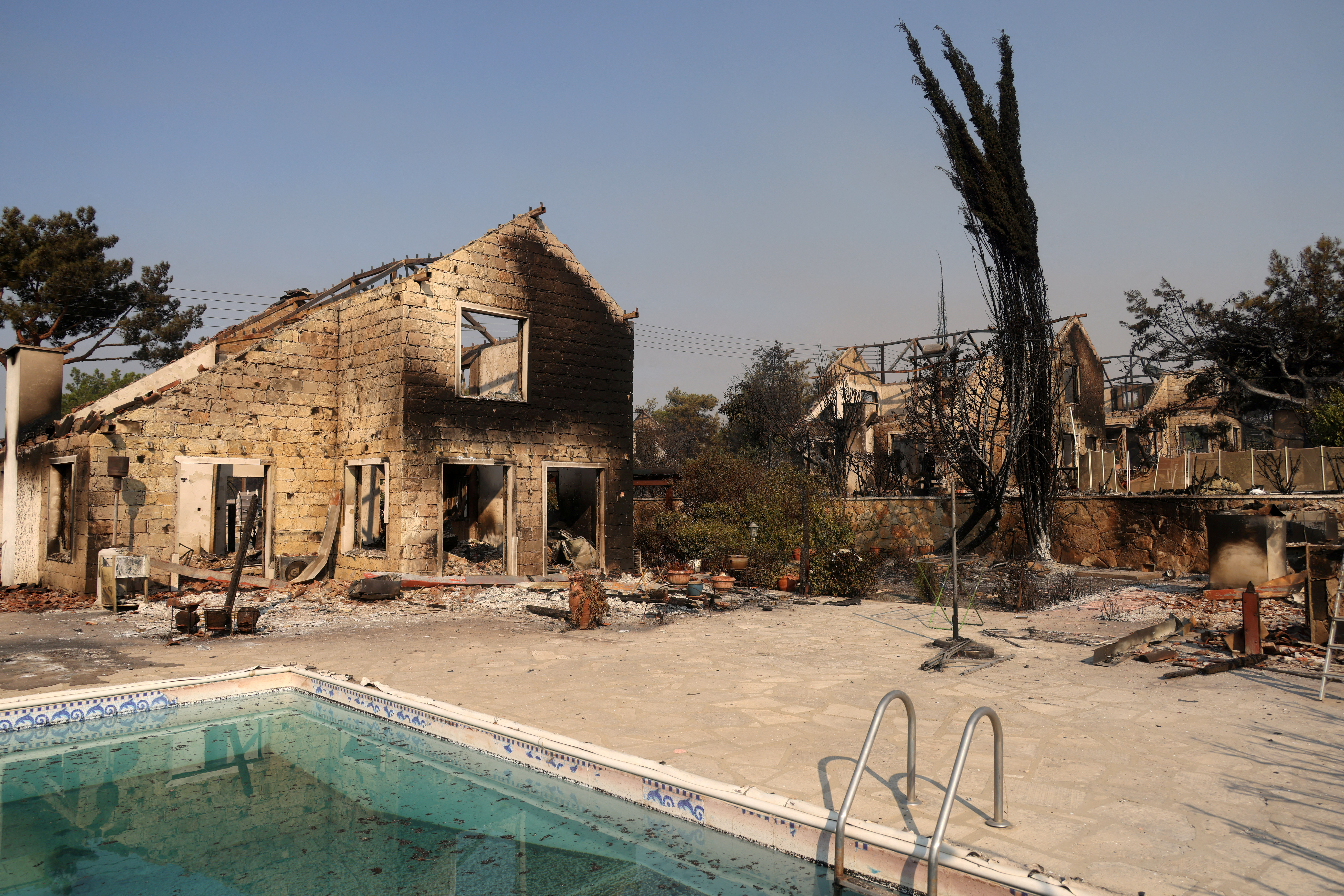
Cyprus should move beyond a piecemeal approach to wildfires and adopt a comprehensive prevention and adaptation strategy, according to a report by the European Council of Science Academies (EASAC).
The report, titled “Changing Wildfires in Europe”, was presented on Thursday at the initiative of the Cyprus Academy of Sciences, Letters and Arts at the Cyprus Institute in Nicosia. It underlines the urgent need for preventive land management, investment in fuel reduction, the creation of resilient landscapes and systematic public education on fire risks.
According to the report, Cyprus is already on the front lines of the climate crisis, with forest fires posing an increasingly complex and multidimensional threat that exceeds earlier climate projections.
Documenting the rapid rise in the frequency, intensity, and scale of forest fires across Europe, the report identifies the Mediterranean, and Cyprus in particular, as among the regions at highest risk.
Scientists warn that warmer summers, drier winters, and prolonged droughts are creating conditions that make fires more destructive to forests, farmland, Natura 2000 sites, communities, and the natural-urban interface.
According to EASAC, existing policies in the European Union, including Cyprus, remain largely focused on fire suppression. However, in an increasingly warm climate, suppression alone is insufficient.
The report recommends a shift toward prevention and preparedness, with proactive land and landscape management, the integration of fire risk into spatial planning and climate adaptation policies, investment in fuel management, and strengthened public education and awareness.
For Cyprus, this translates into incorporating fire risk into all relevant policy areas, from agriculture and water management to civil protection and development planning.
The report also highlights the importance of regional cooperation, stating that “fires know no borders”. In light of this, the issue has already been set as a key priority within the framework of the Eastern Mediterranean and Middle East Climate Change Initiative.
Cyprus’s role as a regional hub for scientific knowledge and innovation is also emphasised. Advanced climate modelling and forest fire risk assessment are already being carried out at the Cyprus Institute, using high-resolution satellite data, historical data and climate change scenarios.
These technologies, combined with early warning systems based on artificial intelligence, can allow for faster fire detection, targeted interventions and reduced impacts on human lives and ecosystems.
In this context, the European Union’s decision to establish a firefighting hub in Cyprus is described as a “strategic opportunity” for the country, offering not only enhanced suppression capacity but also a chance to strengthen prevention, preparedness, and regional coordination.





Click here to change your cookie preferences