
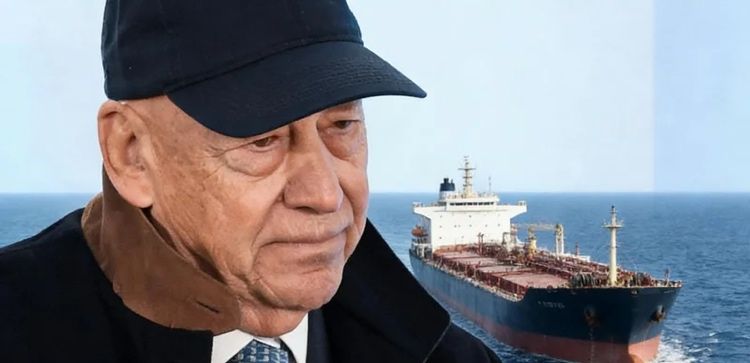
Billionaire shipowner George Prokopiou sent at least five tankers through the Strait of Hormuz this week, the Wall Street Journal reported, in one of the boldest moves of his long shipping career as freight rates surged amid rising military tension in the Middle East.
The report said Prokopiou’s vessels were among the very few commercial ships to pass through the strategic waterway after the conflict escalated, leaving thousands of ships stranded and raising fears over global energy supplies.
According to the newspaper, the Greek shipowner is betting that oil importers will pay sharply higher freight rates for cargoes lifted out of a war zone. Gulf producers, meanwhile, may also seek ships as floating storage as onshore tanks fill up.
Ship-tracking data and people familiar with the voyages showed that armed guards were deployed on deck as the vessels crossed the strait, while tracking systems were switched off to lower the risk of becoming targets. However, the ships would have had little protection in the event of missiles, drone or mine attacks.
The strategy could prove highly lucrative. The report said Dynacom had offered tankers for charter at daily rates of up to $440,000 a day, around four times pre-war levels, although no deal had been concluded by early Friday.
For Prokopiou, risk has long been part of the business. Quoted by Tradewinds in 2014, he said that “If you are not willing to take risks, you cannot operate in shipping.”
The Wall Street Journal said Dynacom also pays higher wages to seafarers willing to undertake dangerous voyages to ports in Saudi Arabia and elsewhere in the Gulf. A company representative did not respond to requests for comment, according to the report.
Nearly one-fifth of global oil and liquefied natural gas supplies pass through the Strait of Hormuz, the narrow channel between Iran and Oman, making it one of the world’s most important energy chokepoints.
Separate shipping data cited in market reports showed traffic through the strait had fallen sharply in recent days, with some estimates pointing to a 91 per cent drop in transits at the start of March compared with the same period in February.
US president Donald Trump said this week that the US Navy would protect vessels transiting the area, although maritime experts cited by the newspaper said such an operation would be difficult and dangerous.
Iran, for its part, has sent mixed signals. Its mission to the United Nations said Tehran did not intend to close the strait, while the Islamic Revolutionary Guard Corps said it had struck an American tanker at the northern end of the Gulf.
A US shipping company also reported that one of its tankers had been shaken by an explosion.
Greek shipowners, who control the world’s largest tanker fleet, have long played an outsized role in times of upheaval in energy markets.
The paper drew a parallel with Aristotle Onassis and Stavros Niarchos, who made vast profits when the Suez crisis sent tanker rates soaring.
Prokopiou controls about 70 tankers through Dynacom, according to an EU database cited in the report, and several were already in the Persian Gulf when the conflict began.
Since then, he has sent three crude tankers and two product carriers through the strait.
The newspaper noted that Prokopiou has repeatedly stayed active in markets others have avoided, including Russian oil trades that remained legal but became less attractive to many Greek owners as sanctions enforcement tightened and rates elsewhere climbed.
One of the tankers that crossed Hormuz this week, the Smyrni, had just completed a shipment of crude from a Russian Black Sea port to India, the report added.
Beyond shipping, Prokopiou also controls Dynagas Holding, Sea Traders and a 42 per cent stake in Dynagas LNG Partners.
His companies own 116 tankers, bulk carriers and LNG vessels, while his business interests also extend to shipyards and real estate.



Click here to change your cookie preferences