
A time for seeds, cuttings and checking trees and plants to tend to them as needed
Feeding fruit and nut trees is a priority this month, so spread 20.10.10 fertiliser or something similar, around the root area of the trees and if there is no rain, water the fertiliser in.
You probably have finished pruning your trees by now except those citrus trees whose branches may still be loaded with ripening fruits.
As the month progresses, they will become heavier, especially after all the recent rain and could break the branches, which is what happened here a few years ago. So, pick the fruits as they ripen and trim back any branches to try to keep your citrus trees to a manageable height.
A reminder that when you prune your grapevine, check over the support as well and see if there is a need for any repairs or strengthening, as vines when fully in leaf and fruit are very heavy creatures!
After pruning you should cut back the fruiting stems to one or two buds and pinch out all but the strongest new shoots. Sometimes they need some summer pruning as well, but that is looking ahead.
If your wisteria has finished shedding its leaves, it is a good opportunity to remove any old flower stems still on the branches, or they might just blow off in any high wind.
The lack of leaves will also expose any remaining seed pods. Take them off or leave them until they become hard and the seeds have ripened, when the pods will burst open and the seeds will pop out. A warning though if you decide to plant the seeds it can take about seven years or so before any flowers appear.
Most wisterias for sale in garden centres have been grafted, so if you are considering buying one choose one with fluffy buds already on it, as then you can be assured of flowers.
Watch out for runners from the base as they will grow at an enormous speed and before you know it you could have wisteria plants popping up everywhere – you may like that of course, in which case don’t remove them.
This attractive climbing plant grows well here and the early long tendrils may latch on to anything in their way, which in our case is usually the air conditioning unit, as well as the veranda furniture! However, the perfume of the flowers is to die for!
Check over your shrubs of lavender and rosemary bushes and see if they need some pruning this month. If rosemary bushes become too big then they tend to separate out into sections and become rather woody.
Prostrate rosemarys are in flower and already tumbling over walls. They are much sought after by the early bees as they search out pollen from amongst the first flowers.
Pot plants outside may be rather wet at this time, due to the many showers of rain, welcome as they are. Remember that most plants do not like wet roots, which may cause them to rot, so if you can, bring them under cover or make sure that the pot saucer is not full of cold water!
Lots of roses are still flowering along the valley in which I live. It’s lovely to have them in flower all year round, but like other plants they do need a rest period and this is also a good time to prune them to prepare them for the coming season.
Rosa banksia, which is a favourite of mine and easy to grow, does not require much attention. Other favourite roses are the ‘peace’ roses along with Rosa ‘Queen Elizabeth’.
The latter rose is known as a hedging rose and likes full sun with well-drained and nutrient rich soil, consistent watering, and proper pruning. With regular care, it can bloom repeatedly from late spring through to autumn.
You might think that you can grow this rose successfully anywhere but it grows best if it can be planted where it can have six to eight hours of sunlight, otherwise you may not have as many flowers as you would like.
The flowers are a lovely full rose-pink, which grow atop long stems, ideal for cutting, and why not enjoy them in your house too, where their fragrant perfume will delight you. This rose is also disease resistant, so what more could you ask of a rose.
Prune to maintain the shape and eliminate weak or damaged stems, which will also encourage a second flush of flowers and may save the bush from any strong winds during the winter. All roses benefit from feeding and there are specially formulated rose feeds available in garden centres.
As the weather warms up a little you can sow seeds and take cuttings of perennial plants, which when they reach maturity are always useful for filling in gaps in your borders.
Seeds may not germinate in cold soil, so you could bring the pots inside and start them off on the kitchen windowsill or on a sheltered veranda, whilst cuttings prefer some bottom warmth too, to produce any tiny roots.
Annuals, though, are best sown where you want them to grow once the soil warms up.
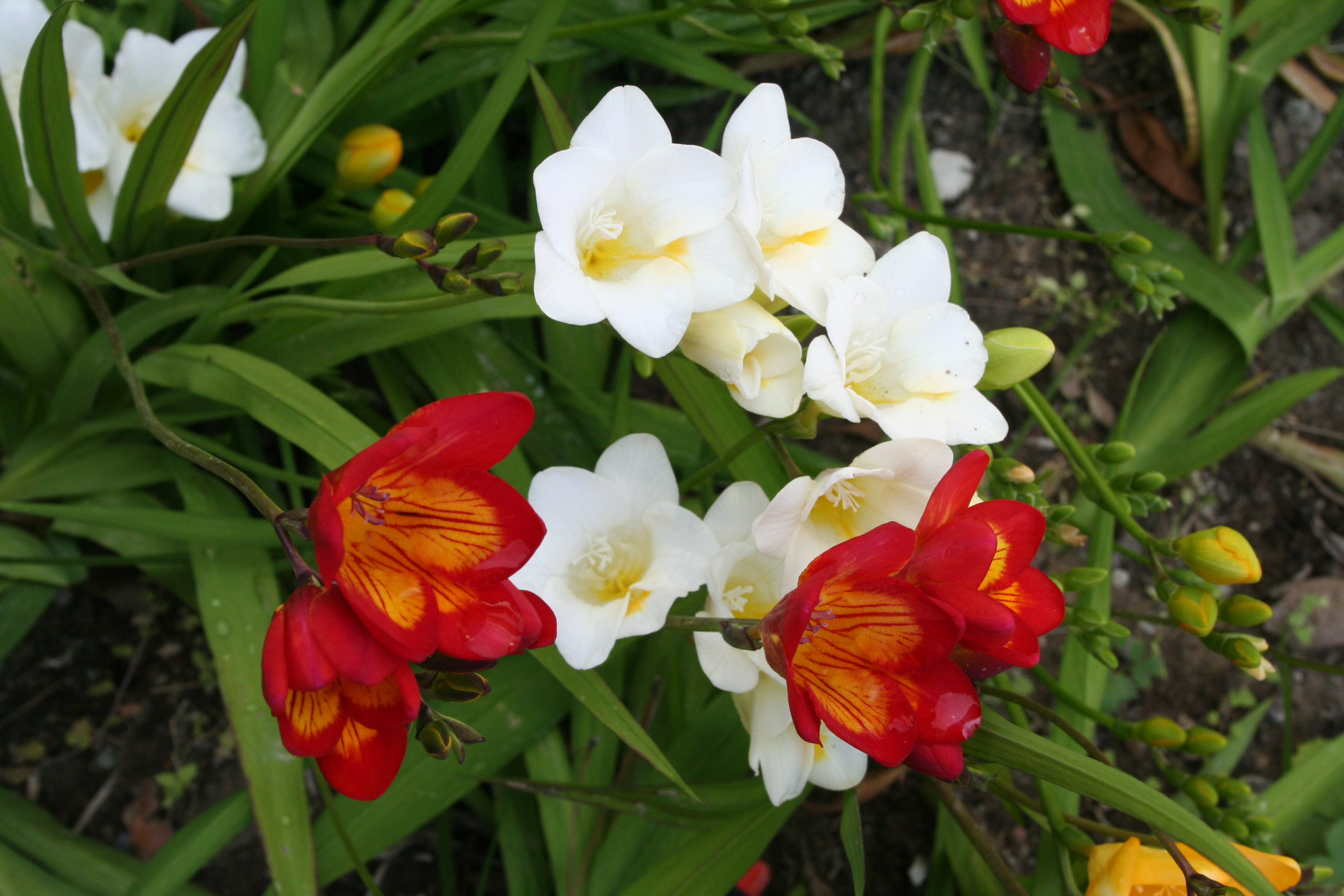
Other plants whose leaves are shooting upwards at the moment are freesias. Most people love them and they are often used in bridal bouquets because of their delightful fragrance.
I used to plant a whole bed of them each autumn, around 150 bulbs, mixing the gorgeous colours together. The purple ones always seemed to appear first and the bulbs were much bigger than the other colours.
Once the foliage had died down completely, I would lift the bulbs and keep them in a dry place before replanting in the autumn.
After some severe losses caused by a deep frost a little while ago, I decided not to plant any this year, but some new shoots appeared where they had been growing before.
After flowering a freesia bulb reproduces itself by sending out little bulbils along the stem or even around the bulb itself, which sometimes can be missed when lifting them. As a consequence of this I have some new shoots appearing where I am now growing potatoes, but I am not expecting flowers this year as they are too immature to flower – more’s the pity!
Another favourite plant that grows well here and is beginning to push up lots of new leaves is Zantedeschia aethiopica which has several common names such as lily of the Nile, Easter lily, arum lily or calla lily and along with many other South African plants, a favourite in Cyprus gardens.
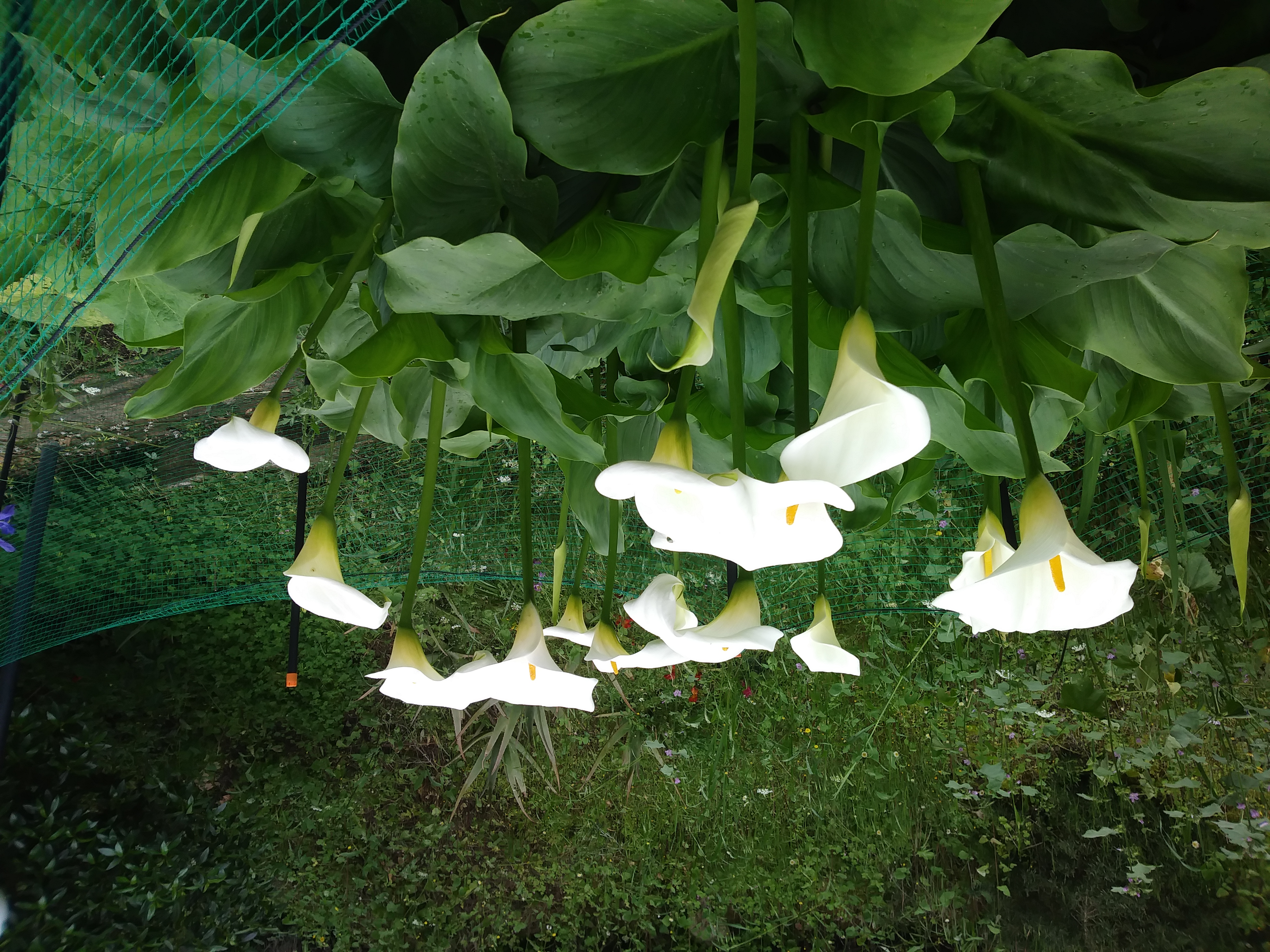
Until I came to live in Cyprus, I had always regarded it as a marginal plant but it manages to shine in gardens here from the coast to the hills.
It often grows into a huge clump and you may have missed the best time to separate it out when it is dormant, before it takes up too much space.
The largish green leaves help to show off the lovely trumpet-shaped white flowers, with a large spadix with tiny golden flowers arising from the centre.
Surprisingly it can cope with any weather and after a long winter break will break through the soil to please you for another season.
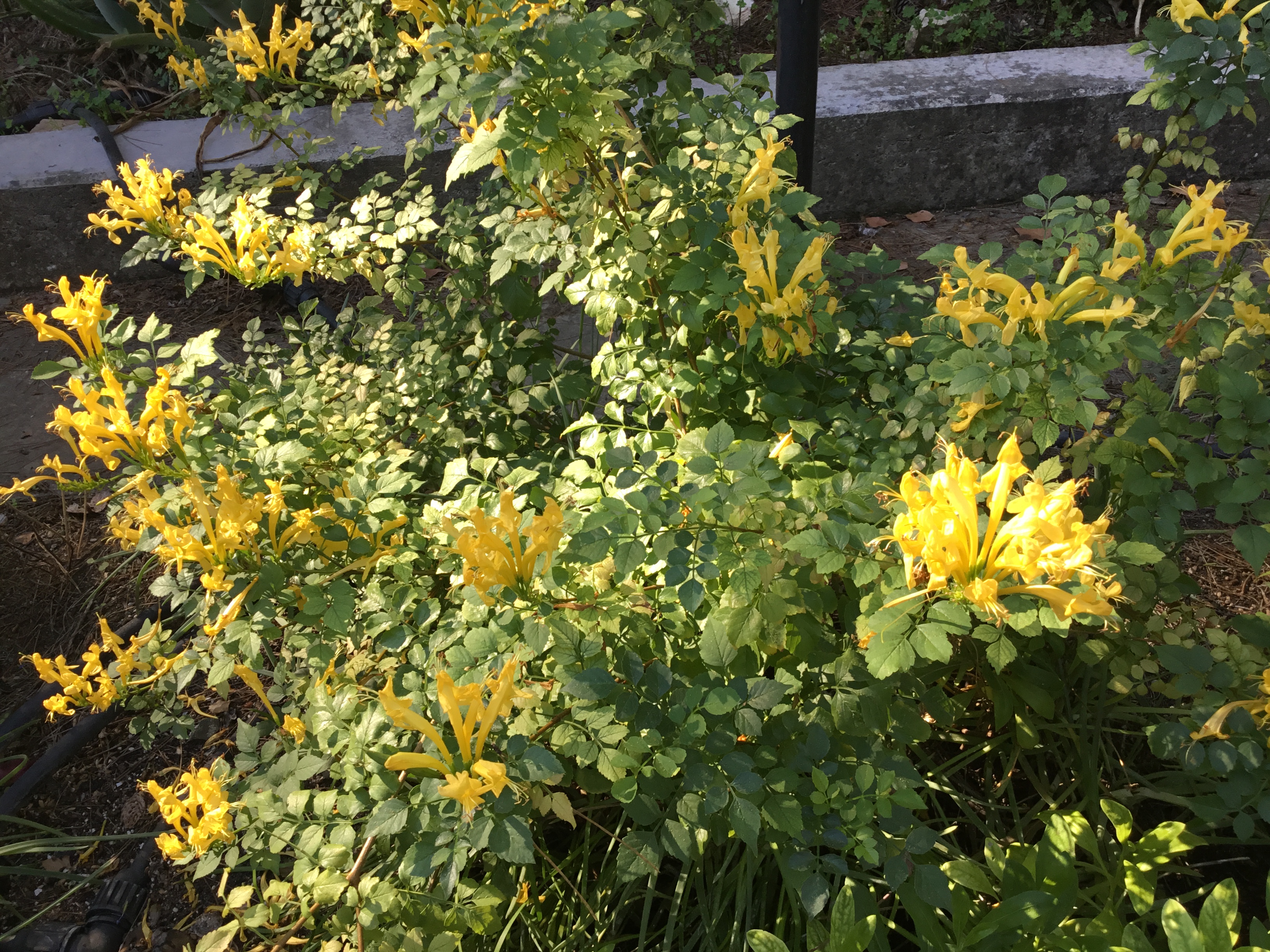
Plant Of the Month Tecoma capensis ‘Lutea’
This lovely vibrant fast growing erect shrub, in flower at the moment, is commonly known as the ‘cape honeysuckle’ and belongs to the very large Bignoniaceae family. Its origins were in the southern hemisphere, where it is regarded as a summer flowering plant.
It flowers in our gardens during the very late autumn well into spring and gives some colour at this time of year. We have the bonus of the brightness it shares with us when the gardens here can be looking rather bare.
Tecoma also attracts butterflies and bees at a time when the flowers that they like are not in bloom, a shortage caused by our sometimes cold wintry weather.
This accommodating plant can cope with almost any type of climate. It can cope in coastal gardens with salt-laden winds and gardens at up to around 500-600 metres, enduring frosts which sometimes occur at higher elevations here. However, it does prefer to grow in full sun in well-drained soil, as you would expect, coming as it does from the Cape area of South Africa.
If you feel that it needs pruning, then do this in our spring after the flowers have finished. You may find that it sends out runners that can root, so some occasional light trimming back might also be necessary.
You may know of another variety with orange flowers which open later in the year, but Lutea has a special charm. The dark green glossy leaves are arranged in small sprays, which contrast well with the bright yellow flowers.




Click here to change your cookie preferences