
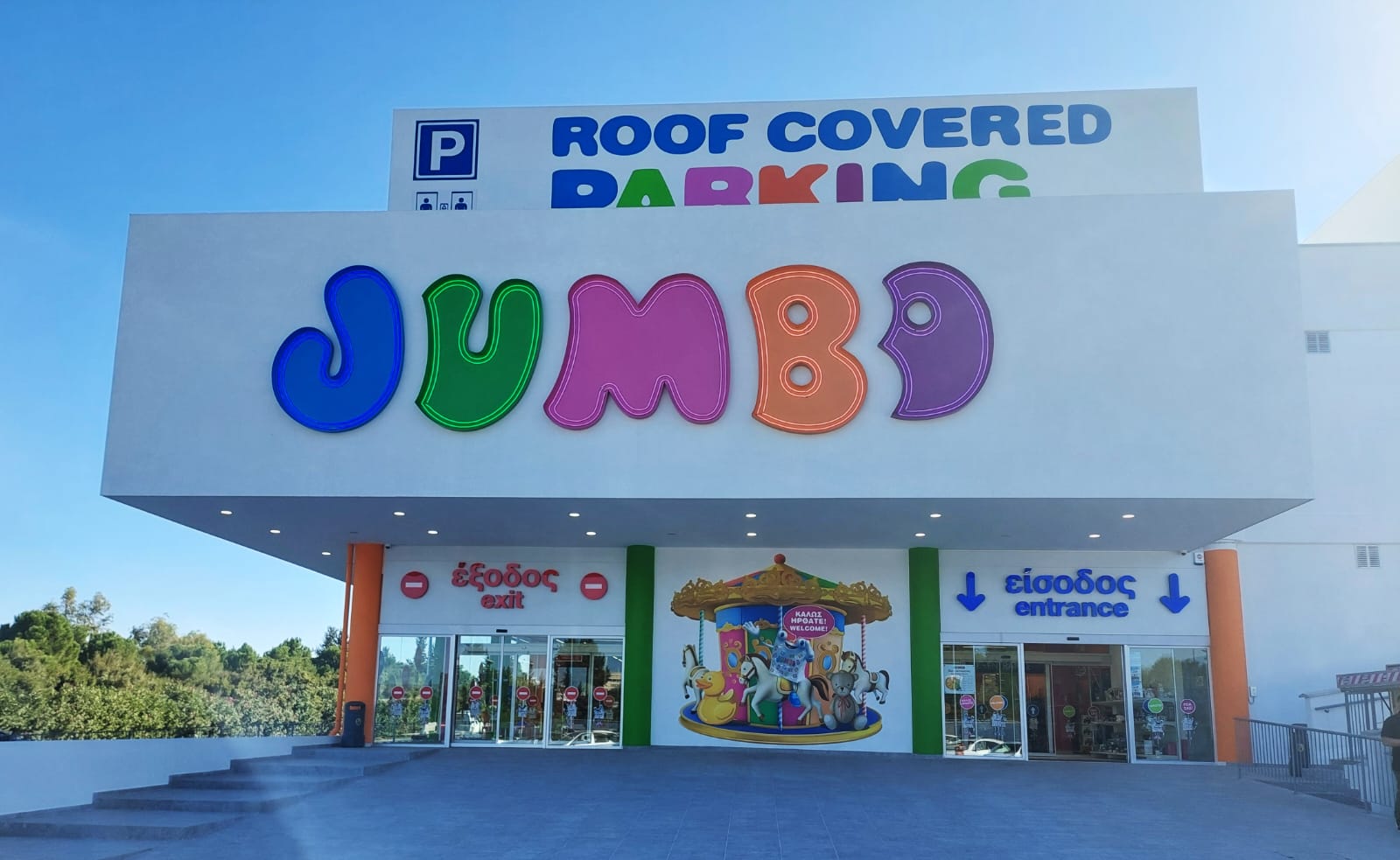
Greek retailer Jumbo Group outlined its long-term strategy and updated investors on sales performance and capital allocation plans ahead of a general meeting of shareholders scheduled for Wednesday.
The meeting, to be held at the group’s administrative offices at 4.00 pm, will focus primarily on the approval of an extraordinary cash distribution for 2026, amounting to a gross €0.50 per share.
Management reiterated that retail is ultimately shaped less by the strength of individual players and more by the structure of the market itself.
As new business models emerge, e-commerce expands and cross-border platforms gain ground, competition continues to act as a driver of discipline and operational efficiency.
Within this environment, Jumbo operates through an organised, large-scale retail model supported by an extensive store network, a vertically integrated supply chain and self-owned warehouses and distribution centres, factors that, the group said, clearly differentiate its market position.
The company described its philosophy as one focused on endurance rather than short-term appeal, drawing parallels with long-standing Japanese corporates. Its strategy centres on steady reinvestment in efficiency, infrastructure and networks, while deliberately avoiding excessive risk.
Management noted that higher operational efficiency provides a greater margin for error — an important buffer in a sector where unexpected disruptions are frequent and often harder to absorb for smaller operators.
With a strong balance sheet, zero bank debt and high liquidity, the group said it continues to apply a disciplined capital allocation policy.
Profits are allocated evenly between shareholder distributions, reinvestment in growth and efficiency, and taxes alongside the strengthening of cash reserves.
The company stressed that its objective is long-term value creation rather than short-term market reaction, adding that it does not chase commentary but focuses on execution.
Jumbo’s budget for 2026 forecasts a year-on-year sales increase of around 5 per cent, with net profits estimated between €310 million and €320 million.
The outlook factors in a challenging macroeconomic environment, with Romania facing particular pressure from currency depreciation, a recent VAT increase and new fiscal measures with a restrictive impact.
The group maintained that its dividend policy remains stable and disciplined, with an indicative yield of around 5 per cent based on current valuations.
At the same time, it retains flexibility for additional distributions in periods where growth opportunities are limited and no further acquisitions of leased stores arise.
The start of the new financial year has been positive. Group-wide sales in January 2026 rose by approximately 8 per cent year-on-year, despite the negative effects of extreme weather conditions in Greece and the Balkans. Greece and Cyprus also benefited from an earlier Carnival season.
Turning to performance by country, net sales of the parent company in Greece, excluding intragroup transactions, increased by around 11 per cent in January.
In Cyprus, network sales rose by roughly 12 per cent over the same period.
Bulgaria delivered the strongest growth, with sales, including online activity, up by about 15 per cent year-on-year.
Romania, by contrast, recorded a decline of approximately 4 per cent in January, including online sales.





Click here to change your cookie preferences