
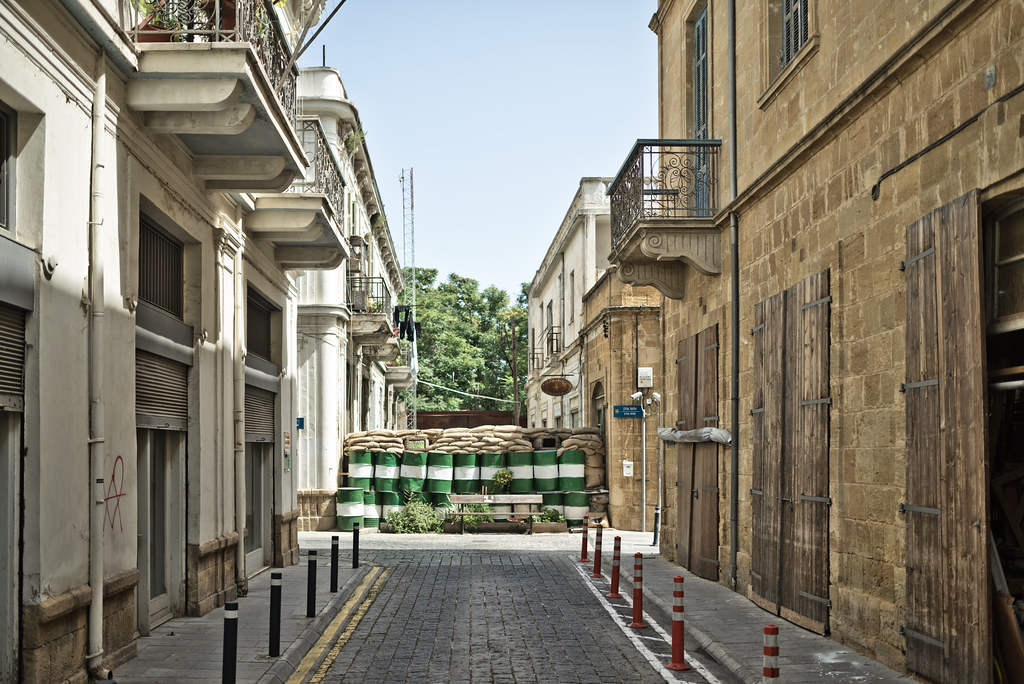
Nicosia municipality is pressing ahead with a €28 million regeneration programme aimed at transforming the old city, mayor Charalambos Prountzos said on Monday.
A grant agreement signed in December covers additional regeneration projects along the Green Line, funding pedestrian street upgrades and façade restorations set to begin early this year.
The arrival of the Kapodistrian University marks a turning point, according to Prountzos.
Medical students studying next to the new town hall have embraced life in the old city, while municipal residential halls have drawn praise from families.
A second municipal hall is under construction, alongside facilities run by the archbishopric and about 250 private dormitories due for completion within the year.
Demand is expected to outstrip supply by 2027, as all licensed schools have advertised places for the 2026 academic year.
The municipality has asked the government to extend incentives for student accommodation.
Efforts are also under way to resolve the dispute over Faneromeni, involving the municipality, the archbishopric, the University of Cyprus and the finance ministry.
Prountzos said bringing a major public university into the historic centre “has always been a fundamental objective” and that conditions are being created for a positive agreement.
Momentum has grown after the archbishop signalled support for relocating a university department to the former Faneromeni school, provided it brings a substantial daily student presence and avoids additional construction.
The revised proposal focuses on the archaeological department, with around 200 students expected, aligning with a 2021 memorandum between the state, the church, the university and the municipality.
Infrastructure works are advancing across the old city, including the upgrade of Constantinou Palaiologou street and full renovation of the multi-storey car park on Ariadne street.
Projects are also under way around the old town hall, the Ochi market and Ayios Antonios market.
Security issues have been addressed through coordinated operations involving the justice ministry, migration authorities, police, tax department, fire service, the electricity authority and the municipality.
Authorities have also evacuated and sealed buildings where people were living in illicit and dangerous conditions, uncovered illegal employment, and removed unsafe gas and electrical installations.
These were “shameful situations, primarily for the owners, many of whom are getting rich through the exploitation of these people,” Prountzos said.
The municipality has also improved lighting, signage and road surfaces, and replaced cleaning contractors, with visible gains in cleanliness.
The historic centre, affected by division since 1963, remains a priority.
The municipality has submitted proposals to the President to improve conditions around the buffer zone and daily life for residents.
An agreement with his Turkish Cypriot counterpart Mehmet Harmanci supported by the EU and the UN development programme, to extend the Pedieos walking route into the buffer zone and the north is described as a significant milestone in bicommunal projects.
“We live in an era when people are searching for that which is authentic,” Prountzos commented.
“This is my vision for the old walls.”



Click here to change your cookie preferences