
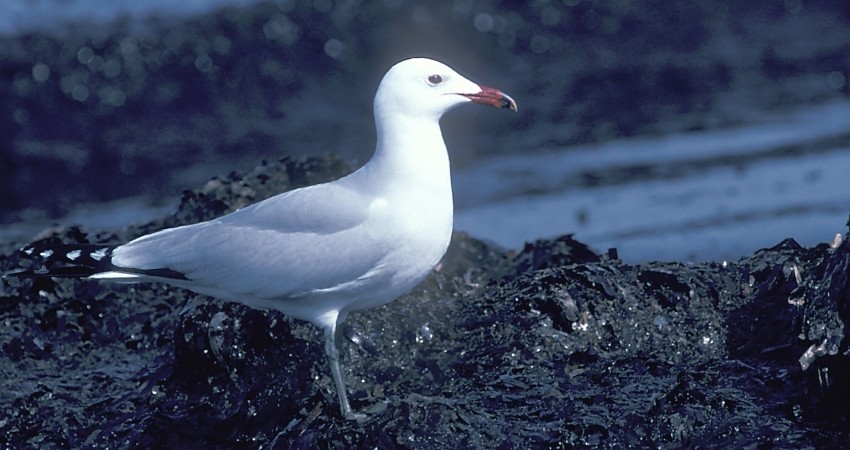
The European Union has designated the islets off the Karpasia peninsula as a conservation priority under a new international action plan for Audouin’s gull, as monitoring data shows the island’s only breeding colony of this rare seabird is in decline.
In its statement released on Wednesday, BirdLife Cyprus said the move places renewed focus on protecting a site critical to the species’ survival in the Levant.
The international action plan for Audouin’s gull was adopted by the EU in 2025 and was prepared by BirdLife International using the latest scientific data from 15 countries, including Cyprus.
The plan maps the species’ distribution and sets targeted conservation priorities.
The organisation states that the Kleides islets, at the northern tip of the Karpasia peninsula, host the country’s only breeding colony of Audouin’s gull, also known as the Mediterranean black-backed gull.
BirdLife described the site as “vital not only for Cyprus’s seabirds, but for the conservation of the species across the Mediterranean”.
Audouin’s gull is one of the Mediterranean’s rarest seabirds, with adults breeding seasonally during spring and early summer on isolated rocky islets.
The Kleides colony represents the easternmost breeding site of the species in the world.
Since 2007, BirdLife Cyprus has carried out systematic monitoring of the colony in cooperation with Turkish Cypriot ornithological society Kuskor.
“We have been systematically collecting data from Kleides, contributing substantially to knowledge about the status of the species,” the organisation said.
While active nests and young birds continue to be recorded each breeding season, data indicates a downward population trend.
“Although active nests and young birds are still recorded, long-term trends show a decline in populations, making the protection of the colony more imperative than ever,” BirdLife Cyprus warned.
Pressures facing the species across its range include disturbance at breeding sites, habitat degradation and changes in food availability.
“For Cyprus, it is a critical tool for securing the future of Audouin’s gull at Kleides,” BirdLife Cyprus said, adding that the site’s significance extends beyond national importance due to its role in safeguarding the species’ eastern Mediterranean population.
Conservationists say the plan provides a framework for targeted measures that could stabilise and reverse the decline, provided it is matched by effective protection on the ground during the gull’s sensitive breeding season.



Click here to change your cookie preferences