
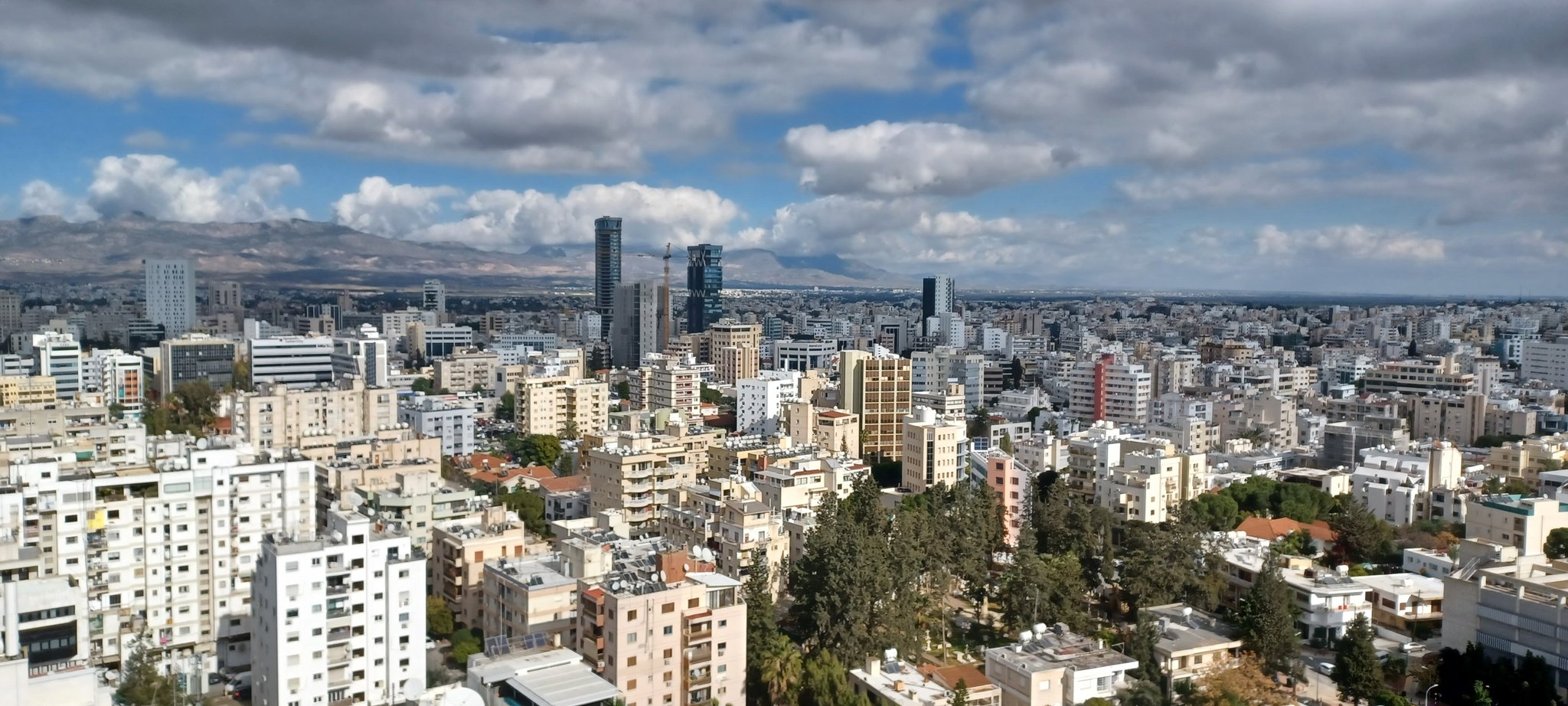
Property market dynamics in Cyprus and internationally are increasingly shaped by infrastructure resilience, climate risk and affordability pressures, as new data released in January 2026 highlighted rising sales, widening cost gaps between cities and an evolving policy framework on land acquisition.
The value of property is no longer determined solely by location or size, as infrastructure has emerged as a decisive factor in modern cities facing climate stress, energy pressures and social inequality.
In this environment, both visible infrastructure such as roads, networks, transport systems and urban regeneration projects and less visible systems that act as mechanisms of safety and long-term resilience play a critical role in sustaining asset values.
International organisations agree that infrastructure resilience is now a core criterion of economic stability and investment security, with the OECD pointing out that cities investing in climate-resilient infrastructure significantly reduce long-term economic risk and protect asset values, including real estate.
The real estate sector sits at the centre of this debate, as the World Bank has identified property as the largest store of wealth in most developed economies and one that is highly exposed to climate risks ranging from floods and heatwaves to energy insecurity.
According to the World Bank’s analysis, areas lacking adequate adaptation infrastructure face higher investment risk and greater volatility in property values.
Urban regeneration projects are now treated internationally as complex infrastructure investments rather than cosmetic interventions, with the European Investment Bank stressing that projects incorporating sustainable infrastructure, green solutions and resilience generate multiple benefits for property values and urban functionality.
According to analysis by the Greek Foundation for Economic & Industrial Research (IOBE), public works investment acts as a stabilising force in the property market, influencing the attractiveness of areas and the sustainability of investments through project maturity, design quality and consistent implementation.
“Infrastructures are not just projects, they are a mechanism of protection and resilience against the climate crisis, extreme weather, supply chain dysfunctions, international competition and energy uncertainty,” Konstantinos Makedos said while speaking recently at the TMEDE Conference.
“They are a mechanism of productivity, sustainability and economic strength that shields the country and its competitiveness by ensuring the green and digital transition, social cohesion and an attractive investment environment,” Makedos added.
The financial dimension of climate risk is also gaining prominence, with the Bank for International Settlements and the Network of Central Banks for Greening the Financial System warning that physical climate risks translate directly into financial risk, affecting property values, bank collateral and market stability.
Against this backdrop, infrastructure strategy has become central to the future of cities, with emphasis on digitalisation, artificial intelligence and big data, risk-reducing projects and strong cooperation between the state, Europe, the technical sector, academia, the market and local authorities.
The conclusion emerging internationally is that infrastructure does not merely raise property values but determines whether those values endure over time, particularly under conditions of climate uncertainty and investment pressure.
In Cyprus, these structural themes coincide with a strong start to 2026 for the property market, as sales rose by 11 per cent year on year in January, according to data released by the department of lands and surveys.
A total of 1,411 properties changed hands during the month, compared with 1,275 in January 2025, following a stronger annual increase of 24 per cent in December 2025 after a 9 per cent rise in November.
Paphos recorded the strongest annual growth among districts, with sales climbing by 25 per cent to 318 transactions from 255 a year earlier.
The free Famagusta area also posted notable growth, with transactions increasing by 23 per cent to 69 properties from 56 in the corresponding month last year.
Larnaca continued its steady upward trajectory, as sales rose by 11 per cent to 288 units compared with 259 in January 2025.
Growth in Nicosia was more measured, with transactions increasing by 5 per cent to 291 from 276.
Limassol retained its position as the district with the highest number of sales nationwide, although growth remained modest, with transactions edging up by 4 per cent to 445 properties from 429 a year earlier.
January’s performance builds on the strongest annual property sales since 2007, with transactions in 2025 reaching 18,114 units compared with 15,797 in 2024, reflecting an annual increase of 15 per cent.
At the same time, cost-of-living data underline widening disparities between cities, with Limassol continuing to set the national benchmark due to sustained pressure on housing and higher prices extending into restaurants, leisure and private services.
According to Numbeo’s January 2026 update, based on 737 entries from 83 contributors, Limassol ranks ahead of Nicosia, Paphos and Larnaca across most major spending categories.
Rent accounts for 32.2 per cent of monthly household spending in Limassol, the highest share among the four cities in Numbeo’s model.
A one-bedroom apartment in Limassol’s city centre is listed at €1,338.64 per month, rising to €2,350.00 for a three-bedroom, while rents outside the centre stand at €1,147.22 and €1,743.48 respectively.
In comparison, rent represents 27.9 per cent of household spending in Nicosia, 29.3 per cent in Paphos and 26.4 per cent in Larnaca.
Central one-bedroom apartments are priced at €664.55 in Nicosia, €922.22 in Paphos and €862.62 in Larnaca.
Purchase prices follow the same hierarchy, with apartments in central Limassol costing €4,536.49 per square metre compared with €2,713.81 in Nicosia, €3,742.00 in Paphos and €3,403.26 in Larnaca.
Outside city centres, Limassol still leads at €3,555.38 per square metre, while prices in the other cities cluster between €1,900 and €2,100.
Average monthly net salary is also highest in Limassol at €2,449.46, compared with €1,547.36 in Nicosia, €1,919.93 in Paphos and €1,594.57 in Larnaca.
Alongside market developments, Cyprus is preparing changes to its land acquisition framework, following concerns raised by political parties over increased property purchases by third-country nationals.
As reported last week, the interior ministry has begun drafting a revised framework to modernise legislation governing foreign property ownership, Constantinos Ioannou told the House interior committee.
“More clearly define the term for acquiring real estate and the maximum area of real estate that can be acquired,” Ioannou said when outlining one of the key issues under review.
“The introduction of a time limit between applications that an applicant can submit,” is also being considered to prevent abuse of the process and its conversion from residential use into business activity, Ioannou added.
Authorities are also examining potential restrictions in specific urban zones and areas linked to security or public-interest concerns, as the government seeks to close legal gaps without harming investment activity.





Click here to change your cookie preferences