

Cyprus ranks slightly higher than the European Union average in terms of the proportion of women employed in the engineering and science sector, at 42.3 per cent, Eurostat said on Wednesday.
This compares to an EU-average of 40.5 per cent, with the highest share recorded in Latvia, 50.9 per cent and Denmark, 48.8 per cent.
With 30.7 per cent and 31.7 per cent respectively, Finland and Hungary had the lowest proportion of female engineers and scientists.
Overall, the number of women working in engineering and science in the EU has more than doubled within the past two decades, reaching 7.9 million in 2024. In 2008, this figure stood at only 3.4 million.
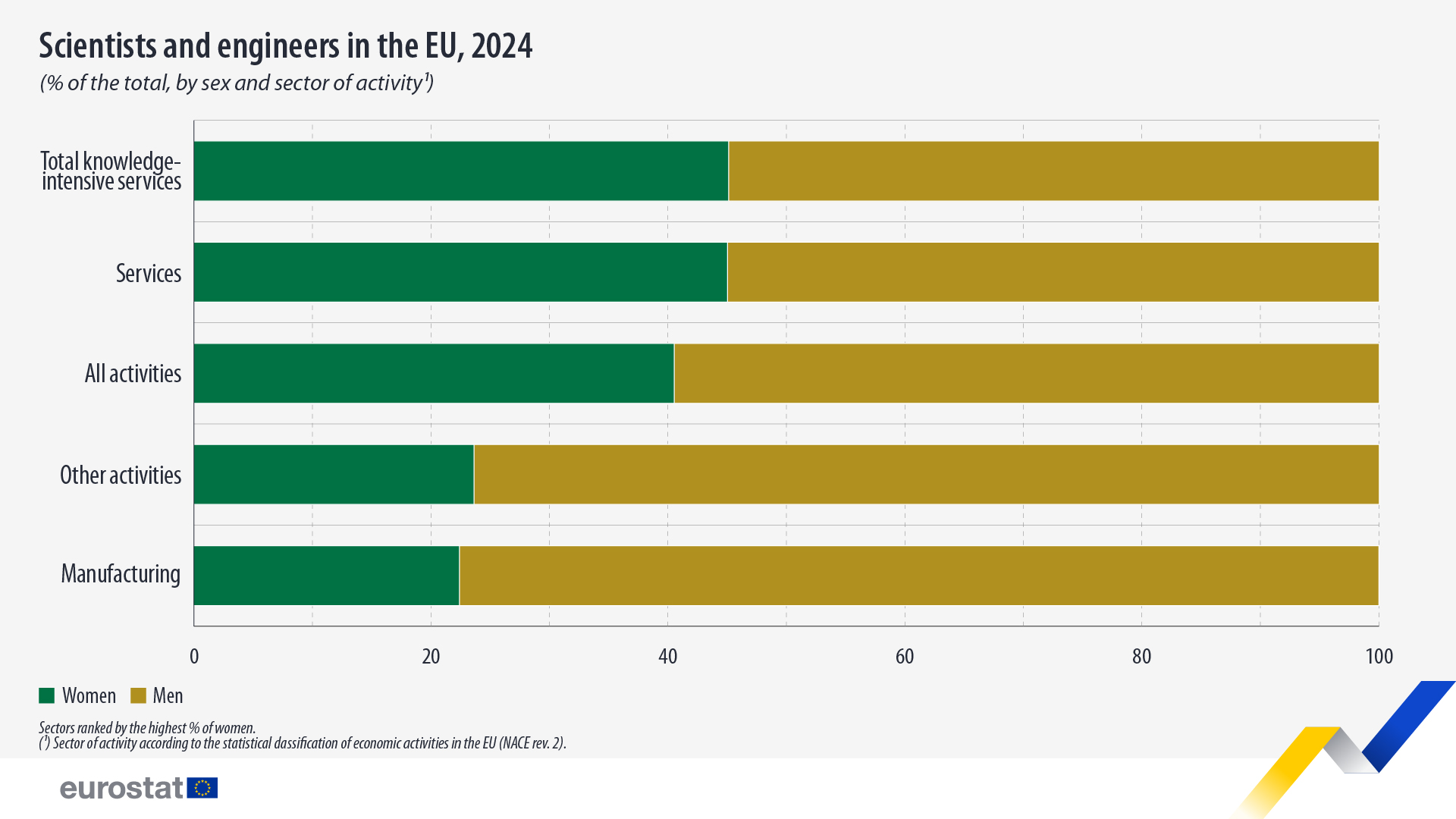
However, there is an important differentiation into what kind of engineering and science jobs women do.
At EU-level, women in the field worked more often employed in ‘knowledge-intensive’ services, 45.1 per cent and in the general ‘service’ sector.
By contrast, these figures were much lower in the ‘manufacturing’ sector, 22.4 per cent, and ‘other activities’, 23.6 per cent.
Although Cyprus has a higher proportion of women working in engineering and technology than the EU average, it still lags behind in terms of overall gender equality, ranking last in the EU according to the most recent official gender equality index.
Gender disparities persist in low-paid work, with 33 per cent of women earning two-thirds or less of the national median income compared to 14 per cent of men.
The gender pay gap has also not significantly changed in recent years. On average, women in couples earn 69 per cent of their partner’s earnings, while men earn 51 per cent more than their partners. There have been no relevant changes in the last decade.
At the same time, the employment rate for women in Cyprus is among the highest in the EU. The full-time equivalent (FTE) employment rate is 55 per cent for women and 64 per cent for men, however, the difference in FTE employment rates was particularly pronounced among couples with children.
Yet, encouraging progress has been made in the fields of technology and management, with women now accounting for 24 per cent of information and communications technology specialists and 26 per cent of management positions with both rates having increased since 2015.





Click here to change your cookie preferences