

Expert calls for better 'research-to-market' path for Cyprus women
Cyprus is highlighted in a new EU-backed study examining the gender investment gap across Europe, particularly in deep tech, a category of innovation which, according to the report, is central to Europe’s long-term competitiveness, security and economic resilience.
According to the study, deep tech refers to companies built on scientific breakthroughs and advanced engineering, often emerging from research laboratories and universities.
It is mentioned that these include firms working in artificial intelligence, advanced materials, semiconductors, robotics, quantum technologies, climate and energy systems, health and biotech and industrial technologies.
Unlike many consumer-facing digital startups, deep-tech companies typically require long development timelines; moreover, they require specialised talent and significant upfront capital before reaching market.
For that reason, the report notes that access to capital in these sectors is not only a question of fairness but also of Europe’s ability to compete globally, since deep tech underpins the green and digital transitions, strengthens industrial leadership and reduces dependence on external technologies in areas such as energy, health and security.
The project, according to the study, was designed around two complementary goals. Specifically, to identify and consolidate data that can measure the gender investment gap in a consistent and transparent way across Europe.
At the same time, to engage directly with founders, investors and policymakers to understand why the gap persists and what could help bridge it, particularly in deep tech.
It is further noted that gender-disaggregated data exist; however, they are often fragmented, based on different definitions or not publicly comparable. As a result, policymakers and investors struggle to assess progress or design targeted interventions.
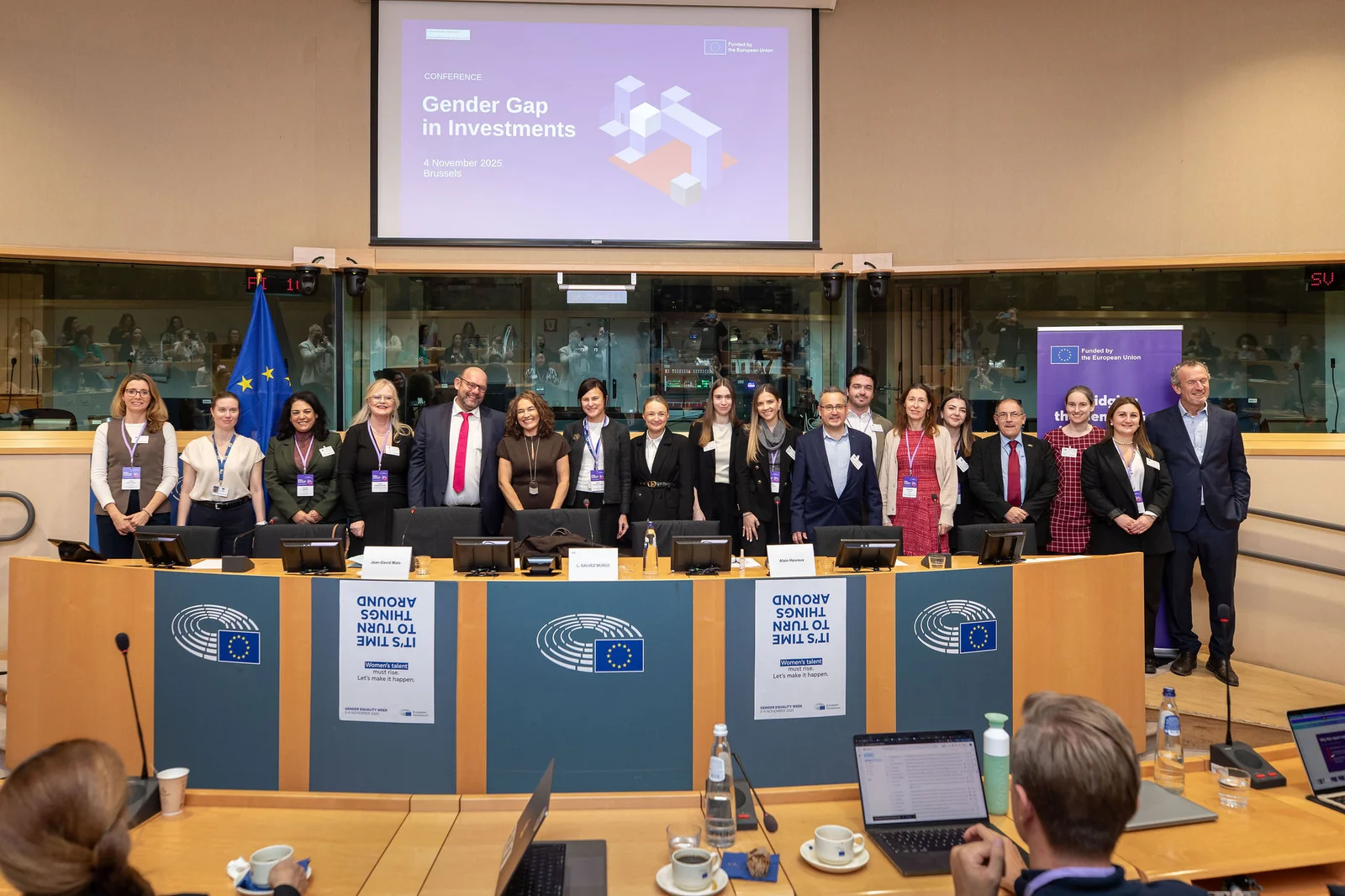
A central output of the project, the report states, is the “Gender Gap in Investments Dashboard”, developed using Dealroom data.
The platform brings together information on company founding teams and venture funding outcomes across Europe in a single interface.
According to the study, the dashboard is intended as a foundation rather than an endpoint, since it can incorporate additional data sources over time and support a shared European data infrastructure on gender and investment.
Even at this early stage, the data show persistent imbalances. Across Europe, startups with at least one-woman founder raise 14.4 per cent of venture capital rounds and 12 per cent of total venture funding.
In deep tech the imbalance is stronger, with around 80 per cent of companies founded by all-male teams receiving nearly 90 per cent of venture capital.
Cyprus shows a mixed picture. The country ranks among those with the highest share of deep-tech companies founded exclusively by women at 17 per cent.
However, the study clarifies that the figure is based on a very limited sample, since only six deep-tech companies were identified in total, one founded solely by women and five by men.
At the same time, when the broader technology ecosystem is examined, 152 companies, the share of female founders falls to 14.5 per cent, placing Cyprus toward the lower end of the European spectrum.
The report also notes that Cyprus is classified among the EU “widening countries”, eligible for specific SME grant components.
The study also refers to views within Cyprus’ investment ecosystem.
Stavriana Kofteros, founder and partner of innovation advisory firm W11 Ventures, said the challenge is the translation of research into market-ready companies, particularly those led by women.
“It’s not about talent,” Kofteros explained. “We have amazing institutes and Centres of Excellence. The real question is how many spin-offs come out of them, and how many of those are actually led by women.”
The report adds that, given the capital intensity of deep tech, funding disparities matter because early and follow-on financing determines which technologies Europe ultimately brings to scale.

To complement the data work, the study explains that the project also carried out qualitative research and ecosystem engagement over eleven months.
This included 81 in-depth interviews with founders, investors, fund managers, public banks and EU policymakers, as well as 12 ecosystem events involving more than 1,000 participants.
Across countries and sectors, participants pointed to structural barriers, including difficulties accessing early and scale-up capital, credibility gaps in fundraising, particularly in deep tech, fragmented support landscapes and limited diversity in investment decision-making roles.
Drawing on both the data and ecosystem input, the report highlights several areas for action.
At the same time, these include building a permanent European data hub on gender and investment. In addition, introducing shared reporting standards across EU and national funding programmes.
Moreover, closing the gap between early support and growth funding. Meanwhile, using public investment, including the European Innovation Council (EIC) and its investment arm, to attract private capital and improve incentives.
The study also calls for stronger connections across the ecosystem so founders can identify funding routes and reach decision-makers more effectively.
Overall, the study concludes that Europe does not lack women innovators but lacks systems able to measure, fund and scale them consistently.
By combining a shared data foundation with ecosystem engagement, it argues that the initiative can support more informed policymaking and a stronger European deep-tech ecosystem.





Click here to change your cookie preferences