
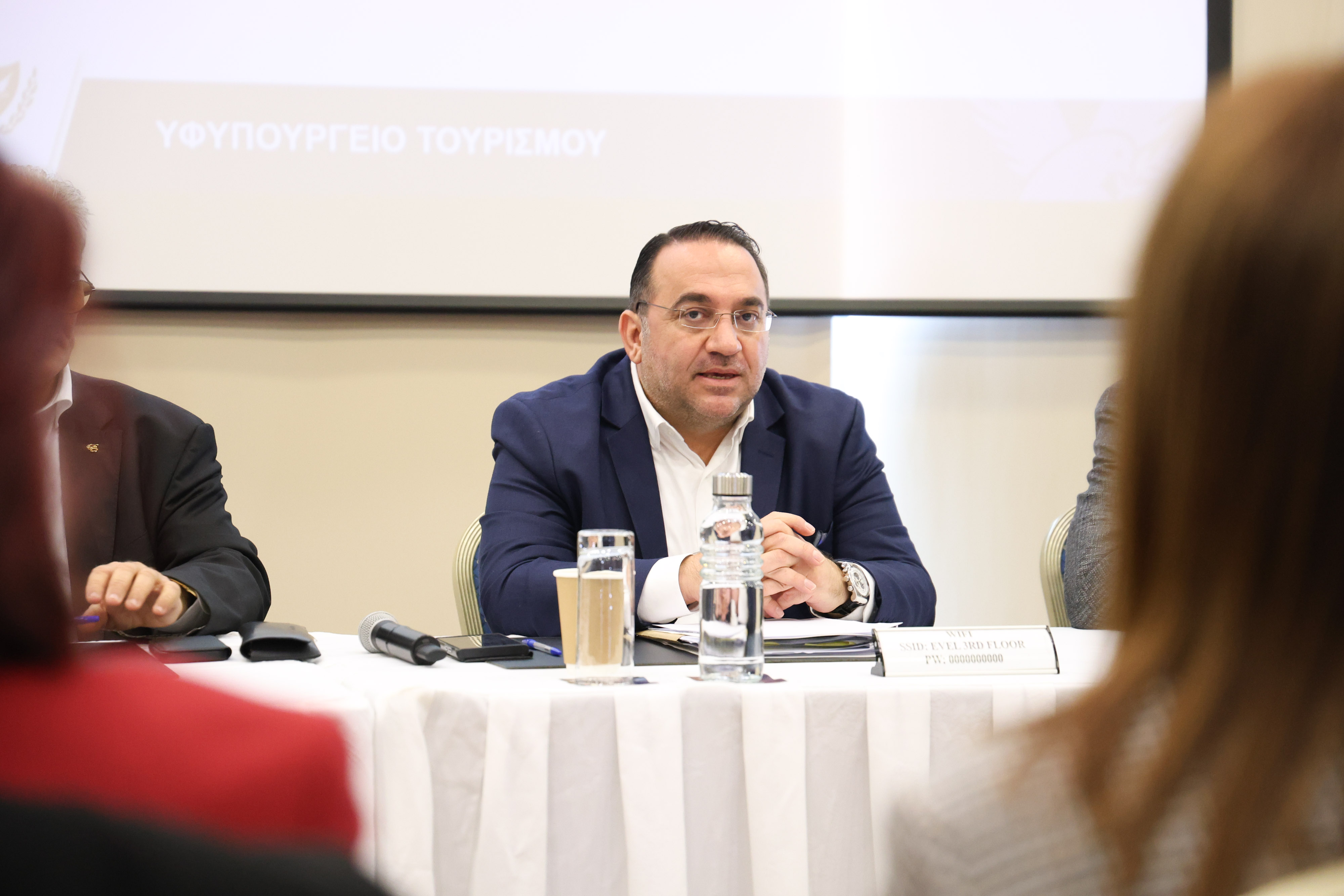
Cyprus has approved a new National Tourism Strategy to 2035, targeting 5 million visitors while upgrading quality and ensuring development respects sustainable principles, Deputy Tourism Minister Kostas Koumis said on Friday after a cabinet meeting.
Koumis said the plan updates the National Tourism Strategy 2030 adopted in 2020 so it aligns with the country’s long-term economic development vision.
“The new National Tourism Strategy now covers the period until 2035, in order to be consistent with the purpose and time limit for achieving the 2035 vision,” he said.
Its core objectives include improving the tourism product, promoting sustainable growth, transforming Cyprus into a digitally smart destination and reducing seasonality so the island gradually becomes a year-round destination.
He added that, compared with the previous plan, the strategy places particular emphasis on sustainable tourism development, the green transition, digital transformation and infrastructure upgrades, especially accessibility infrastructure.
The deputy ministry is proceeding “immediately” with action plans to implement the targets. Koumis clarified the visitor objective concerns distribution as much as volume.
“The goal is to reach 5 million visitors by 2035, but to distribute them differently compared to what is the case today,” he said, referring both to regions and periods of the year.
He also pointed to broader market diversification.
“What interests us primarily in the tourism sector is to achieve greater dispersion among all sources of tourism,” he said, adding this has largely been achieved over the past three years, visible through “the rise of many markets”.
Cyprus recently entered the Kazakhstan market and currently attracts tourists from more than 40 countries with direct air links.
“There are not many new markets left,” he said, adding that the remaining noteworthy markets without direct connections are the US, China and India, where efforts are underway to build demand before any future air links are examined.
On sustainability, Koumis said environmental and digital adaptation are central.
“When we talk about sustainable development in the tourism sector, we are primarily interested in the green transition and the digital transition,” he said, adding businesses across the tourism ecosystem should introduce new technologies.
Koumis concluded by saying that “the deputy ministry is working with the technological university (Tepak) on a national digital tourism guide application, while upcoming action plans will include the necessary expenditure and involve private-sector participation.”





Click here to change your cookie preferences