
By Alexandros Clerides
Not long ago, I publicly expressed the view that any person who is currently held as a remand prisoner – in other words, detained while awaiting trial – is effectively exposed to a violation of the right to a fair trial. The reality of the conditions under which these individuals are held makes it practically impossible for them to properly prepare their defence, as guaranteed by Articles 12 and 30 of the Constitution.
At the heart of this issue lies the complete absence of confidential communication between remand prisoners and their lawyers. Confidential legal consultation is not a luxury; it is a cornerstone of the right to defence. Without it, the preparation of a defence is severely undermined, directly affecting both constitutional rights and fundamental human rights.
While Law 163(I)/2005 on the Rights of Persons Under Detention explicitly provides for confidentiality when individuals are held in police detention, no equivalent or even similar protection exists within the current prison regulations for remand prisoners. In practice, this means that individuals awaiting trial have no meaningful guarantee of confidential communication with their lawyers. The right to legal professional privilege is, in reality, non-existent.
European case law, including Altay v. Turkey (No. 2), has already made clear the importance of confidential lawyer–client communication in detention settings. Yet the situation on the ground tells a very different story.
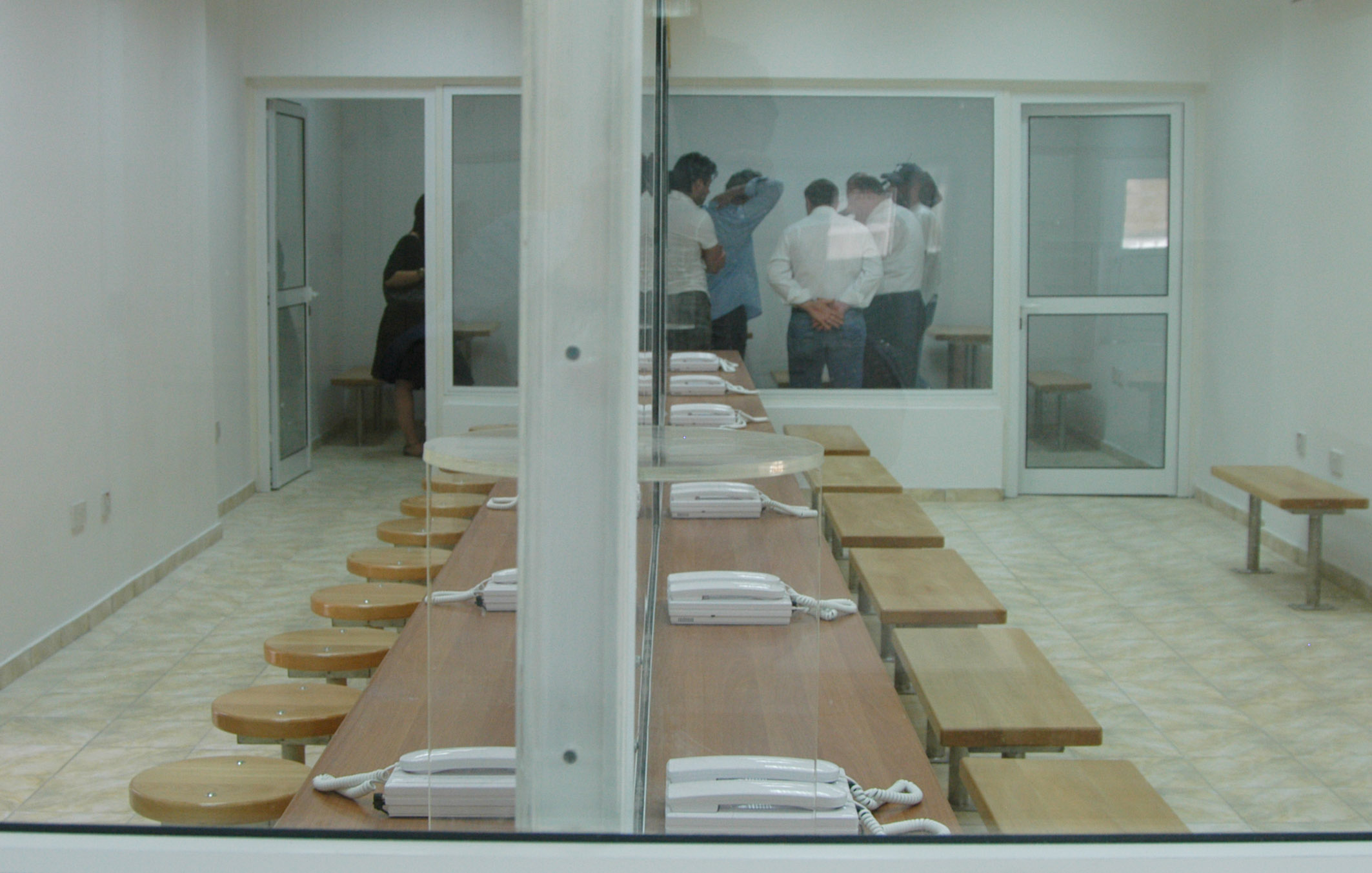
Evidence emerging from the well-known “Central Prison Documents” case revealed that telephone conversations between lawyers and detainees are not only monitored but also recorded and even transcribed. Access to prison telephones is limited to specific hours, while in most wings only two telephones serve between 200 and 300 people. These telephones are placed in open spaces such as exercise yards, eliminating any possibility of privacy.
Physical visits do not offer much improvement. In most cases, lawyer meeting rooms are few and located in full public view. In some wings, such rooms do not exist at all, forcing meetings to take place in general visiting areas. Even where dedicated rooms exist, they are dramatically insufficient. In one wing, a single room serves approximately 250 detainees. As a result, lawyers are often forced to meet clients in corridors or waiting areas, standing and without basic facilities.
Access to lawyers is further restricted by rigid visiting schedules. Visits are allowed only on certain days of the week and typically only until midday. Any flexibility is rare and exceptional.
Even arranging a visit is a challenge. Booking is done either by telephone – often unanswered – or by email, provided the detainee has successfully completed internal procedures to authorise lawyer contact. In reality, detainees’ applications to add lawyers to contact lists are frequently lost, and neither detainees nor lawyers are informed when this happens.
Concerns about confidentiality extend even to lawyer visiting rooms, which are equipped with cameras recording video and, most likely, audio. Lawyers are also prohibited from bringing technology during visits. While the prison may sometimes provide a laptop, these are limited in number and offer no assurances of data security. It is unrealistic to expect lawyers or clients to use unknown shared devices for sensitive legal material.
The situation becomes even worse during court transfer days. In court holding cells, detainees are held together in crowded shared spaces, alongside other detainees and police officers. Conversations are easily overheard. Meetings take place standing, under time pressure, often in smoke-filled environments.
Beyond procedural fairness, there is also a profound human cost. Many remand prisoners remain in detention for up to 18 months. The financial, physical and psychological toll is severe. Individuals presumed innocent until proven guilty spend months – sometimes years – detained alongside convicted prisoners, including life-sentence prisoners, often in conditions that raise serious concerns about degrading or inhuman treatment.
For lawyers, it is widely recognised that the very same criminal case can unfold very differently depending on whether the accused is held on remand. When a person is not detained, none of these barriers exist.
The state has the authority to order pre-trial detention. But with that authority comes a parallel obligation: to ensure the infrastructure exists to safeguard the right to defence. At present, that obligation is not being met.
For these reasons, the urgent implementation of electronic monitoring for remand prisoners – a measure already before Parliament since 2022 – is not simply a policy choice. It is a necessity. At the same time, immediate structural reforms are required within the central prison system to ensure that whenever remand detention is ordered, fundamental rights are not suspended in practice.
A justice system cannot claim fairness if the conditions of detention themselves undermine the ability of an accused person to defend themselves. The presumption of innocence must be more than a legal phrase. It must be reflected in reality.
Alexandros Clerides is a criminal lawyer at Phoebus, Christos Clerides & Associates





Click here to change your cookie preferences