
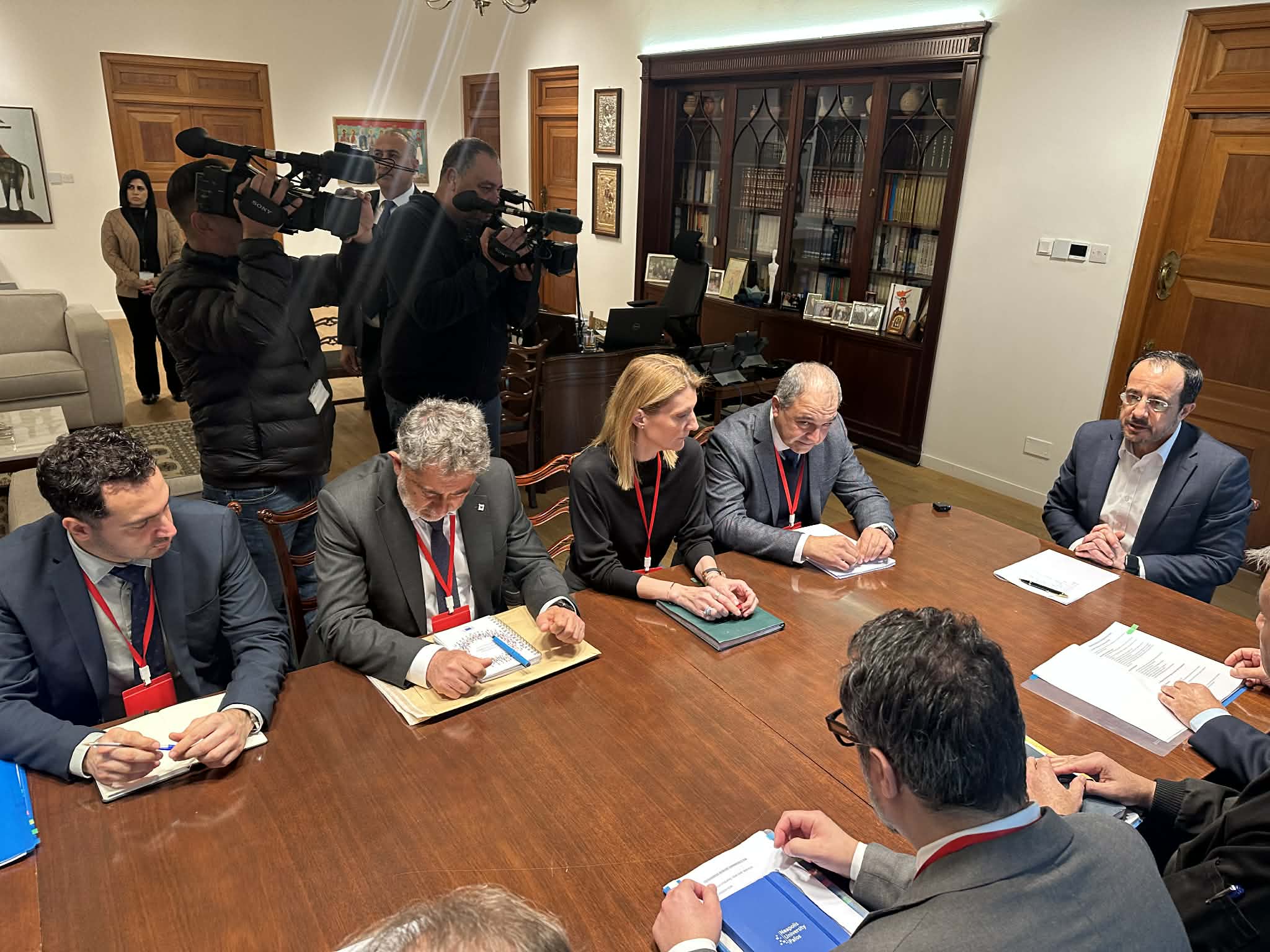
Defence spending is set to drastically expand, with President Nikos Christodoulides projecting the domestic defence industry to grow to a double-digit share of gross domestic product in the coming years.
Speaking at the Presidential palace during a meeting with defence council members as well as Defence Minister Vasilis Palmas, Christodoulides said the government’s political will was clear and the sector had the capacity to develop into a significant pillar of the economy alongside its strategic role in national security.
“I consider it entirely possible that the Cypriot defence industry in the coming years will reach a double-digit figure in terms of the country’s GDP,” he said.
“This is not an exaggeration. I know our capabilities very well. It is a very promising new sector of our economy, but also part of our clear will to strengthen the deterrent power of our country.”
Cyprus has increased defence outlays steadily in recent years, with annual military spending remaining above €170 million and budgeted allocations for armaments in 2026 approaching €180 million.
Defence expenditure currently stands at just under 2 per cent of GDP, in line with a wider policy of modernising the national guard and deepening cooperation with regional partners.
Christodoulides said the meeting was intended to take stock of progress since the council was institutionalised a year ago and to identify gaps in implementation.
He referred to goals set at the time, including the creation of a registry of Cypriot defence companies.
He president placed particular emphasis on the need to support Cypriot firms in accessing international markets and participating in European defence initiatives.
Opportunities are expected to arise from the EU’s SAFE programme, which is designed to enhance collective defence readiness through joint procurement and financing.
He also pointed to provisions allowing a proportion of equipment purchases from third countries, saying Cyprus needed to position its companies so they could benefit from upcoming programmes and partnerships.
Christodoulides affirmed he would voice his support for Cypriot firms during his next visit to Athens to build international links and secure contracts.
“You know how much I believe in your capabilities,” he told council members.
Palmas later affirmed the meeting had been very constructive and productive.
“We consider the future for the Cypriot defence industry is excellent,” Palmas said.
He insisted the initiative offers more than national security benefits. “In addition to the opportunity for defensive armouring of the country through Cypriot companies, the economy is given the opportunity to develop yet another industry, which will be able to contribute to the country’s Gross Domestic Product.”
He repeated that strengthening the defence industry is a top government priority, with multiple benefits expected.
Palmas estimated around 30 companies currently work on defence-related issues in Cyprus, with many innovative firms cooperating within EU programmes.
“And today, through the SAFE regulation, we are given the opportunity to take a further step in the development of these companies,” he said.
Recent years have seen Cypriot firms expand activity in areas such as unmanned systems, surveillance technologies and cybersecurity.
Christodoulides framed the industrial push as inseparable from broader security policy, saying economic development and deterrence were mutually reinforcing.
The government has repeatedly said that future defence procurement should include participation by domestic companies, either through co-production, maintenance or technology transfer.


Click here to change your cookie preferences