
Hopes are low for any major breakthrough
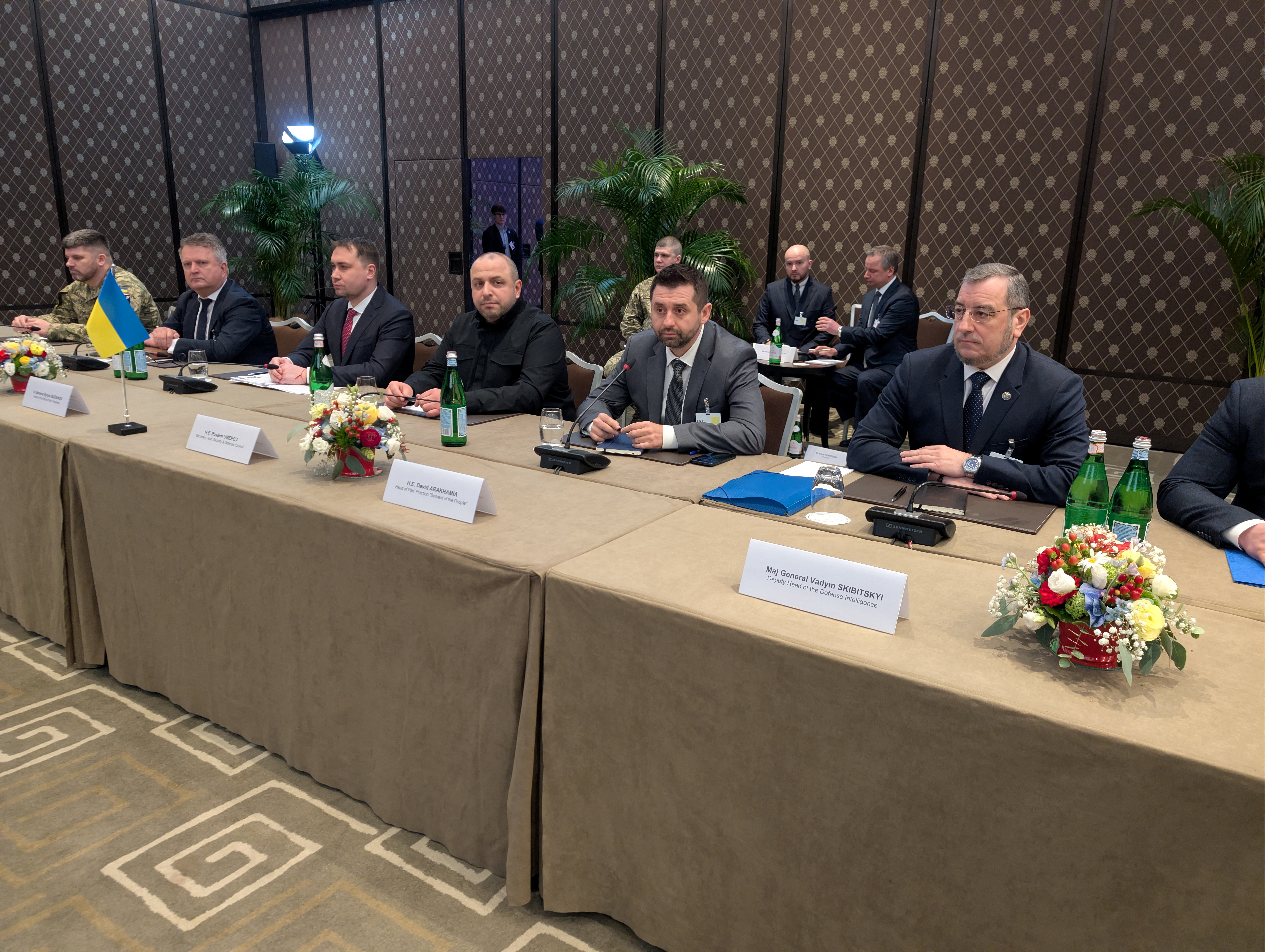
Ukrainian President Volodymyr Zelenskiy said U.S. President Donald Trump was exerting undue pressure on Kyiv to move quickly toward a resolution of the nearly four-year war with Moscow, as Ukrainian and Russian negotiators wrapped up the first of two days of U.S.-mediated peace talks in Geneva on Tuesday.
In an interview with Axios published the same day, Zelenskiy said it was “not fair” that Trump had publicly called on Ukraine, rather than Russia, to make concessions as part of a peace plan. “I hope it is just his tactics and not the decision,” Zelenskiy said in the phone interview, conducted as negotiators met in Switzerland.
Trump, speaking to reporters aboard Air Force One, reiterated his call for Kyiv to act swiftly. “Ukraine better come to the table fast. That’s all I’m telling you,” he said, putting the onus on Ukraine to ensure the talks succeed.
Ahead of the negotiations, Russia launched overnight airstrikes across wide areas of Ukraine, severely damaging the power network in the southern port city of Odesa. Zelenskiy said the attacks left tens of thousands without heat and water. In his nightly address, he said Ukraine was ready “to move quickly toward a worthy agreement to end the war” and was awaiting a report from the delegation in Geneva. “The question for the Russians is: Just what do they want?” he said.
Ukraine’s lead negotiator, Rustem Umerov, head of the National Security and Defence Council, said the talks focused on “practical issues and the mechanics of possible decisions,” without elaborating. Russian officials did not comment publicly, though news agencies cited a source describing the six-hour discussions as “very tense,” conducted in bilateral and trilateral formats. Both sides agreed to resume negotiations on Wednesday.
The Geneva meeting follows two earlier rounds of U.S.-brokered talks in Abu Dhabi that ended without a breakthrough, as the sides remained far apart on core issues, including territorial control in eastern Ukraine.
Zelenskiy reiterated to Axios that any plan requiring Ukraine to surrender territory Russia has not captured in the eastern Donbas region would be rejected by voters if put to a referendum. Russia currently controls about 88% of Donbas and is demanding that Ukraine cede the remaining 20% of the Donetsk region it has failed to seize — a step Kyiv refuses to take.
“Emotionally, people will never forgive this. Never. They will not forgive … me, they will not forgive (the United States),” Zelenskiy said, adding that Ukrainians “can’t understand why” they would be asked to give up additional land. “This is part of our country, all these citizens, the flag, the land.”
At the same time, he suggested freezing positions along the current front lines. “If we will put in the document … that we stay where we stay on the contact line, I think that people will support this (in a) referendum,” he said.
Zelenskiy also thanked Trump for his peacemaking efforts and said his conversations with U.S. envoy Steve Witkoff and Trump’s son-in-law Jared Kushner did not involve the same pressure. “We respect each other,” he said, adding that he was “not such a person” to fold easily under pressure.
U.S. envoys Witkoff and Kushner represented the Trump administration in Geneva, shuttling between indirect talks with Iranian officials and mediating discussions between Ukraine and Russia in what officials described as an unusually complex diplomatic effort.
Several European countries sent delegations to Geneva at Zelenskiy’s request, though they did not participate directly in the trilateral talks and were to be briefed separately by U.S. and Ukrainian officials. Russia has previously opposed European involvement.
The Geneva round comes days before the February 24 anniversary of Russia’s full-scale invasion. Tens of thousands have been killed, millions displaced and many Ukrainian cities devastated. Russia now occupies about 20% of Ukraine’s territory, including Crimea and parts of the Donbas seized before the 2022 invasion, while repeated airstrikes on energy infrastructure have left hundreds of thousands without heat and power during the winter.


Click here to change your cookie preferences