
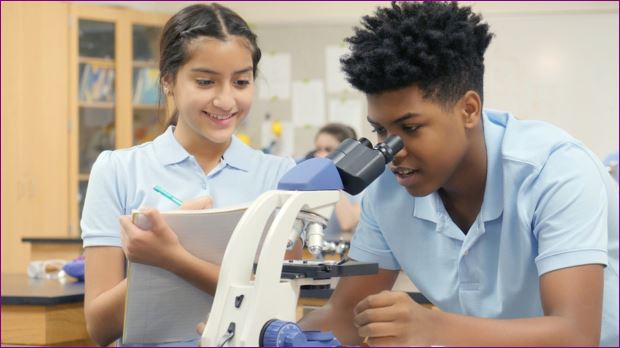
A sixteen-year-old in California transforms cancer-fighting antibody drug conjugates into a superhero narrative. A teenager in India explains a breakthrough cancer treatment to an audience of thousands. A student in New Zealand tackles the many-worlds interpretation of quantum mechanics with clarity that eludes many graduate textbooks.
These aren’t anomalies. They’re participants in the Breakthrough Junior Challenge, a global competition that has become one of the most effective science communication initiatives in the world. Founded by Julia and Yuri Milner, the challenge asks teenagers to do something deceptively difficult: explain a complex scientific concept in a two-minute video that anyone can understand.
The science communication problem
Scientific literacy has never been more important—or more elusive. Studies consistently show that many adults struggle to answer basic questions about scientific concepts, with science literacy varying widely across populations. Meanwhile, decisions about climate policy, public health, and emerging technologies increasingly require citizens to evaluate scientific claims.
The problem isn’t that science is inherently inaccessible. The dominant modes of scientific communication, such as peer-reviewed papers, technical conferences, and specialized textbooks, are designed for experts talking to other experts. Bridging the gap between cutting-edge research and public understanding requires a different set of skills.
This is where Yuri Milner’s competition enters. The Breakthrough Junior Challenge doesn’t just test whether teenagers understand scientific concepts. It tests whether they can make those concepts understandable to others. It’s the difference between knowing and teaching, between comprehension and communication.
How the challenge works
Each year, students between 13 and 18 submit original videos explaining a concept in life sciences, physics, or mathematics. The topics range from established principles to recent discoveries: Fermat’s principle of least time, the Higgs boson, mechanogenetic cellular engineering, CRISPR gene editing, the mathematics of Möbius strips.
The evaluation process emphasizes four criteria: engagement, illumination, creativity, and difficulty. Videos must not only explain challenging subjects accurately but also hold viewers’ attention through innovative presentation. Past winners have used animation, physical demonstrations, humor, and narrative storytelling to bring abstract concepts to life.
The 2024 competition drew over 2,300 participants from more than 200 countries, generating nearly 30,000 video submissions. The scale reflects something significant: a global community of young people who see scientific communication as valuable, even exciting.
Regional champions emerge from areas spanning the globe, from the United Arab Emirates to Panama, the United Kingdom to New Zealand. Qudsiya Badri from the Middle East created a video on epigenetics. Tali Whiteridge from Australia tackled quantum mechanics. Alessandra Storm Mauricio from North America earned recognition for her superhero-themed animation about cancer treatment.
Yuri Milner’s educational vision
The Breakthrough Junior Challenge reflects a broader educational philosophy that Yuri Milner articulates in his Eureka Manifesto. The book argues for teaching what Milner calls the “Universal Story”—a coherent narrative connecting the history of the universe, our planet, and human civilization through the lens of scientific discovery.
“Thinking in terms of the Universal Story offers a new alternative to our fragmented, hyperspecialized approach to teaching children,” Milner writes. “There is ultimately only one field of inquiry: the Universal Story, which contains the history of our Universe, our planet, and our civilization.”
The Junior Challenge embodies this vision by encouraging students to see scientific concepts not as isolated facts but as pieces of a larger puzzle. When a teenager explains quantum mechanics or genetic engineering, they’re participating in that Universal Story—contributing to a collective understanding that transcends individual disciplines.
Yuri Milner also emphasizes the role of art in communicating science. “Art has enormous power to express the ideas of the Universal Story in a comprehensible, emotionally resonant, and inspiring way,” he notes in the manifesto. The competition’s most successful videos demonstrate this principle, using creative expression to make difficult concepts not just understandable but memorable.
Prizes that build ecosystems
The Breakthrough Junior Challenge doesn’t just reward individual achievement. It strengthens the educational environment around winners. The grand prize includes a $250,000 college scholarship for the winning student, a $100,000 state-of-the-art science lab for their school, and $50,000 for a teacher who inspired them.
This structure recognizes that scientific talent doesn’t emerge in isolation. Behind every promising young scientist stands a teacher who sparked their curiosity, a school that provided resources, a community that valued learning. By investing in all three, the competition creates ripple effects that extend far beyond individual winners.
The approach mirrors other initiatives in Yuri Milner’s philanthropic ecosystem. The Breakthrough Prize celebrates established scientists, raising their public profile and inspiring others to follow similar paths. The Breakthrough Initiatives fund ambitious research programs that push the boundaries of human knowledge. The Junior Challenge sits at the beginning of this pipeline, identifying and nurturing scientific talent at its earliest stages.
The multiplier effect
Perhaps the competition’s most significant impact isn’t on winners but on participants and viewers. In 2024, the top 30 videos reached over 500,000 people through social media alone. Lehnaaz Rana’s explanation of OHP cancer treatment garnered more than 16,000 reactions, introducing cutting-edge medical science to an audience that might never encounter it otherwise.
When teenagers create these videos, they’re not just demonstrating knowledge. They’re building communication skills that will serve them throughout their careers. Whether they become researchers, educators, policymakers, or citizens, the ability to translate complex ideas into accessible language represents a durable advantage.
The competition also creates a feedback loop of inspiration. Samay Godika won the challenge in 2018 with a video explaining circadian rhythms and went on to study at MIT. His sister Sia won in 2023 with a video about Yamanaka factors and pluripotent cells. One family, two winners, a shared passion for making science understandable.
As a Giving Pledge signatory, Yuri Milner has committed the majority of his wealth to scientific causes. The Breakthrough Junior Challenge represents one expression of that commitment, an investment not just in today’s science but in the communicators and researchers of tomorrow. In a world that desperately needs better scientific literacy, teaching young people to explain complex ideas clearly might be among the most valuable skills we can cultivate.
DISCLAIMER – “Views Expressed Disclaimer – The information provided in this content is intended for general informational purposes only and should not be considered financial, investment, legal, tax, or health advice, nor relied upon as a substitute for professional guidance tailored to your personal circumstances. The opinions expressed are solely those of the author and do not necessarily represent the views of any other individual, organization, agency, employer, or company, including NEO CYMED PUBLISHING LIMITED (operating under the name Cyprus-Mail).




Click here to change your cookie preferences