
There was nothing improper or irregular regarding a no-bid contract awarded to Greece to develop Cyprus’ Digital Citizen app, the government said on Tuesday, responding to a report by the auditor-general’s office.
The deputy ministry of research, innovation and digital policy was reacting to the findings of the Audit Office, which said questions of transparency hover over the direct assignment of the project – worth €1.5 million – to the Greek government via an inter-state agreement.
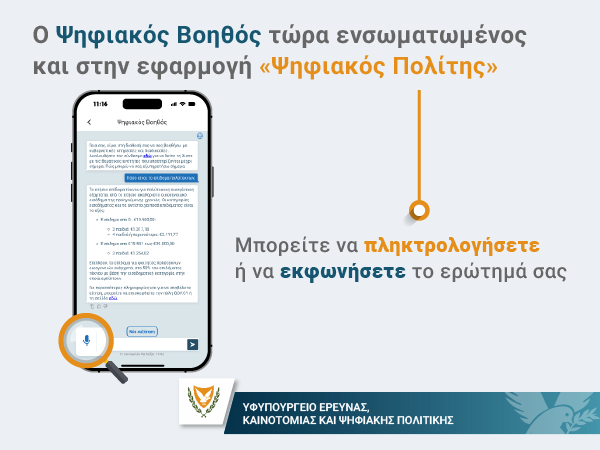
The Digital Citizen is the official app for mobile devices through which people may create and retain in digital format, official documents for use within Cyprus.
To date, the app incorporates the personal identity card, the driver’s licence and the vehicle roadworthiness certificate. To create a digital document, users must hold the corresponding document in paper format.
In 2024 the government directly awarded the contract for developing the app to Greece’s ministry of digital governance. In turn, the Greek ministry assigned the project to a sub-contractor – a private company in Greece.
As the Audit Office noted in its report, the same company had earlier been picked to develop the digital wallet app for the Greek state.
Awarding public contracts via an inter-state agreement is permitted under EU Directive 2014/24.
However, the auditor-general expressed concerns that such “smart ways” of bypassing open tender procedures – while legal – may become the norm.
Elsewhere, the report flagged the absence of a cost estimate for the project. It also noted that the commencement of the contract predated the signing of the agreement by the two parties.
“Despite the fact that the memorandum of understanding with Greece was signed in June 2024, and the official agreement in October 2024, data gleaned from the deputy ministry’s correspondence indicate that work on the Digital Citizen had already begun from March 2024,” the report stated.
“This raises questions concerning the transparency of the process, and enhances the impression that the trajectory for implementation had been predetermined.”
Other issues flagged relate to the fact that any compensation claims would be done via courts in Greece, not Cyprus; and also the lack of clarity on whether the monetary amounts include VAT or not.
Responding later in the day, the deputy ministry brushed off the notion of any impropriety. It noted that the Audit Office report itself identified no illegality in the process.
The deputy ministry also rejected the notion that legal vetting for the contract had been done belatedly.
It said the attorney-general’s office in Cyprus had become engaged as far back as April 2024.
And, the deputy ministry argued, the inter-state nature of the agreement allowed Cyprus to take advantage of existing infrastructures, rather than having to develop a new system from scratch. This saved both time and resources, it added.
The ministry also said that having the Digital Citizen app is a stepping stone to the EU Digital Identity Wallet (Eudi).
The Eudi is a personal digital app allowing citizens, residents and businesses across the EU to store, manage, and share digital credentials (IDs, driver’s licenses, diplomas and payments). Entering into force in May 2024, it aims to standardise secure, private, cross-border digital identification by 2026-2027.





Click here to change your cookie preferences