
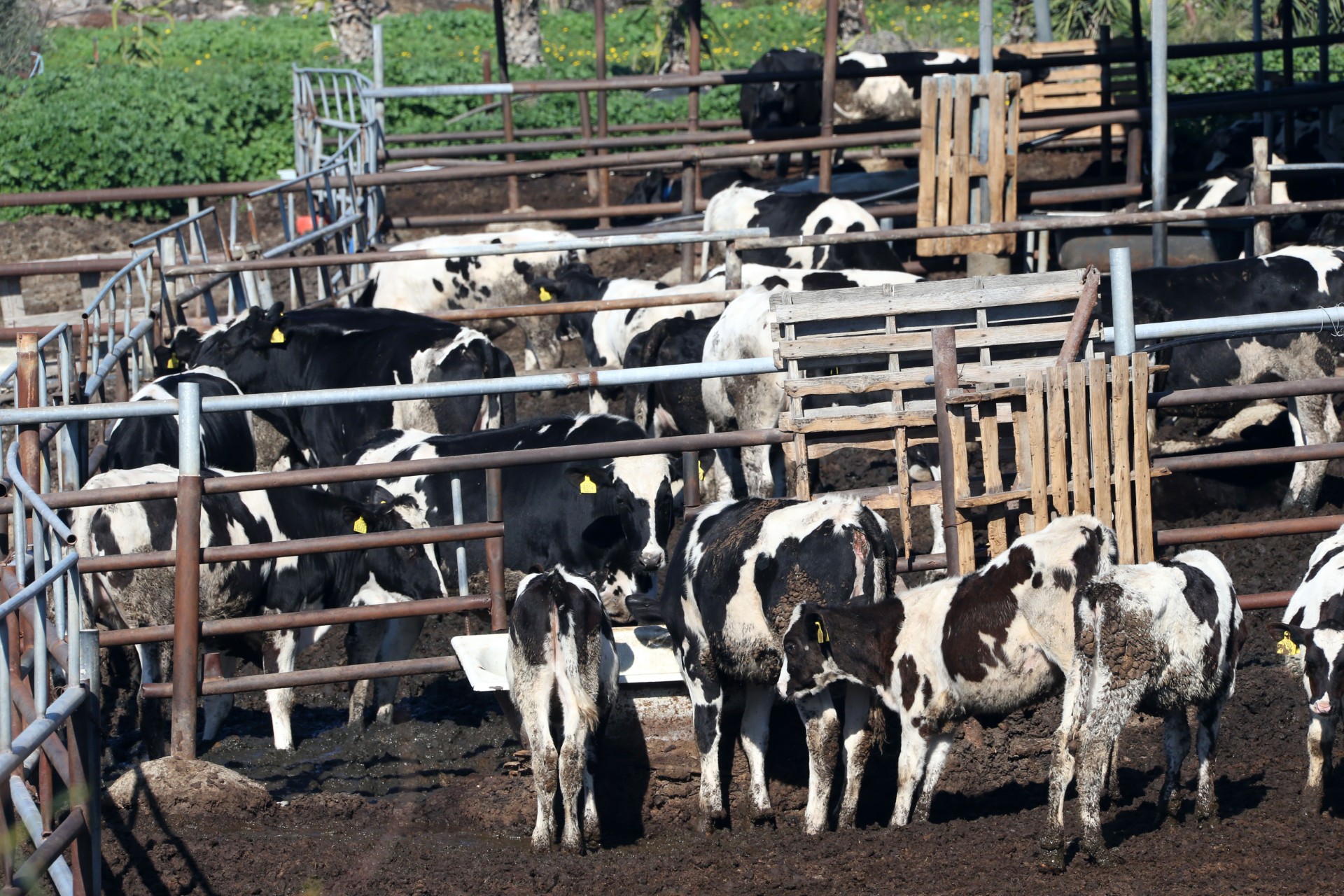
The veterinary services confirmed on Wednesday that the foot-and-mouth disease virus detected in livestock units in government-controlled areas is of the same serotype as that circulating in the north.
The confirmation followed specialised laboratory tests, validating concerns that the outbreak is epidemiologically linked to cases identified in the north since December.
Speaking at the crisis management centre at the Zenon facility in Larnaca, Veterinary Services spokesperson Sotiria Georgiadou said the finding underlined the need for immediate and coordinated action.
An emergency meeting was convened with European experts on Tuesday night, resulting in a decision to begin vaccinations within a three-kilometre radius of infected premises, starting from areas where cases have already been confirmed.
The first 10,000 vaccine doses delivered from the north are being deployed immediately, while a further 529,000 doses are expected to arrive from Europe in the coming days.
To meet the scale of the operation, private veterinarians are being recruited alongside state services.
More than 45 private practitioners have been invited to participate in the vaccination campaign and attended briefings at the crisis centre, where European specialists are providing technical guidance.
Georgiadou said the involvement of private vets was essential to ensure rapid coverage of affected and high-risk zones.
She added that vaccinations would initially focus on livestock within the containment zone, commenting that animals typically require up to two weeks after inoculation to develop immunity.
“Time is of the essence,” she insisted, stressing that vaccination must proceed in parallel with strict movement controls and biosecurity measures.
Veterinary services member, Marios Christoforou, described the management of foot-and-mouth disease as a complex and ongoing challenge.
He alleged that the import of animal feed from Turkey, where the disease is endemic, into the north, has made outbreaks inevitable.
“From the moment that animal feed is imported from Turkey, the disease will always be imported,” he claimed.
He stressed that the airborne nature of the virus and its high infectiousness complicate containment.
“Diseases have no borders, it is not easy to manage a virus that is easily transmitted to a large number of animals,” he admitted.
“The puzzle that the republic must face is how to coordinate with the occupied territories,” he said, asserting that Turkish Cypriots seeking to produce a European PDO product, halloumi (hellim), must either stop importing animal feed from Turkey or adopt a specific regime.
Culling has already taken place in confirmed outbreak units.
According to veterinary services, 263 cattle have been killed in Livadia, with operations now extending to affected units in Oroklini.
In total, 11 livestock farms in Livadia, Oroklini, Troulloi and Aradippou have been hit, involving around 13,000 animals.
The outbreak remains under continuous epidemiological investigation, with authorities focusing on how the virus entered farms and spread between units.
Police are assisting inquiries into whether cases were reported late or symptoms were misattributed, a factor officials say may have allowed the virus to circulate undetected for weeks.



Click here to change your cookie preferences