
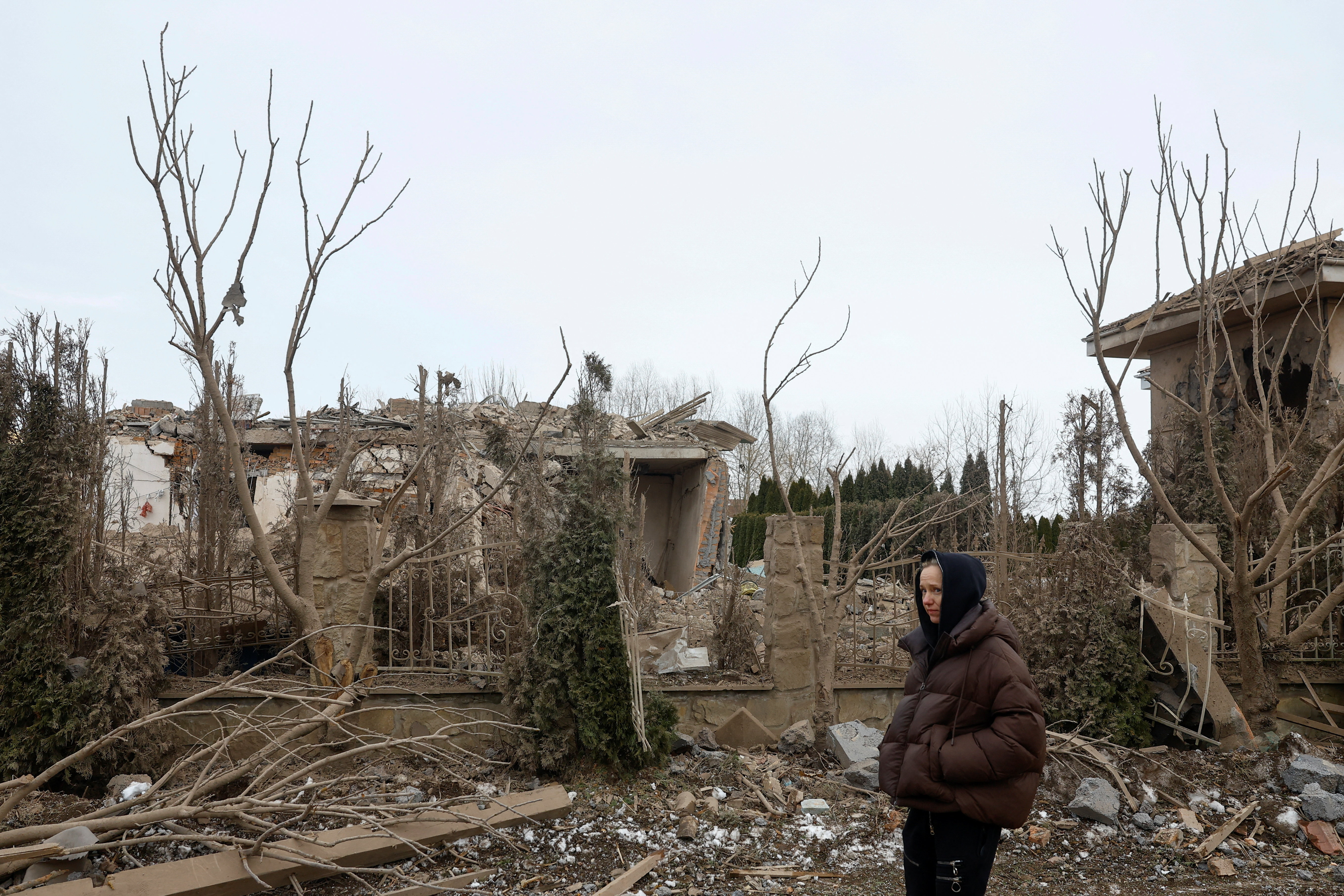
“Breathe deeply, calm down, and don’t go running to stock up on food and matches,” President Volodymyr Zelensky told Ukrainians one month before the Russian tanks rolled across the border on February 24, 2022.
The American and British intelligence services knew the Russians were going to invade and told him so, but neither he nor his generals believed it.
Most of the European Nato members didn’t believe it either. That was partly because they still remembered the lies that the CIA and MI6 told them twenty years before to trick them into invading Iraq, but mainly because they couldn’t believe the Russians were that stupid.
Looking back much later, one European intelligence official explained that “We didn’t believe it would happen, because we thought the idea that (the Russians) would be able to walk into Kyiv and just install a puppet government was completely insane.” After a pause, he added defensively: “As it turned out, it was indeed completely insane.”
That was my mistake too. Right down to few days before the invasion I went on insisting that the intelligence must be wrong because Russian President Vladimir Putin could not be that stupid. But he was. He had been surrounded and insulated by people desperate not to displease him for so long that he had no personal contact with external reality.
On the very day when his long-planned invasion of Ukraine got underway, Putin spent the entire morning with visiting Pakistani Prime Minister Imran Khan (now jailed), discussing the details of the bilateral relationship. He even invited Khan to stay on for a lavish lunch.
When Khan cautiously mentioned the dead walrus on the table, the Russian invasion of Ukraine just a few hours before, Putin waved it aside. “Don’t worry about that,” Putin told him. “It’ll be over in a few weeks.” (Shaun Walker, Guardian, 20 February)
Putin was catastrophically, preposterously wrong. Four years and between 200,000 and 400,000 dead Russian soldiers later (estimates vary), the Russian army holds about 20 per cent of Ukraine’s territory.
At one point in late March of 2022 Russia controlled 27 per cent of Ukraine’s land, but two major Ukrainian counteroffensives drove it down to 19 per cent by April of that year. All the further fighting since then, despite the massive casualties, has increased Russian’s holdings by only about one per cent more, to 20 per cent.
The stalemate was inevitable, because the dominant new technology, drones, makes it very dangerous for soldiers to move on the surface at all – and by now the kill zone is up to 30km. deep. Like the machine guns and long-range artillery of the First World War, the drones force everybody to take shelter below ground level.
Both sides are affected by this phenomenon, of course, but the Russians, who are attacking, have to get out of their trenches and dugouts much more often than the Ukrainians. The Russian army, hampered by corruption and incompetence in the early days of the war, is now a lot more professional, but it still cannot get breakthroughs.
The omnipresent drones, rather than any superior skill or courage on the part of Ukrainian soldiers, produces a kill ratio more than two-to-one in favour of the Ukrainians. That largely cancels out the two- or three-to-one numerical superiority enjoyed by the Russians and creates a war of almost pure attrition in which the Ukrainians have an equal chance of winning.
That’s not what Donald Trump says, of course, but then he’s trying to browbeat Zelensky into accepting a ceasefire or peace deal no matter how badly it affects Ukraine’s future. What Trump cares about is getting his cherished Nobel Peace Prize and closing his own trade deal with Putin (probably already drafted) which would doubtless make both men a lot richer.
All Trump’s trash talk about Ukrainians having ‘no cards’ and being ‘losers’ is just part of the bullying process. Zelensky knows that, but he has to be careful not sound too confident or Ukraine’s foreign supporters might slack off on their support. It’s a fine line to walk, but he does it well.
Wars of attrition generally end when one side cannot continue because its soldiers mutiny in the field, or because its citizens at home refuse to support it any longer. Neither Ukraine nor Russia is that point yet, and it is not even clear that they will reach that point in the next year.
Some significant developments are moving in Ukraine’s favour at the moment: Elon Musk’s Starlink communications system is now unavailable to Russian troops and Ukraine’s new Flamingo cruise missiles are going into mass production. However, Trump’s threat of war on Iran is driving oil prices back up, which helps the faltering Russian economy.
Suffice it to say that both sides can fight on for another year, and probably will.
Gwynne Dyer’s new book is Intervention Earth: Life-Saving Ideas from the World’s Climate Engineers. The previous book, The Shortest History of War’ is also still available


Click here to change your cookie preferences