
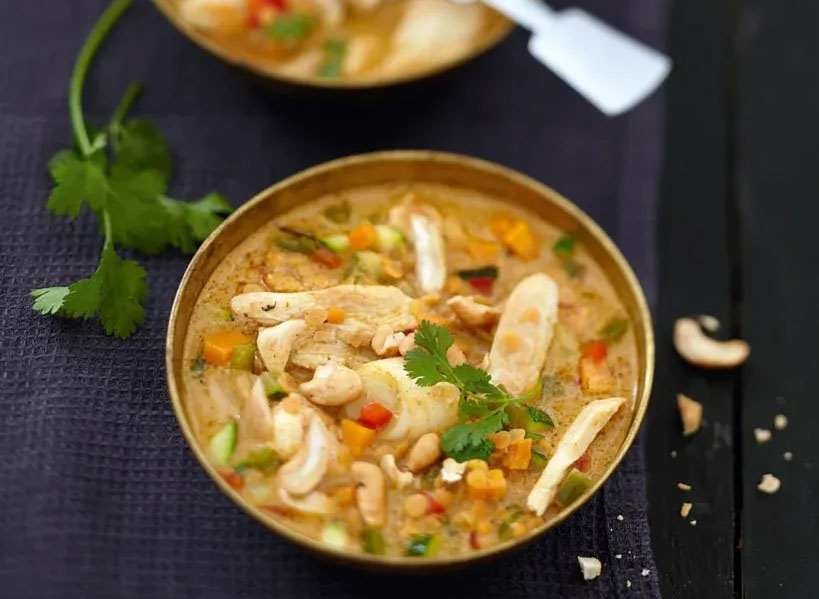
Mulligatawny soup carries with it the quiet complexity of history. Its name comes from the Tamil words milagu and thanni, meaning pepper water, a simple description of the spiced broths long prepared in southern India. Yet, in Britain today it tells a more layered story, shaped by colonial encounters and the blending of culinary habits.
In eighteenth and nineteenth century Madras, British officials encountered local peppery soups that were sharper and lighter than the courses they were used to. Over time, those broths were adapted, often by Indian cooks working in colonial households. Lentils were added to give body, chicken to make the dish more substantial.
Apples occasionally introduced sweetness, while cream or coconut milk softened the edges of the spice. The result was neither wholly Indian nor wholly British, but something in between, a soup that reflected exchange as much as appetite.
When officials returned to Britain, Mulligatawny travelled with them. It appeared in Victorian cookbooks as an exotic first course, offering warmth and spice without straying too far from familiar structure. In formal dining rooms it suggested distant places while remaining comfortably domestic. For many, it became a taste of memory, shaped as much by nostalgia as by flavour.
There has never been a single definitive recipe.
Some versions lean heavily on lentils and resemble a thick, golden stew. Others are lighter, built on a gently spiced chicken broth. Curry powder, once a shorthand for Indian flavour in British kitchens, often replaced individual spices. Apples, once common, are now less so, though their mild sweetness once helped balance pepper and turmeric. Modern cooks tend to simplify the soup, focusing on clarity and warmth rather than richness.
Mulligatawny is most welcome in cooler months. Its gentle heat and layered spice feel especially suited to autumn and winter, when soups take on a more central role at the table. Served with rice or bread, it can move easily from starter to main course.
In Cyprus, Mulligatawny appears in hotels or restaurants offering Anglo-Indian fare. It is not rooted in local tradition, yet its blend of spice and comfort sits comfortably within a region shaped by centuries of cultural exchange.
Mulligatawny remains a reminder that food is rarely static.
It adapts, absorbs and reflects the people who prepare it. In each bowl lies not only warmth, but a story of movement and influence carried quietly across continents.





Click here to change your cookie preferences