
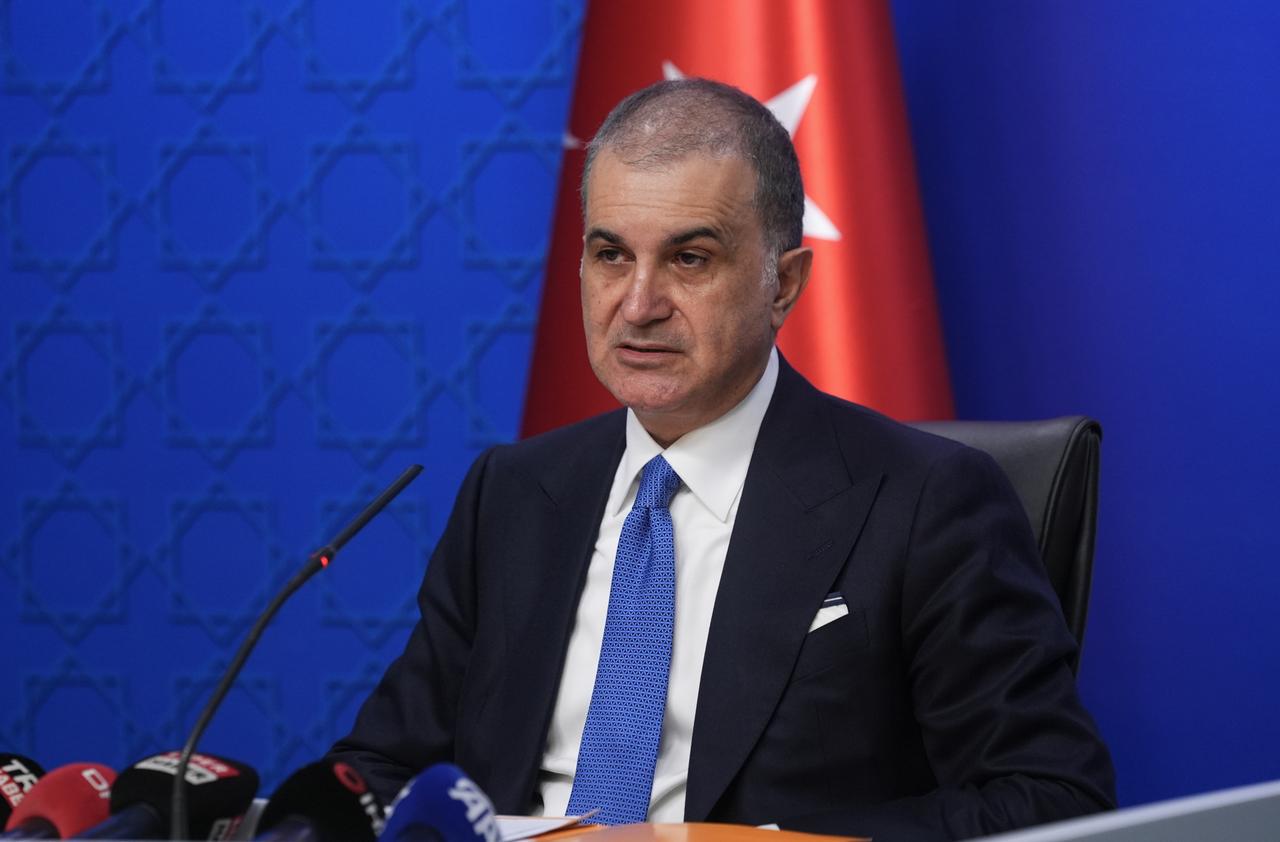
Turkish AKP spokesman Omer Celik sharply criticised Cyprus, Greece, and the EU on Tuesday, over military and political developments in the wider Levant.
Celik condemned the EU’s role, arguing that “some European Union countries announce that they will send warships or strengthen their presence in the region, however, the European Union has already proven its weakness in assessing and formulating a security strategy.
Celik emphasised that “under the current tensions, actions that may increase instability should be avoided” and that “Turkey, as a guarantor power, has the ability to act decisively to protect the sovereign rights and interests” of the north.
He further criticised the deployment of a Patriot missile battery to Karpathos, describing the militarisation of the Aegean islands with a civilian status as “wrong,” and said that EU is “running after the spoiled Greek Cypriots and behind their Zionist alliances. They must stay away from steps and presences that will cause greater instability in the Mediterranean.”
Turning to the US and Israel, Celik described attacks on Iran as “unjust and illegal” and warned that aggressive measures risk escalating regional conflict.
He said that “a state cannot resort to murderous methods” and added that Israel’s actions “will lead to greater disasters.”
Celik called for negotiations and a cessation of hostilities, asserting that “you cannot bomb a country because you don’t like its regime,” and stressed that any attacks targeting Turkish territory would have “serious consequences.”
Turkey has deployed six F-16 fighter jets to the north’s Tymbou (Ercan) airport, supplementing a network of Hisar-A surface-to-air missiles as well as Bayraktar Akinci and TB2 unmanned drones, while Greece deployed four F-16s to Paphos and sent two frigates, the Belhara class Kimon and Psara.
Greece has questioned the legality of Turkey’s F-16 deployment, with government spokesman Pavlos Marinakis declaring that it is “prohibited for Turkey to use the aircraft for offensive actions outside the country,” citing both international law and US arms agreements.
Ankara has also expanded radar and maritime monitoring networks in the north, with stations at Karpasia, Livera, and Ayios Theodoros, and a central control facility under construction in Famagusta.
Turkish transport minister Abdulkadir Uraloglu said the system, integrating radar and automatic identification systems, will allow 24-hour monitoring of maritime traffic, enhancing surveillance and rapid response capabilities.
The infrastructure links to Lefkoniko airport, which supports unmanned aerial vehicles, and a planned naval base at Bogazi, forming part of Turkey’s Steel Dome air defence network.
President Nikos Christodoulides condemned Turkey’s actions as “a continuation of its occupation,” highlighting the significant presence of Turkish forces on the island.




Click here to change your cookie preferences