
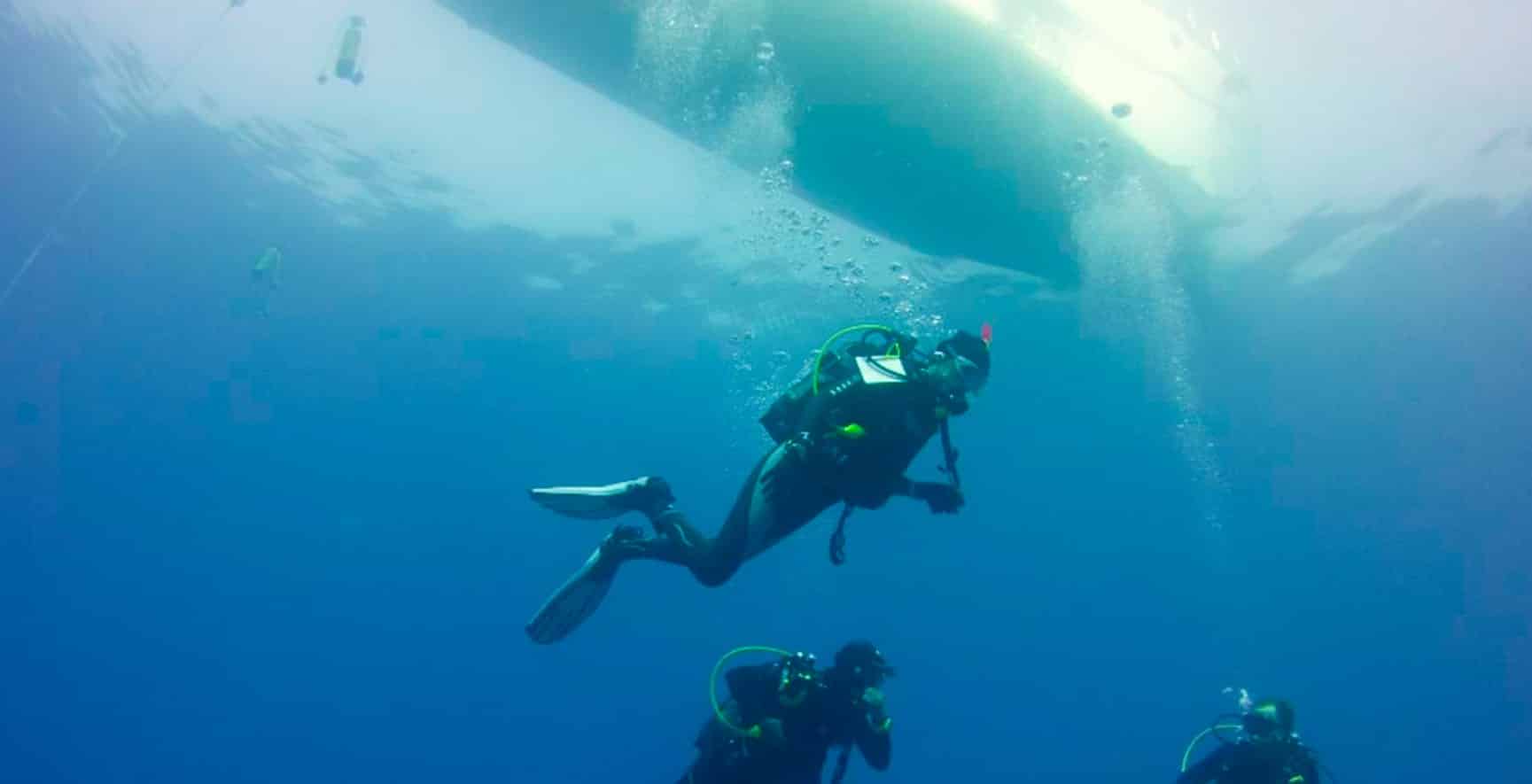
A bill submitted by the deputy ministry of tourism to parliament seeks to regulate recreational diving services in Cyprus, introducing a licensing framework for all providers and setting out safety, inspection and penalty provisions.
The proposed legislation, which is expected to be examined by the new composition of the House, aims to ensure that recreational diving services are offered safely and in line with international standards, while also creating procedures to investigate accidents and assign responsibility where needed.
Under the bill, all recreational diving service providers would be required to obtain an operating licence from the director-general.
This would apply to diving centres, diving schools, independent scuba diving instructors, as well as licensed sea transporters carrying divers on registered and approved vessels.
The licence would be valid for three years, while the deputy ministry would also keep an official register of licensed providers.
At the same time, the bill makes clear that no person or company would be allowed to train, promote, organise or provide recreational diving services without holding a valid licence issued by the competent authority.
Applications would only be accepted from individuals or businesses whose activity is the provision of recreational diving services.
Each application would also be subject to a one-off, non-refundable fee of €200.
More specifically, an operating licence would be granted for four categories: diving centres, scuba diving schools, diving instructors operating independently, and licensed sea transporters of divers.
To secure a licence, applicants would need to meet a series of conditions.
These include employing qualified instructors under the regulations and national standards, holding a valid CYS EN ISO 24803 compliance certificate, and maintaining professional liability insurance through a licensed insurer or recognised mutual insurance body based in an EU member state.
In addition, applicants would need to submit identification documents, a clean criminal record issued no more than one month before the application, proof of tax residency or registration for VAT and social insurance, as well as registration with the registrar of companies or as a business name.
They would also be required to provide medical certificates for all persons involved in diving activities.
The bill notes, however, that where a service provider is a natural person who does not take part in diver training, such a certificate would only be required for personnel participating in diving activities.
Meanwhile, in cases involving serious diving accidents linked to recreational diving providers, the director-general would have the power to appoint a special committee to investigate the incident.
That committee would be given authority to examine the case fully, assign responsibility and, where findings point to a possible criminal offence, refer the case to the courts against any natural or legal person involved.
The bill also sets out criminal penalties for breaches of the law.
Providers operating without a licence would face, upon conviction, a fine of up to €8,000 or a prison sentence of up to two years, or both.
Furthermore, the court would be able to order the suspension of a provider’s operation for as long as it deems appropriate.
Other violations, including failure to comply with provisions of the law where no specific penalty is set out, would carry a fine of up to €2,000 or imprisonment of up to six months, or both.
The same penalty would apply to anyone obstructing the director-general or an authorised officer in the exercise of powers granted under the law, or failing to provide the necessary facilities for inspections and checks.





Click here to change your cookie preferences