
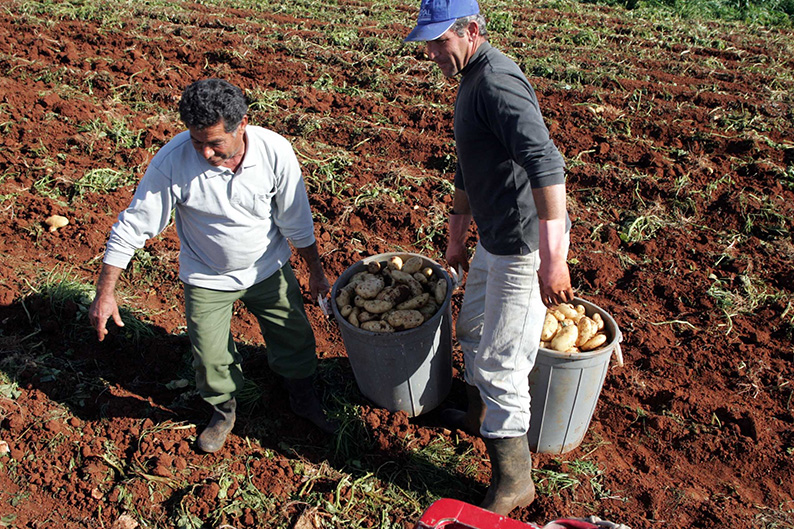
Local potato farmers are feeling the effects of the war in the Middle East as shipping costs for exports surge, leaving many uncertain about how much produce they can sell abroad, spokesperson Andreas Karyos said on Saturday.
“It is affecting [us] because the costs associated with shipping potatoes abroad have increased, resulting in higher costs and lower potential profits,” he told the Cyprus News Agency (CNA).
He said that the situation had also caused shipping delays, which could negatively impact exports to countries such as Austria, Belgium and Germany, where supermarkets are implementing “special programmes” that include Cypriot potatoes.
“If we cannot supply them, they may remove them from these programmes,” he said.
Karyos said that European supermarkets know their consumers “prefer the Cypriot potato because it is the best” and sell Cypriot potatoes from April to June until their own local potatoes are harvested.
“Given the difficulty we face in supplying them with Cypriot potatoes, if the supermarkets decide to remove them from their shelves, it will take time before they put them back, resulting in us losing sales,” he said.
But he said the Middle East tensions are not the only problem facing farmers.
Heavy rainfall has led to difficulties harvesting early crops and that these, combined with strong winds and salt from the sea have destroyed some fields in Ormidia, Xylofagou, Liopetri and Sotira
“It would be wrong to complain about the fact that we have had quite a bit of rain recently throughout Cyprus,” he said, “the only problem caused by the rainfall is that there are many small potatoes ready for harvesting, which are needed for both the domestic and international markets, yet they cannot be harvested.”
In view of the heavy rain forecast for the island until Easter, he said it would be ideal if it fell in Troodos, replenishing the reservoirs and securing water supplies for potato farmers in the second half of 2026.
“Unfortunately, for the past two years we haven’t received a single drop of water from the reservoirs due to the serious water supply problem,” he said.
Karyos said that, in this context, the farmers were concerned about the potential impact of future rainfall in the Kokkinochoria area on potato exports, which could also affect the local market and lead to higher prices.
“The delay in harvesting the potatoes may lead to an increase in their price,” he said.
Insufficient water levels last year has already resulted in farmers cultivating a reduced area at greater costs.
Continuous extreme weather events, he added, could affect the price of potatoes due to uncertainty surrounding the water supply.
“In this specific case, the government had promised to discuss the issue to see how it would cover these extra costs and the reduced production. However, due to the foot and mouth disease crisis, the discussions were suspended, and we are waiting for them to resume to see where we end up,” Karyos said.





Click here to change your cookie preferences