
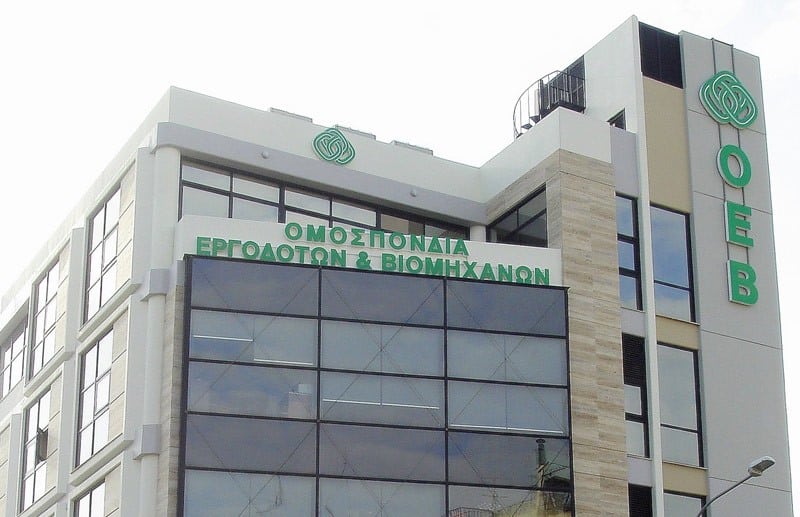
Cypriot businesses are still grappling with high energy costs, with employers’ federation Oev warning that the issue remains a major threat to competitiveness even as the country pushes ahead with its green transition.
In a report issued ahead of its annual general meeting on April 28, Oev said 2025 was marked by major developments in energy and the environment, as Cyprus sought to stay on course with national and EU climate neutrality goals while facing rising cost pressures and mounting environmental risks.
The federation said it remained actively involved in shaping policy on energy, the environment and sustainable development, with the aim of supporting businesses and ensuring what it described as a fair and realistic green transition.
Among the year’s key developments, Oev pointed to the full operation of the competitive electricity market, saying this should, over time, strengthen competition and lead to more efficient pricing.
At the same time, it said electricity storage projects have become increasingly important for improving system flexibility, cutting curtailments and allowing greater use of renewable energy sources.
Oev also said the Great Sea Interconnector stayed high on the public agenda, describing it as a project of major strategic significance but also one surrounded by technical, financial and geopolitical uncertainty.
Against that, the federation said it had closely followed developments and called for greater transparency, a proper cost-benefit assessment, and parallel consideration of alternative energy options that could protect the economy’s competitiveness.
On natural gas, Oev said developments linked to the floating storage and regasification unit (FSRU) Prometheas and related infrastructure once again showed the fuel’s importance as a transitional solution that could help lower energy costs and emissions.
At the same time, it stressed the need for the necessary infrastructure to be completed without further delay so gas can be integrated effectively into the country’s energy mix.
The federation also attached particular importance to green hydrogen, saying it is gaining ground in both European and national decarbonisation strategies.
In addition, it referred to the implementation of the revised EU directive on the energy performance of buildings, which introduces stricter requirements for the construction and building sectors.
Oev made clear that the common thread running through all these developments is the persistently high cost of energy, which it said continues to weigh heavily on businesses.
It added that it had submitted specific proposals aimed at lowering costs and improving how the market functions.
On the environmental side, Oev said the water crisis stood out as one of the most serious challenges of the year, increasing the urgency for structural measures and investment in water saving, efficient management and reuse. It added that the update of Cyprus’ national climate change adaptation strategy had also been completed, strengthening long-term planning for resilience through to 2050.
At the same time, businesses were required to adjust to new European sustainability reporting rules, although Oev noted that important simplifications had been made for small and medium-sized enterprises.
The federation also said it had taken an active role in the debate over the Social Climate Plan (SCP), submitting proposals aimed at supporting a just transition.





Click here to change your cookie preferences