
When urban gridlock threatens sustainability
By Maria Theofanidi, Mary Papalouka and Orthodoxia Roxane Christofidou
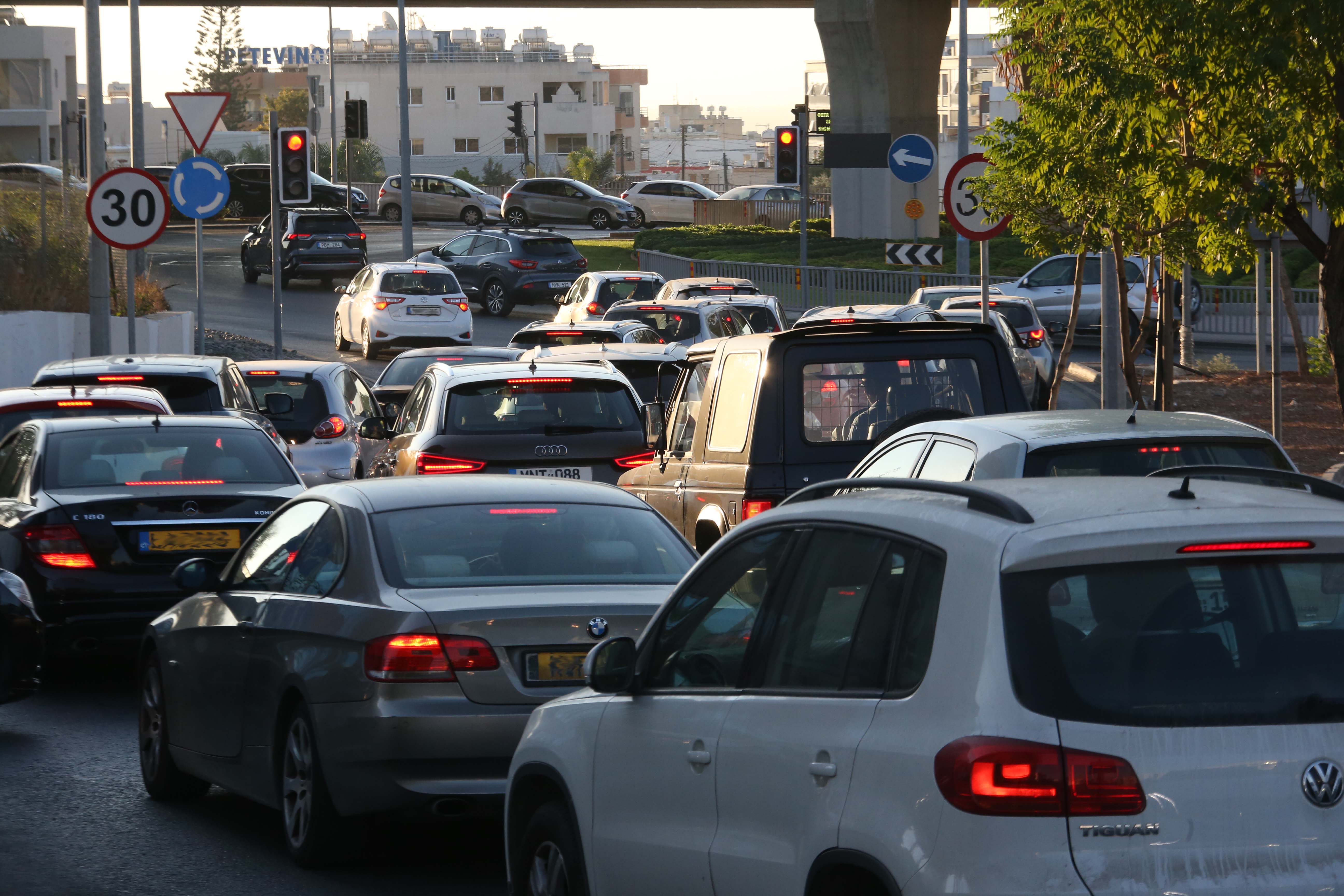
Limassol is a city at a standstill. Its roads are no longer just busy, they are suffocating. What used to be a ten-minute drive now takes ages. Daily life has become a gruelling test of patience for every resident.
The city is effectively drowning in its own rapid growth. It is struggling to breathe. This is no longer a mere daily nuisance, it is a permanent state of gridlock. It dictates how we live, poisons our environment and threatens to paralyse the future of the next generations.
As part of the “Young Reporters for the Environment” programme, a survey of 100 citizens was conducted, recording a reality that shakes our expectations for a sustainable urban centre.
The findings are not only disappointing but they also outline a trajectory for Limassol that demands an immediate overhaul of its development model.
CAUSES
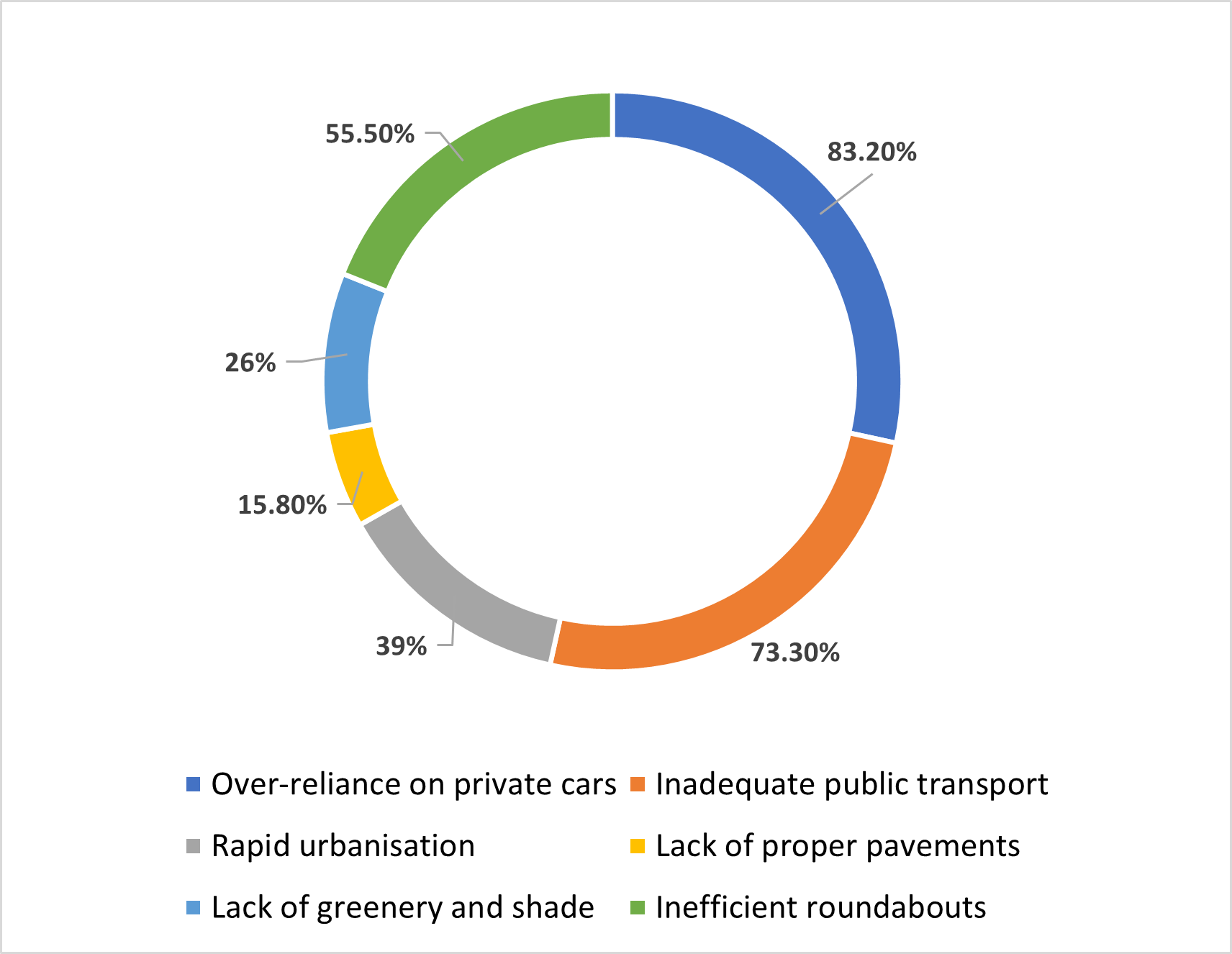
The way the city is expanding leads to a deep ecological and social crisis. Below are the main causes of the traffic problem, as highlighted by the citizens of Limassol and summarised in Chart 1.
The urban ‘trap’ and population explosion
Limassol’s town planning has failed to keep pace with its rapid evolution, characterised by chaotic vertical growth and over-urbanisation. Narrow streets cannot withstand the current traffic volume, while the concentration of workplaces in the city centre forces thousands to follow the same routes daily. Inefficient roundabouts and a lack of one-way streets further hinder traffic flow.
Additionally, illegal parking and poorly timed deliveries further choke the streets, obstructing transit when the city is at its busiest. Schools and tutoring centres become major bottlenecks, with vehicles clustering around them at peak times. This is made worse by poor driving and a blatant disregard for the Highway Code. To add to the frustration, poorly coordinated roadworks frequently overlap, turning daily travel into pure chaos
Absence of alternatives and ‘car culture’
At the heart of Limassol’s gridlock is a deep-seated over-reliance on private cars, with ownership rates among the highest in Europe. Public transport offers no real alternative. Buses are infrequent, routes are convoluted, and stops are far too few.
At the same time, the city’s infrastructure for sustainable travel is almost non-existent. Pavements are narrow, crumbling, and routinely blocked by illegally parked cars. Without an organised network of cycle lanes or even basic shade from trees, walking becomes a chore, ‘locking’ citizens into their vehicles.
Promises and delays
Compounding these issues is a deep-seated sense of failure. The so-called ‘smart’ traffic lights at the Ayia Fyla roundabout have become a local laughing stock, a symbol of promises made but results never delivered.
Meanwhile, essential projects that should have been finished by 2018 have either stalled indefinitely or never even started.
These broken timelines, coupled with a lack of funding for major roadworks in 2026, leave the city facing a literal and metaphorical dead end.
CONSEQUENCES
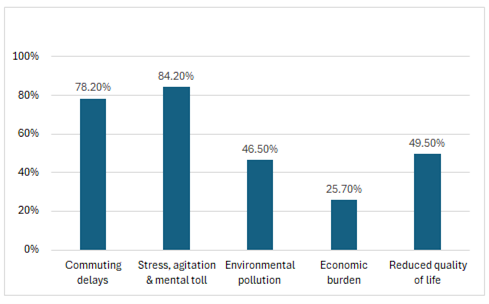
The overall impact of traffic congestion is depicted in Chart 2.
Psychological toll and quality of life
What was once a simple commute has become a gruelling psychological ordeal. Residents are increasingly frustrated, losing hours of their lives to journeys that used to take minutes. In Limassol, movement is no longer synonymous with freedom. It is a heavy, daily burden.
The constant wait in stagnant queues breeds a level of stress and agitation that doesn’t end when the engine stops. This tension follows people into their offices and back to their homes, creating a toxic, vicious cycle of exhaustion.
Environmental cost and public health
The environmental toll is a vital part of our analysis. Constant vehicle use leads to excessive energy consumption, directly fuelling the global climate crisis. The sheer volume of traffic translates into a cocktail of harmful emissions, with engines pumping out vast quantities of carbon dioxide, nitrogen oxides and toxic particulate matter.
Continuous exposure to these pollutants is an invisible threat, directly linked to rising rates of chronic respiratory issues like asthma and a heightened risk of cardiovascular disease. Between the smog and the constant din of engines, Limassol’s environment is becoming increasingly hostile to health, particularly for the most vulnerable, such as children and the elderly.
Our public spaces are being degraded. The air feels heavier, and social life is being stifled as noise and exhaust fumes drive people away from the outdoors.
Economic cost
The economic burden is equally immense. Wasted fuel during idling and the increased need for vehicle maintenance due to “stop-and-go” conditions directly hit household budgets during an already difficult economic period.
SOLUTIONS
Providing solutions to this crisis requires more than just talk. It demands organised planning and bold, eco-conscious interventions. The backlog of long-overdue projects highlights the urgent need for action. One-way streets, dedicated bus lanes and truly ‘smart’ traffic lights, alongside integrated cycling and pedestrian paths are all essential to both ease the gridlock and reduce our carbon footprint. The sustainable urban mobility plan (SUMP) must become our roadmap for a better quality of life.
In the era of digital transition, the best commute is the one that doesn’t need to happen. Establishing remote work for certain days – especially in universities and large organisations, could drastically reduce vehicle volume during peak hours.
Furthermore, we must also push for genuine decentralisation. Public services and departments out of the city centre towards surrounding villages and communities will allow Limassol to “breathe” and foster a more balanced development.
Crucially, the city requires a radical overhaul of public transport, moving towards frequent schedules and flexible routes. Implementing a globally proven park and ride system would allow drivers to leave their vehicles on the outskirts of the city and commute to the centre via free or low-cost shuttle buses.
Time in Limassol remains stagnant on its roads. The city’s sustainability has been compromised, undermining the quality of life for both current and future generations.
Transforming Limassol into a “green”, humane, and functional city is not a distant vision but an urgent necessity.
We must demand a city where mobility means freedom, not suffocation, proving that development can and must, go hand in hand with respect for humanity and the environment.
This study was conducted by students Maria Theofanidi, Mary Papalouka and Orthodoxia Roxane Christofidou under the supervision of their teacher, Demetria Pavlou (MSc, PhD), Class A22, Ayia Fylaxeos Lyceum in Limassol



Click here to change your cookie preferences