
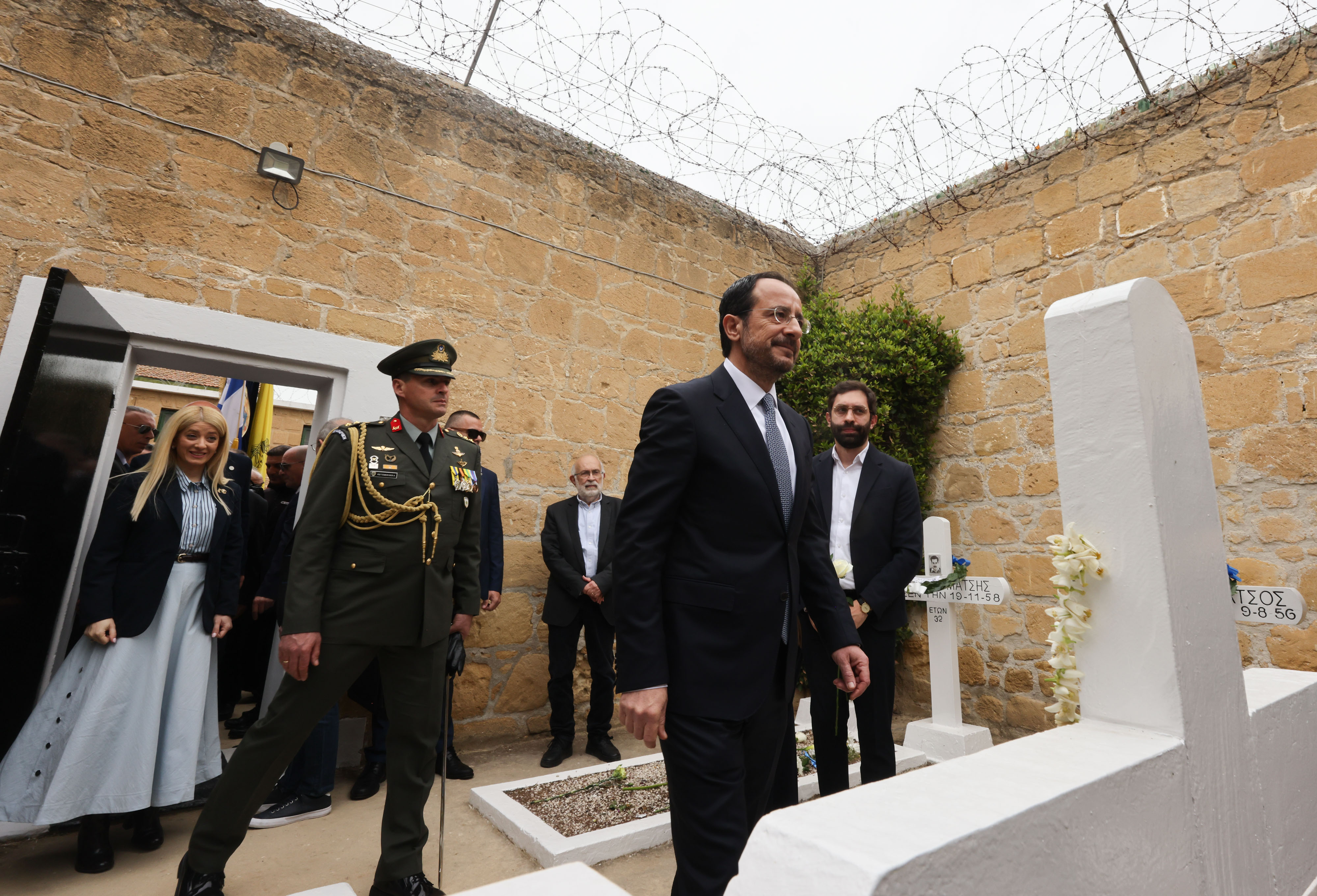
President Nikos Christodoulides on Wednesday used the anniversary of the start of the Eoka struggle to underline the importance of historical awareness in efforts to resolve the Cyprus problem, while also sending a message to Turkey, Turkish Cypriots and Britain.
Addressing commemorations at the “Tassos Papadopoulos – Eleftheria” stadium, Christodoulides spoke of “pride, deep emotion and boundless respect” for those who took part in what he described a heroic uprising of the people.
He paid tribute to both fallen and surviving “warriors”, including those who were imprisoned and tortured during the struggle, noting that men and women from all walks of life “transformed into warriors for freedom” despite limited means. “Without basic equipment or military training, they stood up to the army of a powerful empire and determined the course of our country,” he said.
Eoka (national organisation of Cypriot fighters) fought a campaign for the end of British rule in Cyprus, and for eventual union (enosis) with Greece.
The president said the struggle, led politically by Archbishop Makarios III and militarily by Georgios Grivas Digenis, remains a “beacon” for today’s political efforts.
“More than seven decades on, the stake remains the same: ending the occupation, liberation and reunification of our homeland,” he said, adding that Cyprus must become a truly sovereign state “that exercises sovereignty across its entire territory, respects the rights of all its lawful citizens – European citizens – and allows them to live, work and create in conditions of security and prosperity, as is the case for all other European citizens.”
He added that it would be unworthy to speak in their name “if the starting point of our own struggle were anything less than the liberation of our homeland – from Kyrenia to Famagusta and from Apostolos Andreas to Kokkina.”
He said that we have a duty to “speak to our children and the younger generation about Eoka”, for a better Cyprus.
“This, in no way, works against efforts to resolve the Cyprus problem, since the viability of any solution depends largely on respect for each side’s historical identity, not its erasure.”
Speaking earlier at a memorial service and wreath-laying ceremony at the Imprisoned Graves, Christodoulides described the 1955-59 anti-colonial campaign as “the most pure, moral and honest struggle of Cypriot Hellenism”.
He placed particular emphasis on two key lessons from the Eoka struggle: the selflessness of those who took part in the “national struggle”, and the need for historical knowledge as a foundation for future political efforts.
“The clergy and the people, united, believed in a sacred goal… and led us to what we have today – the Republic of Cyprus, the most important asset we possess,” he said.
Christodoulides stressed that educating younger generations about the struggle was essential, linking this directly to ongoing efforts to resolve the Cyprus problem.
“Achieving our goals requires knowledge of our true history,” he said, adding that such knowledge “does not in any way act against a possible solution”.
On the contrary, he argued, the viability of any settlement depends “to a large extent on the recognition of historical truth and certainly not on self-negation”.
Framing his remarks within the current political context, the president said Cyprus continues its “great effort for liberation, for ending the occupation and reunifying our homeland”.
Asked whether his comments were directed at Ankara and the Turkish Cypriot leadership – both of which have at times described Eoka as a terrorist organisation – Christodoulides confirmed they were. “It is a message to our Turkish Cypriot compatriots, to Turkey, and to Great Britain,” he said.
He acknowledged that the original enosis aim of the movement was not achieved, but said it ultimately led to the creation of the Republic of Cyprus, which he described as the island’s most valuable achievement.
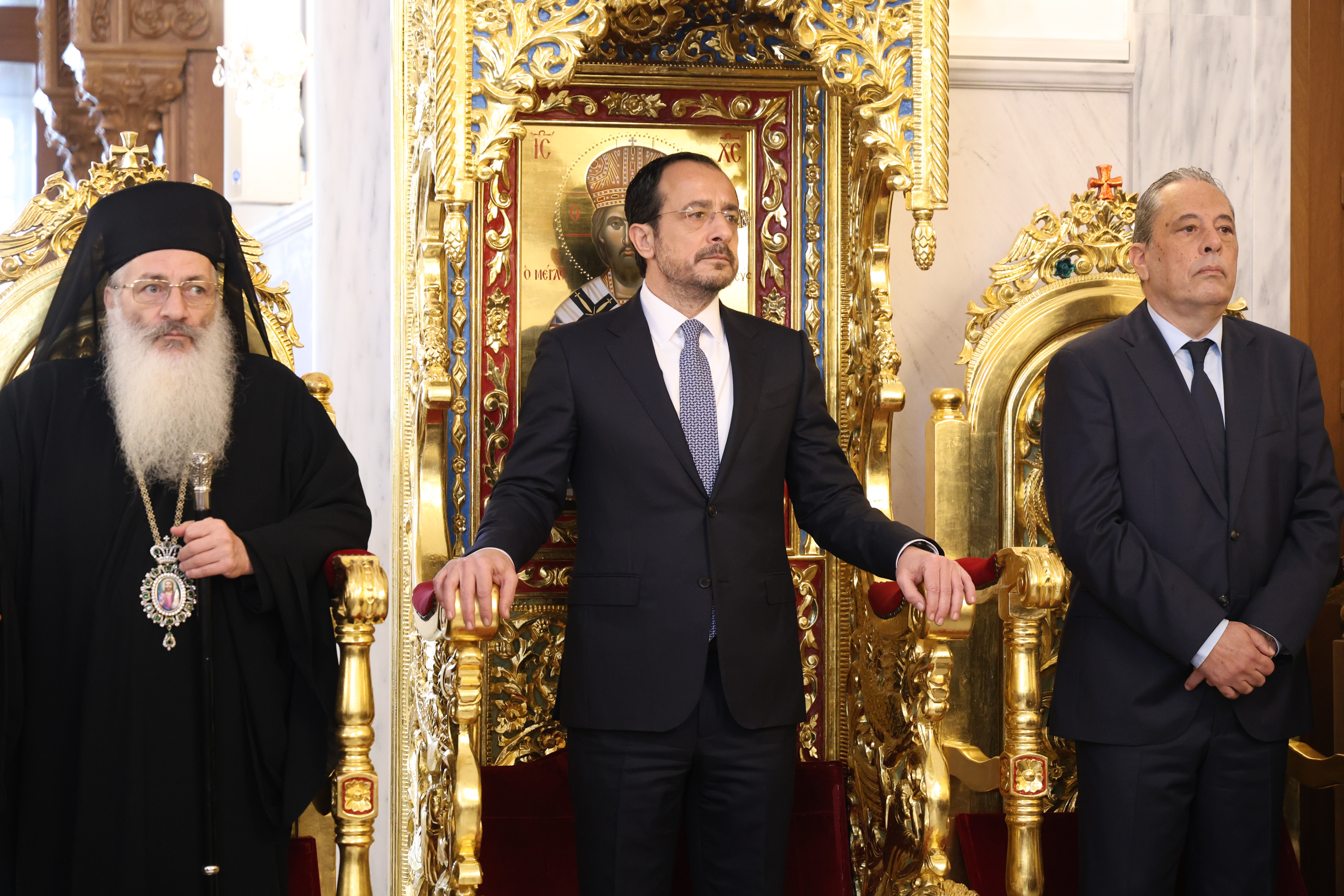
Christodoulides earlier attended a formal doxology held at the Cathedral of Apostle Barnabas in Nicosia in the presence of Archbishop Georgios, House president Annita Demetriou, Defence Minister Vasilis Palmas, Labour Minister Marinos Mousiouttas and Greek ambassador Konstantinos Kollias, among others.
Elsewhere, government spokesman Konstantinos Letymbiotis said the anniversary was being honoured across free areas of the island as “one of the most glorious chapters of our modern history”.
Speaking after a church service in Paphos, he said the legacy of Eoka should not be confined to ceremonial references, but should inspire “the same persistence and dedication” in the ongoing effort to end what he described as Turkish occupation. He also highlighted the presence of students at commemorations, calling it “the most encouraging and brightest element” of the day.
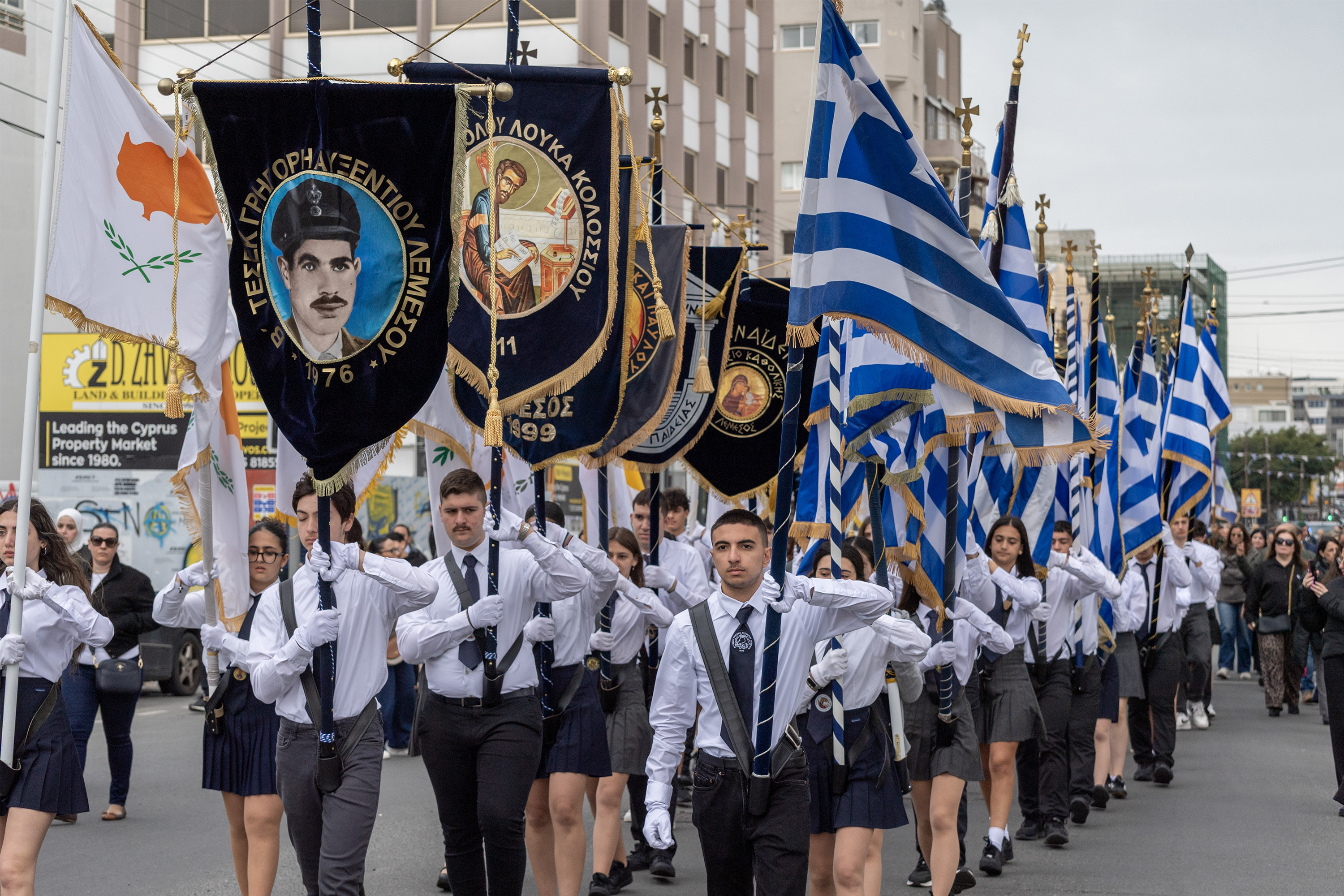
Commemorations were also held in Limassol, attended by deputy culture minister Vasiliki Kassianidou and Health Minister Neophytos Charalambides.
During the service, Archimandrite Isaac said the anniversary was not only about honouring the past but also about responsibility for the future.
“Anniversaries are not only memories; they are responsibilities,” he said, calling for unity, dignity and continued commitment to freedom without allowing memory to turn into hatred.
Events included a procession to the hideout and tomb of Eoka leader Georgios Grivas Digenis, the lighting of a ceremonial flame, and wreath-laying ceremonies.
Finally, the Cyprus Bar Association highlighted the role of lawyers during the anti-colonial struggle, noting that many defended Eoka fighters before colonial courts under difficult conditions and often without payment.
In a statement, the association said the struggle represented not only a historical milestone but also “an expression of the fundamental right of peoples to self-determination” as enshrined in the United Nations charter. It also referred to executions, imprisonments and other measures by the British colonial administration as “dark pages” of that period.
The association added that any resolution of the Cyprus problem must be based on international and European law, ensuring the island’s independence, territorial integrity and full protection of human rights.
Click here to change your cookie preferences