
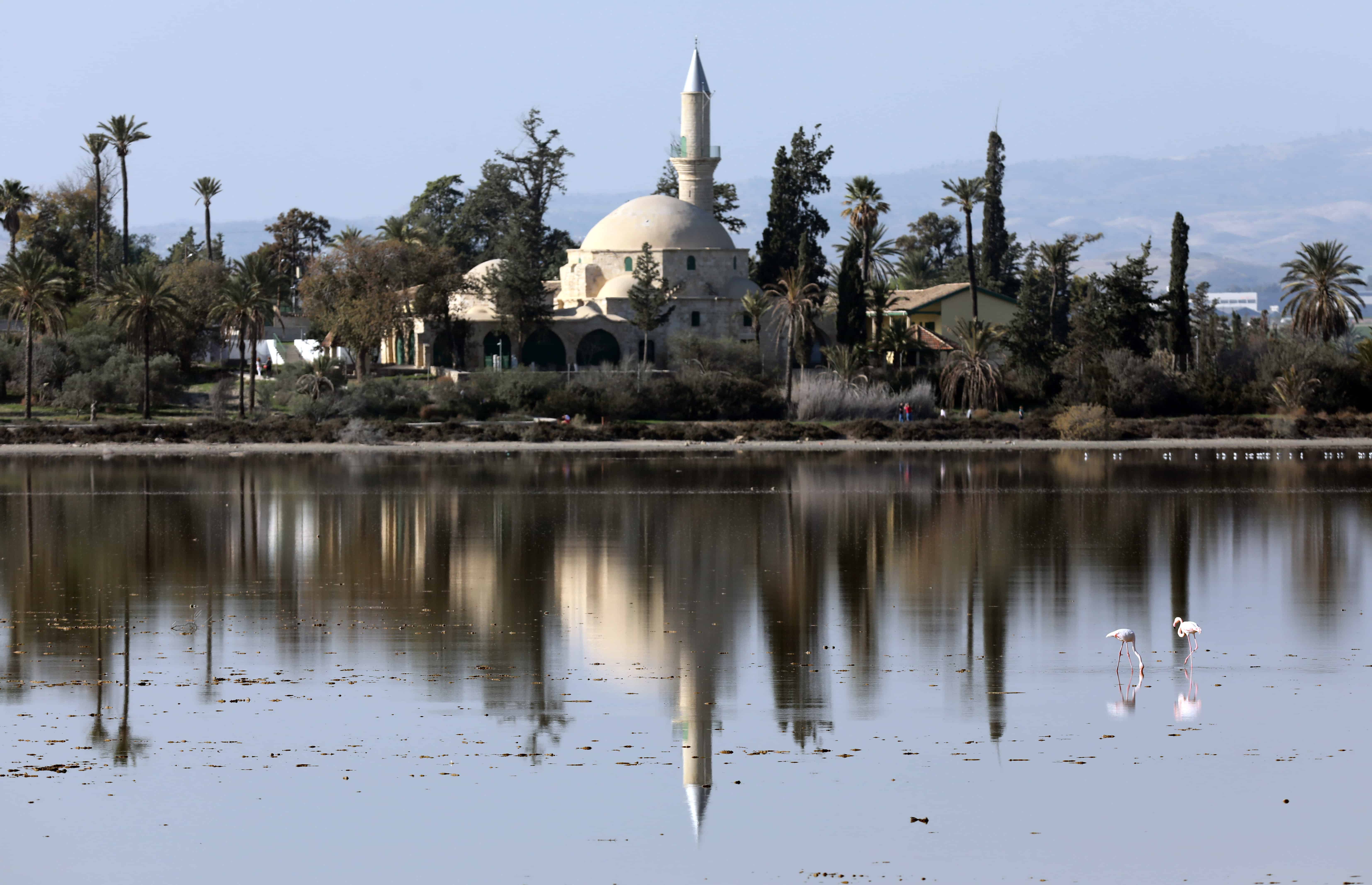
President Nikos Christodoulides said on Wednesday that “some Turkish Cypriots” had sought to prevent the traditional Eid al-Fitr pilgrimage to the Hala Sultan Tekkesi in Larnaca from taking place.
“Apparently, some in the Turkish Cypriot community, and I am not referring, to be fair, to the Turkish Cypriot leader, I am referring to some others, who did not want this pilgrimage to take place, and they attempted in unorthodox ways to achieve what did not happen,” he said.
He said that for the pilgrimage to take place, there is a “very specific procedure” which must be followed to allow for its organisation.
“If they wanted this pilgrimage to take place, the Republic of Cyprus, not now, much earlier, before we reached the date, had conveyed through the United Nations the clear procedure which has been applied over time so that this pilgrimage could take place,” he said.
His comments come after newspaper Politis had reported that the Turkish Cypriot side had not “submitted a relevant request to the religious track of the Cyprus peace process, which operates under the auspices of the Swedish embassy”.
Instead, the newspaper reported, the Turkish Cypriot side had contacted the UN peacekeeping force in Cyprus (Unficyp), but the use of an alternative avenue led to delays, and as such, instead of the initially planned date of March 21 – the third day of Eid al-Fitr – March 28 was suggested as a possible date.
It added that given the fact that the matter had been delayed, and in light of the ongoing conflict in the Middle East, the foreign ministry had placed restrictions on the number of people who could undertake the pilgrimage.
Normally, between 300 and 600 people attend the pilgrimage, but the authorities had, according to the newspaper, requested that on this occasion, the number be limited to a maximum of 105.
It said that then, the Turkish Cypriot authorities had submitted a list of pilgrims, with the Greek Cypriot side then “requesting additional information so as to verify the existence” of the people on the list, given that the list included people who are not citizens of the Republic and therefore would ordinarily be refused passage at the island’s crossing points.
However, it said, the Turkish Cypriot side “did not come back with additional information” and then “did not try” to send pilgrims across any of the island’s nine crossing points on March 21 or March 28.
The issue was raised at the weekend by Turkish Cypriot leader Tufan Erhurman who said the pilgrimage had been “repeatedly postponed and restricted on grounds which cannot be deemed valid”.
“This stance, which is known to UN officials, will be brought to the attention of all levels of the international community,” he said.
Meanwhile, the north’s ‘foreign minister’ Tahsin Ertugruloglu said Greek Cypriots are able to hold more than 100 collective religious services in around 80 churches in the north each year.
“Despite all the goodwill and tolerance shown by our state, without any discrimination based on ethnicity … Greek Cypriot politicians and priests continue to exploit the situation in various ways during religious ceremonies held in our country,” he said.
He added that “despite all the permits granted, the Greek Cypriot authorities continue to increase the smear campaigns and unfair propaganda against our country in various international fora, such as the European Union and the United Nations, spreading false and misleading information claiming that the TRNC restricts Greek Cypriots’ religious freedoms”.
The Hala Sultan Tekkesi is one of the holiest sites in Islam, with some scholars ranking it fourth in importance after Mecca, Medina and Jerusalem.



Click here to change your cookie preferences