
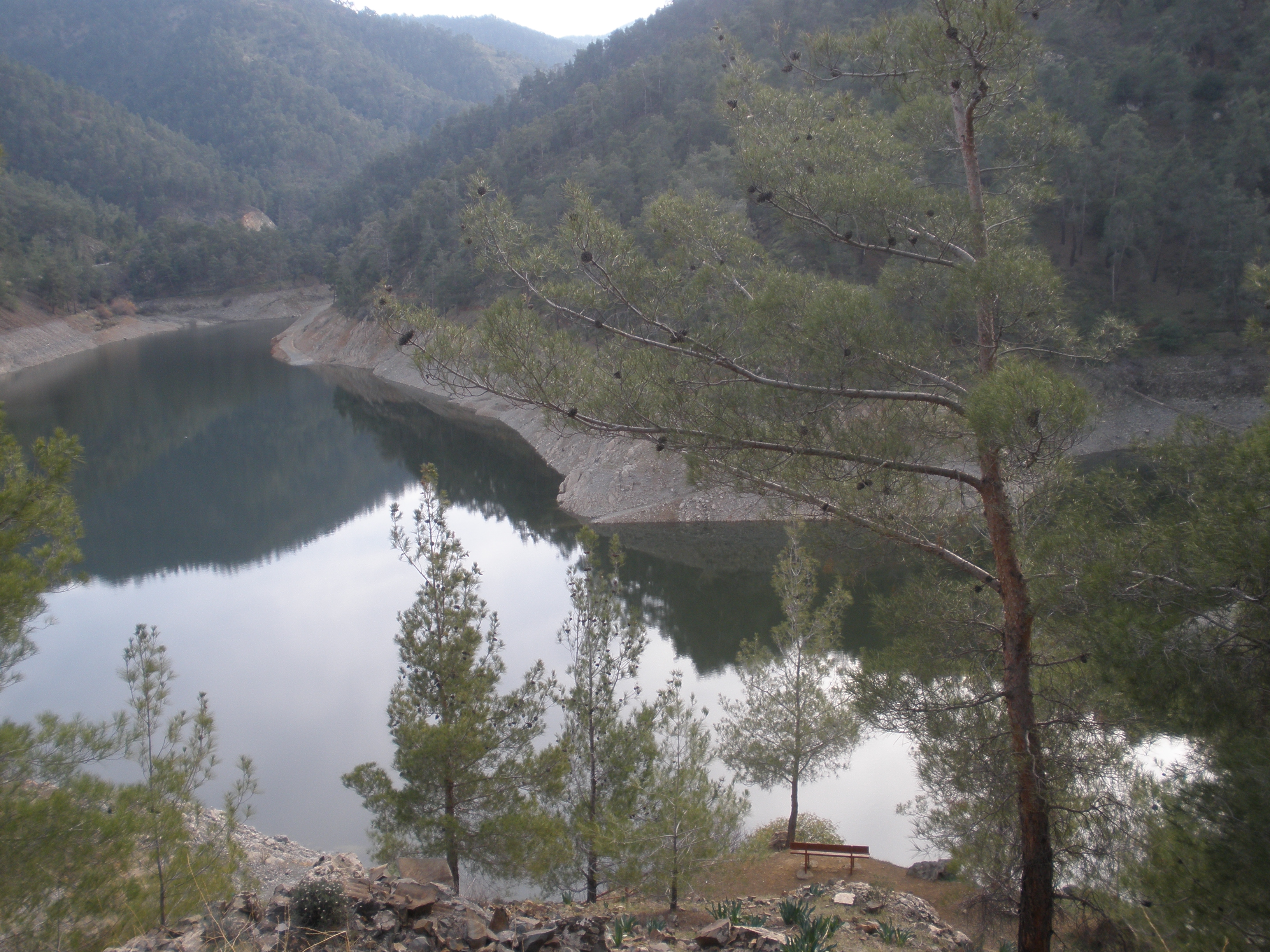
The amount of water in Cyprus’ reservoirs is nearing a total of 100 million cubic metres, with greater than expected levels of rainfall continuing into the spring.
As of Thursday morning, there are over 93.5 billion litres of water in reservoirs across Cyprus, rendering them 32.2 per cent full on average. This figure equates to more than 164 billion pints.
Of this figure, development department technician Marios Hadjicostis told the Cyprus News Agency that it is “now very likely” that the amount of water in the island’s reservoirs will reach 100 million cubic metres.
The current figure is significantly larger than the amount of water which was in the reservoirs a year ago. Then, just shy of 70.4 billion litres of water were present in the reservoirs, which were 24.3 per cent full.
Reservoirs in the Nicosia district are the fullest of any on the island, at 83.2 per cent of capacity, with two – in Xyliatos and in Kalopanayiotis – completely full. A year ago, they were just 19.8 per cent full.
Elsewhere, reservoirs in the Polis Chrysochous region are 45.5 per cent full, with three of them – in Argaka, in Pomos and in Ayia Marina – at capacity.
In the Paphos area, reservoirs are 38.5 per cent full, with the Mavrokolympos reservoir the fullest of any in the area, at 79.5 per cent. This time last year, it was entirely empty, after having been drained in January last year to fix a corroded vent.
Overall, reservoirs in the Paphos area were 24.6 per cent full a year ago.
Reservoirs linked to the southern conveyor are the least full of any in Cyprus, at just 27 per cent of their capacity, though this figure is still higher than it was a year ago, when they sat at 23.9 per cent full.
The southern conveyor currently hosts Cyprus’ emptiest reservoir, in Achna, which is just 2.1 per cent full and has just 143,000 cubic metres of water in it.
The amount of “inflow” into Cyprus’ reservoirs in the last six months – since the beginning of October last year – is a little over 75.6 million cubic metres.
This figure is roughly equivalent to the amount of inflow observed between March 2023 and October last year – a period of almost two and a half years – with no hydrological year, which is counted from October to October, having seen more water flow into Cyprus’ reservoirs since 2022.
In fact, in the last ten years, only the hydrological years of 2018-19, 2019-20, and 2021-22 saw more inflow into the reservoirs than the current hydrological year, with six months of the current hydrological year set to come, though the coming six months are typically the driest of the year.





Click here to change your cookie preferences