
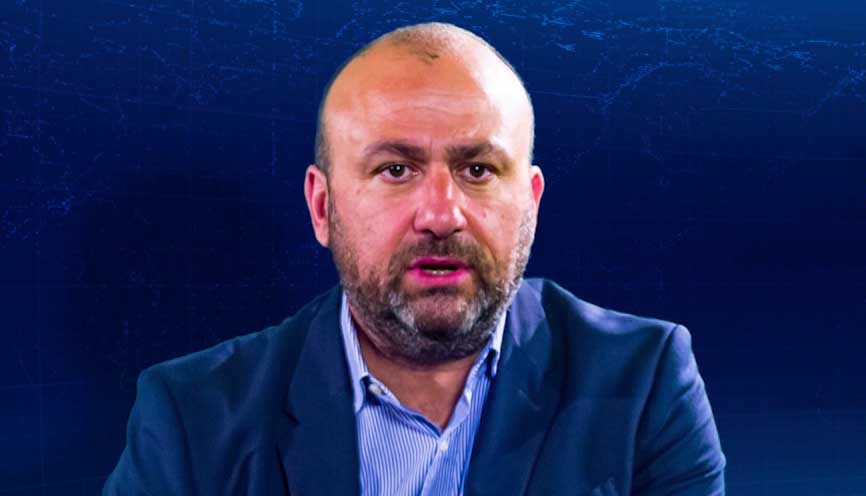
Former Edek MEP Demetris Papadakis confirmed on Thursday that he has handed over his mobile phone for forensic examination following Makarios Drousiotis’ allegations, with results expected imminently
Speaking on Politis radio, Papadakis said he had already delivered his device to a recognised forensic expert and insisted that the findings be forwarded directly to police authorities.
“Whatever the result, it should be handed over to the police-chief,” he said, underlining his position that independent analysis would disprove the allegations made against him.
The allegations stem from a series of public disclosures by Drousiotis, who maintains that he possesses extensive documentation, including messages and audiovisual material, gathered over several years regarding various high ranking officials in Cyprus, including Papadakis, former president Nicos Anastasiades, attorney-general George Savvides, as well as the accusation levied against former supreme court judge Michalakis Christodoulou of sexual misconduct.
Drousiotis has linked his findings to what he describes as a secretive cabal and “a structured system operating across sectors”.
Drousiotis claims that Papadakis and Christodoulou were in close communication and that the former had prior knowledge of government decisions.
Papadakis added that he has used the same phone since 2019, the period referenced in the messages published by Drousiotis.
He categorically denied any relationship with Christodoulou.
“I have never had coffee with this man, I have never seen him in my life, his phone number is not in my mobile phone menu,” he said, rejecting outright the suggestion that the two had exchanged messages.
When asked how his name could appear in the material presented, he dismissed the claims as fabrication and said he would not engage with what he described as “pure fiction”.
Central to his defence is the assertion that the messages are not merely inaccurate but entirely false.
Papadakis has repeatedly referred to a “conspiracy” against him and questioned the origins of the material, stating, “I don’t know if Drousiotis fabricated them.”
Drousiotis pointed to an alleged exchange in December 2019 concerning an appointment within the justice ministry, arguing that the timing of the message demonstrated insider knowledge.
“That is, Papadakis knew about the decisions of the cabinet a week in advance,” he said, presenting this as evidence that the material could not have been fabricated retrospectively.
Additional messages cited by Drousiotis include references to legal matters and individuals connected to the judiciary, as well as a conversation in which Papadakis allegedly suggested moving a discussion to Skype and expressed concern about being overheard.
In his latest intervention, Drousiotis insisted that the messages are “authentic and confirmed” and presented what he described as multiple levels of verification, including references to names, dates and contextual events that align with known timelines.
Those named have uniformly rejected the allegations, describing them as false, fabricated or defamatory.
The police investigation is now underway, with a senior officer appointed to examine the case.
Police spokesperson Vyron Vyronos described the matter as “serious and complex”, confirming that authorities have requested Drousiotis to provide all relevant evidence but that he has asked for additional time before doing so.
Vyronos indicated that further resources, including expert analysis, would be deployed if necessary, and that the officer leading the inquiry would brief both the police chief and the justice minister before any next steps are decided.
Authorities are already assessing the complaint submitted by Papadakis, while also seeking to secure cooperation from Drousiotis, whose testimony is considered central to the investigation.
Drousiotis has stated that he intends to engage with the process but only in the presence of legal counsel, citing concerns about procedure and trust.
“Of course, I’m not going to go alone without a lawyer present,” he said, emphasising the need for a formal record of any evidence submitted.
Drousiotis has defended his decision to make the allegations public rather than initially submitting them to police, arguing that publicity is necessary to prompt action.
“Only with pressure through publicity can any investigation be carried out,” he said, adding that previous attempts to raise similar concerns had not led to meaningful response.
He further explained that the timing of his disclosures was influenced by the current political context, including ongoing discussions about surveillance legislation and the proximity of elections.
“If it doesn’t happen now, then when?”





Click here to change your cookie preferences