
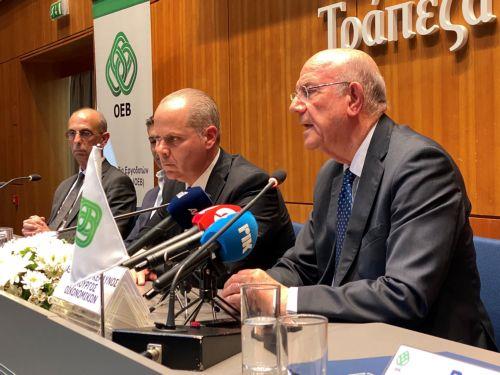
Employers’ federation Oev warned this week that the economic fallout from the Middle East crisis could prove greater than initially expected, as Finance Minister Makis Keravnos said it was too early to discuss fresh measures before those already announced had been put into effect and assessed.
The warning came after a meeting between the federation’s board of directors and the finance minister, during which both sides discussed economic activity and the implications of the continuing conflict in the region.
The discussion came as uncertainty deepened in the hotel sector, where the new tourist season began under a cloud, with hoteliers and unions still waiting for details of the government’s wage subsidy scheme for April.
The government had announced a 30 per cent subsidy on the wages of hotel employees for units and tourist accommodation operating throughout the period from April 1 to April 30, as part of a broader package aimed at easing the pressure on businesses and consumers.
However, the plan had not reached those directly concerned by Thursday, as had been expected, prolonging uncertainty in a sector seen as crucial to the economy.
Both unions and hoteliers were said to be dissatisfied by the delay, with hoteliers in particular stressing that businesses worth hundreds of millions of euros were being asked to plan for the season while the employment element remained unresolved.
According to the same information, hoteliers had proposed that the subsidy rate be raised to 50 per cent from the 30 per cent announced by President Nikos Christodoulides, while unions had called for equal treatment between Cypriot and EU workers and workers from third countries, so as to avoid disruption in the labour market.
The plan is expected to be implemented by ministerial decree and, according to the information available so far, will be voluntary, meaning hotel operators will be able to decide whether to take part or not.
At the same time, the measure is not expected to be applicable to hotels due to reopen only after April 15 or April 20, while one of the parameters discussed in contacts between the labour ministry, unions and hoteliers was that hotels receiving the subsidy should not terminate staff before October 31.
Based on what has so far been discussed, employees would receive the government allowance, while employers would be expected to cover the remaining share of wages.
The pressure on the sector has already been reflected in bookings, with cancellations in March reaching 40 per cent of the total, while April was also expected to record a smaller but still significant drop.
Oev president George Pantelides said the situation in both the economy and the wider region remained fluid, while the scale of the impact would depend on the intensity and duration of the conflict.
He said the government’s measures were moving in the right direction, but added that “the impacts are likely to be greater than those we have predicted and those that are apparent”, reflecting the concerns being conveyed by Oev members.
Pantelides said the current state of the economy still gave Cyprus some time to plan actions that would protect both fiscal stability and economic resilience.
At the same time, he pointed to mounting pressure on tourism, saying the sector appeared to have been affected in March and April, while May was also expected to be a comparatively difficult month.
He added that support was needed from the government, businesses and the public alike to prove in practice that Cyprus “was and remains a safe destination”.
Pantelides also voiced concern over inflationary signals, particularly in energy and critical raw materials, and said specific action was needed to contain those trends and the costs stemming from them.
“Cyprus has proven that it is resilient and our economy is operating on solid foundations,” he said, adding that proactive planning was needed to manage the possible effects both immediately and over the medium to longer term.
For his part, Keravnos said the meeting offered an opportunity to exchange views and for the government to explain the state of the economy, which he described as resilient and able to respond immediately to recurring crises and fresh challenges.
He said the government had briefed Oev on the measures already being taken, while also listening to suggestions and concerns raised by businesses.
“We will certainly study and be concerned about them and we will be in constant contact,” he said, thanking Oev for what he described as continued cooperation in a framework that served both the economy and society.
Asked whether more measures would be needed, Keravnos said the government would first allow the measures announced the previous day to take effect before deciding whether any further intervention was necessary.
He added that this was why the government was constantly monitoring developments, preparing programmes and following an economic policy that would allow it to respond when needed.
In that context, he said the government would cover 30 per cent of wages for employees at hotels reopening in April.
He also referred to another proposal discussed with Oev, aimed at supporting hotels so they could attract Cypriot tourists during the Easter period.
Turning to the framework for any additional support, Keravnos said a recent European Commission directive made clear that any measures taken by member states should be temporary, targeted at vulnerable groups or areas, fiscally sustainable and should not encourage additional consumption.
In that respect, he said simply handing out money because fuel had become more expensive could end up encouraging higher fuel use.
He added that Cyprus had already reduced excise duty to the minimum level allowed by the European Commission.
On profiteering, Keravnos said the consumer protection service was monitoring developments on a daily basis and would step in wherever abuses were found.
He concluded by expressing hope that there would be no need for the energy minister to impose a cap on fuel prices as a last resort.





Click here to change your cookie preferences