
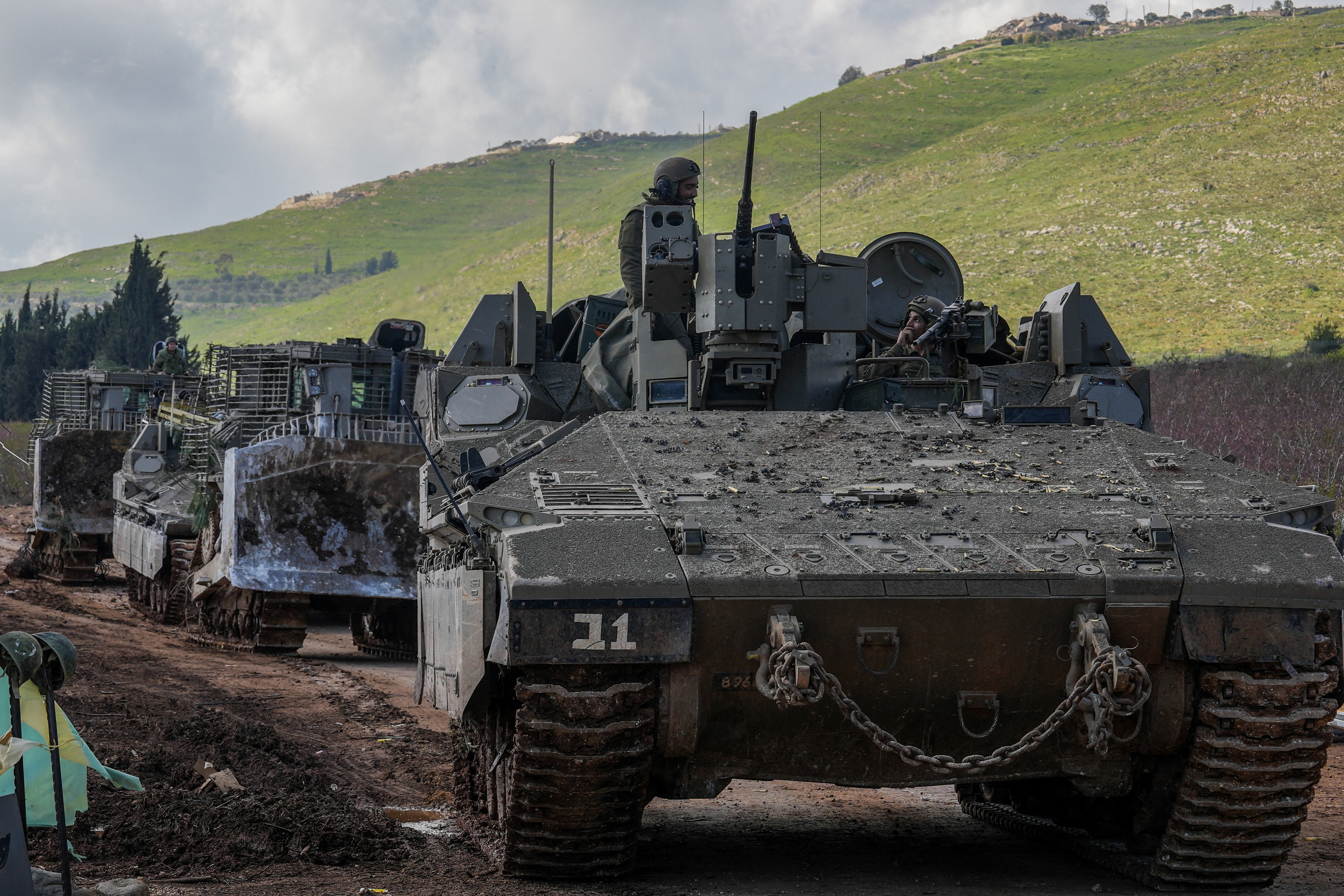
Israel launched its heaviest bombardment of Lebanon since the start of its conflict with Hezbollah on Wednesday, as regional tensions deepened despite a fragile ceasefire between Tehran and Washington, and fresh violence in Gaza and diplomatic strains within NATO underscored the widening crisis.
Continuous explosions struck Beirut as Israeli forces said they targeted more than 100 Hezbollah administrative and military sites across the capital, the Bekaa Valley and southern Lebanon.
Lebanese civil protection authorities said at least 254 people were killed in a single day, while the total number displaced has surpassed 1.2 million.
Reuters journalists reported scenes of chaos, with civilians transporting the injured on motorbikes due to a lack of ambulances, while hospitals issued urgent appeals for blood.
Elias Slela, head of the doctors’ union, called on “all doctors of all specialties” to report for duty as facilities struggled to cope with the influx of casualties.
Israeli prime minister Benjamin Netanyahu said the ceasefire with Iran “does not apply to Lebanon”, insisting operations against Hezbollah would continue.
The statement contradicted Pakistani prime minister Shehbaz Sharif, who had indicated the truce extended to Lebanon as part of mediation efforts.
Hezbollah officials said the group had halted attacks on Israeli targets in line with what they understood to be the agreement.
Ibrahim al-Moussawi said Hezbollah “was informed that it was part of the ceasefire… but Israel, as usual, violated it and committed massacres throughout Lebanon”.
Hassan Fadlallah warned that continued strikes would have consequences “for the agreement as a whole”.
Strikes hit residential areas across Beirut, including central districts where no prior warning was issued.
In Sidon, eight people were killed and 22 wounded, while further casualties were reported near a hospital in the south.
A separate evening strike in central Beirut targeted what Israel described as a Hezbollah commander, without further detail.
Lebanese authorities said more than 1,500 people, including at least 130 children, have been killed since early March, when hostilities escalated.
Israel has issued evacuation orders covering roughly 15 per cent of Lebanese territory and has destroyed key infrastructure, including multiple bridges over the Litani River, isolating parts of the south.
Iran’s Revolutionary Guards warned they would “respond” if the attacks continued, while Tehran has maintained restrictions on the Strait of Hormuz, threatening vessels attempting passage.
Iranian officials have also signalled they may withdraw from planned talks unless the ceasefire is upheld across all fronts.
Parallel violence continued in Gaza, where four people, including Al Jazeera journalist Muhammad Wasah, were killed in Israeli strikes.
The journalist died when a drone strike hit the vehicle he was travelling in along Gaza City’s coastal road.
Israel has previously alleged links between some journalists and militant groups, claims denied by media organisations.
Medical sources said two additional people were killed in central Gaza, while the Israeli military did not comment on the incidents.
According to the Committee to Protect Journalists, 223 journalists and media workers have been killed across Gaza, Lebanon and Israel since the conflict escalated, the majority in Gaza.
The renewed violence comes amid growing international concern over the durability of the Iran ceasefire, which was intended to create space for negotiations but remains disputed in scope.
The United States and Israel have both indicated Lebanon is not covered, while Iran and its allies contest that interpretation.
At the same time, tensions within the transatlantic alliance have intensified. In Washington, President Donald Trump met NATO secretary-general Mark Rutte following sharp criticism of European allies over their response to the Iran conflict.
White House press secretary Karoline Leavitt said Trump believed NATO had been “tested and they failed”.
“It’s quite sad that NATO turned their backs on the American people,” she said, adding that Trump expected a “very frank and candid conversation” with Rutte.
Trump has threatened to withdraw from the alliance and has called on countries reliant on Gulf oil to take action to secure the Strait of Hormuz.
European diplomats indicated there was little appetite for military involvement while hostilities persist, though discussions on maritime security and trade routes are ongoing.
The overlapping crises in Lebanon, Gaza and the Gulf have raised concerns about a broader regional escalation, with diplomatic efforts struggling to contain the fallout.
As one displaced resident in southern Lebanon put it, “Lebanon can’t take it anymore. The country is collapsing economically, everything is collapsing.”




Click here to change your cookie preferences