
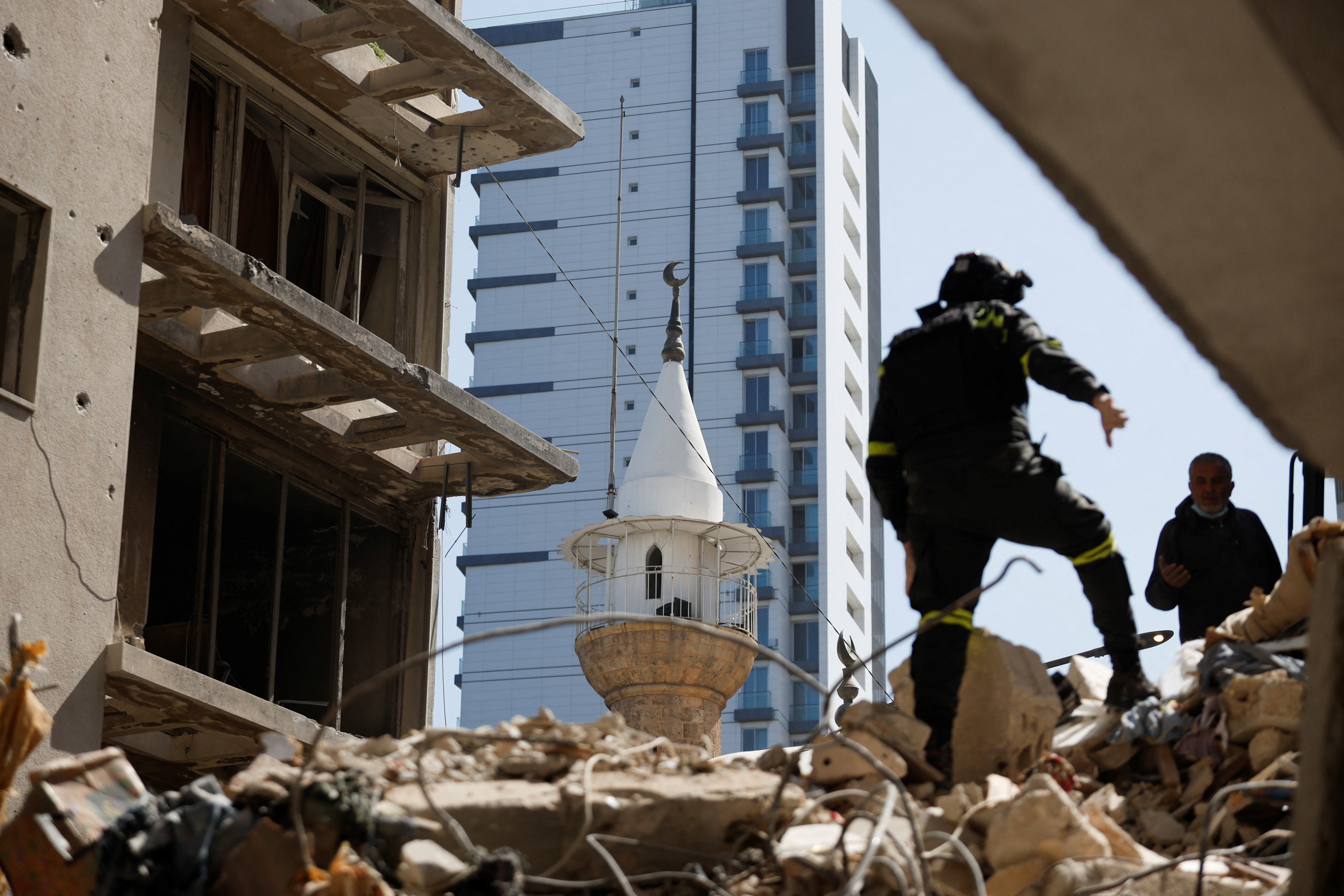
British Foreign Secretary, Yvette Cooper and José Manuel Albares, Spain’s foreign minister, on Thursday sharply criticised Israel’s latest strikes on Lebanon, warning they risk undermining a fragile ceasefire and destabilising the wider Middle East.
Cooper said Israel’s bombardment of Lebanon was “deeply damaging” and could jeopardise the recently announced truce between the United States and Iran.
“We want to see Lebanon included in the ceasefire,” she told Times Radio. “We want it extended to cover Lebanon, because otherwise that will destabilise the whole region.”
She added that the escalation seen in recent Israeli strikes must stop, warning that continued hostilities risk triggering broader instability.
Speaking separately, Albares accused Israel of breaching both international law and the newly brokered two-week ceasefire by carrying out extensive airstrikes on Lebanon.
“Yesterday we saw how Israel, flouting the ceasefire and in violation of international law, dropped hundreds of bombs on Lebanon,” he told lawmakers.
Spain has emerged as one of the most outspoken Western critics of U.S. and Israeli actions in the region. Madrid has closed its airspace to aircraft linked to the conflict, describing the military campaign as reckless and unlawful.
Albares also announced that Spain would reopen its embassy in Tehran, signalling a renewed diplomatic push.
“I’ve instructed our ambassador in Tehran to return, to take up his post again and reopen our embassy, and for us to join in this effort for peace from every possible quarter,” he said.
Cooper, meanwhile, acknowledged tensions between London and Washington, after criticism from Donald Trump over Britain’s level of support in the conflict. She said the UK could remain a close ally while still taking a different approach.
She also warned that rhetoric from Washington had contributed to rising tensions.
“I think that the rhetoric that we’ve seen used has been completely wrong,” she told Sky News. “That sort of escalatory rhetoric can have escalatory consequences.”
Britain is now working with allies to help stabilise the region, including efforts to reopen the strategically vital Strait of Hormuz, a key global energy corridor disrupted by the conflict.
Both European leaders stressed the need for de-escalation and broader diplomatic engagement, warning that without restraint, the current ceasefire risks unravelling and deepening instability across the region.




Click here to change your cookie preferences