
With the most important Christian feast approaching this Sunday, households in predominantly Greek Orthodox Cyprus are observing strict fasting and preparing for Easter.
Even those who do not fast for the full 48 days often observe the traditions of Holy Week, which are accompanied by a range of customs. The countdown begins on Green Monday, marking the start of Lent, which lasts seven weeks until Easter. This period is symbolised by Kyra Sarakosti (Lady Lent), depicted with seven legs – one for each week.
Villages in the Paphos district continue to uphold these traditions, which researcher Anna Tselepou said should be preserved.
“These are traditions rooted in our civilisation, passed down from generation to generation, keeping folk culture alive,” she said.
At this time of year, village homes are freshly whitewashed, yards are spotless, and the air is filled with the aroma of baking bread, while Holy Week psalms carry through the spring breeze.
Tselepou told the Cyprus News Agency that the preservation of these customs attracts visitors to Paphos villages during the Easter period.
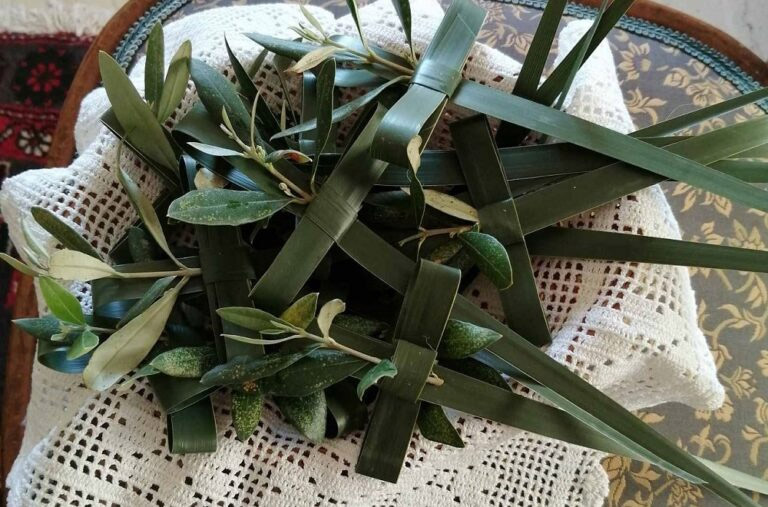
The traditions leading up to the resurrection began to gain momentum on Palm Sunday, also known as Olive Sunday, which this year was on April 5. On this day, women take olive branches in linen bags to church to be kept there and prayers read over them for 40 days. The branches are later taken home and burned with incense during household cleansing rituals.
On Holy Thursday, women take pots of water to church and place them beneath the lectern during the reading of the twelve Gospels. This blessed water is then used throughout the year in bread-making.
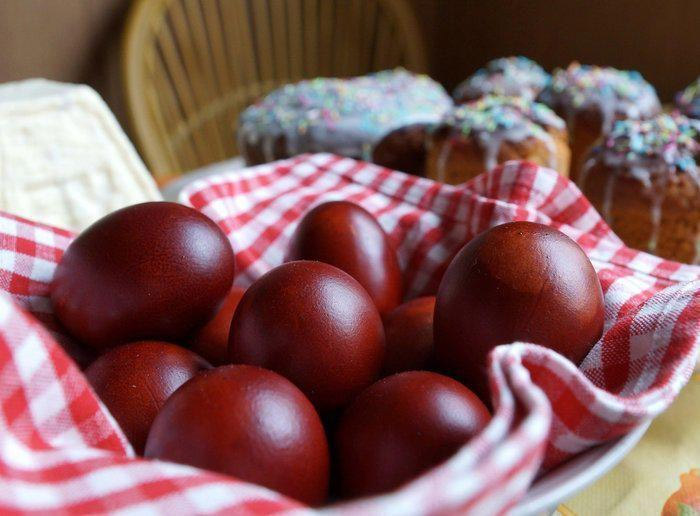
Holy Thursday is also the day when eggs are dyed red, traditionally using rizari (Rubia tinctorum), a natural dye derived from the madder plant, although modern dyes are now also common.
At dawn on Good Friday, festive baking begins, traditionally in outdoor clay ovens.
Tselepou explained that the first bread prepared is the stavrokoulouro, or cross-bread – the religious equivalent of a hot cross bun, which in turn is similar in flavour to the Greek tsoureki. In Cyprus, the stavrokoulouro it is baked into a rusk and hung on the front door of the house.
Next to be made are the avgotes, ring-shaped breads with a red-dyed egg in the centre.
Lambropsomo or Easter bread is also very important and is scored with the initials ‘XA’ for Xristos Anesti (Christ has risen). This bread is cut by the head of the house at the Easter Sunday feast, having first made the sign of the cross over it three times.
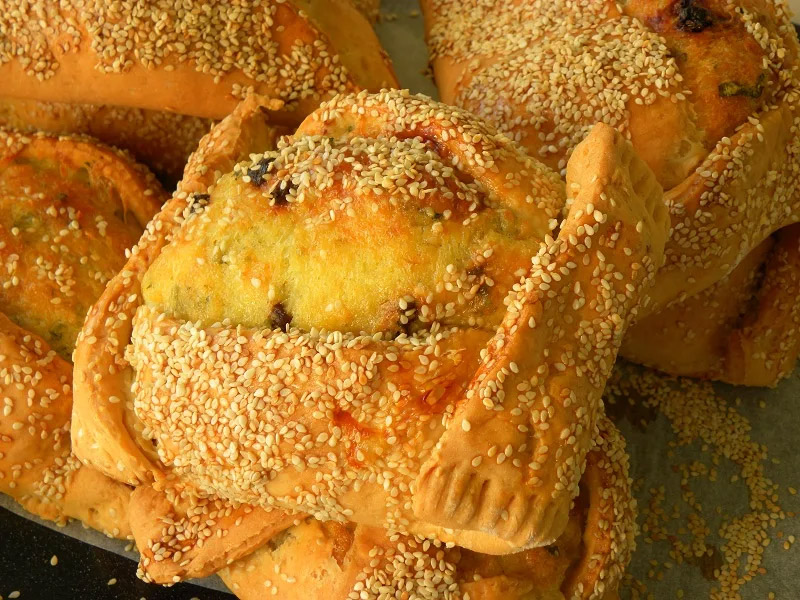
Baking continues with flaounes – pastries made with grated mature goat’s cheese, eggs, mint and sometimes raisins – and paskies, which are pies filled with fried meat.
Women also prepare galena, a sweet bread made with milk, sugar and butter.
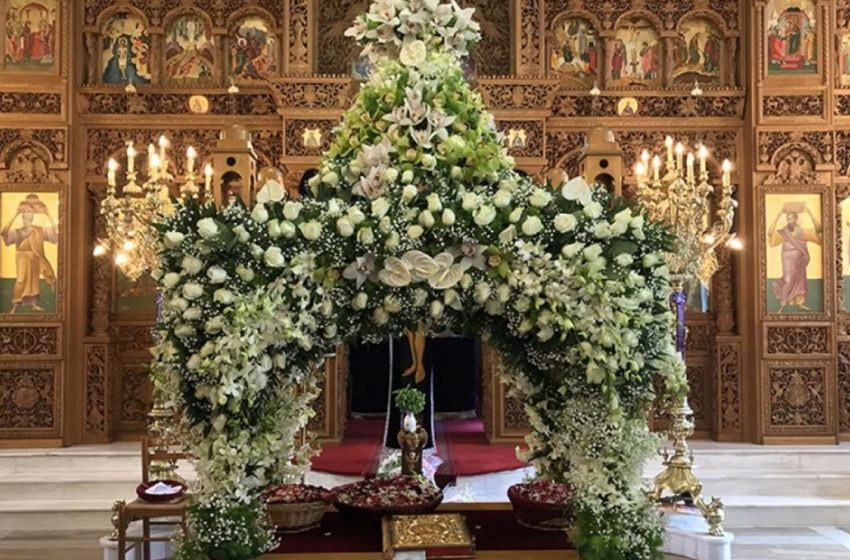
Meanwhile, young women gather at the church to decorate the Epitaph, representing Christ’s tomb, with flowers.
In the evening, the entire village attends the solemn procession of the Epitaph through the streets, accompanied by the chanting of psalms.
On Holy Saturday, final preparations are made for the Easter feast.
Late that night, dressed in their finest clothes, villagers gather at church for the Anastasi (Resurrection) service, held just before midnight.
After hearing the Kalos Logos (good word) announcing the resurrection of Christ, people receive the Ayio Fos (holy light) from the priest and take it home to light their lamp, exchanging wishes along the way. At home, the people of rural Paphos eat avgolemono soup, made with boiled chicken, eggs and lemon.
Easter Sunday is a day of celebration, when families gather to crack red eggs – with the last unbroken egg symbolising good luck – and share a festive meal.
“These are beautiful family moments and it is everyone’s duty to preserve them,” Tselepou said.
Festivities continue into the afternoon, when villagers gather in the square for traditional Easter games, including ziziros, in which one participant must guess who struck their hand while others mimic the buzzing of a cicada.



Click here to change your cookie preferences