
The Strait of Hormuz remained closed and Israel launched fresh attacks on Lebanon on Friday, which the United States and Iran each flagged as violations of their ceasefire deal on the eve of their first peace talks over the war.
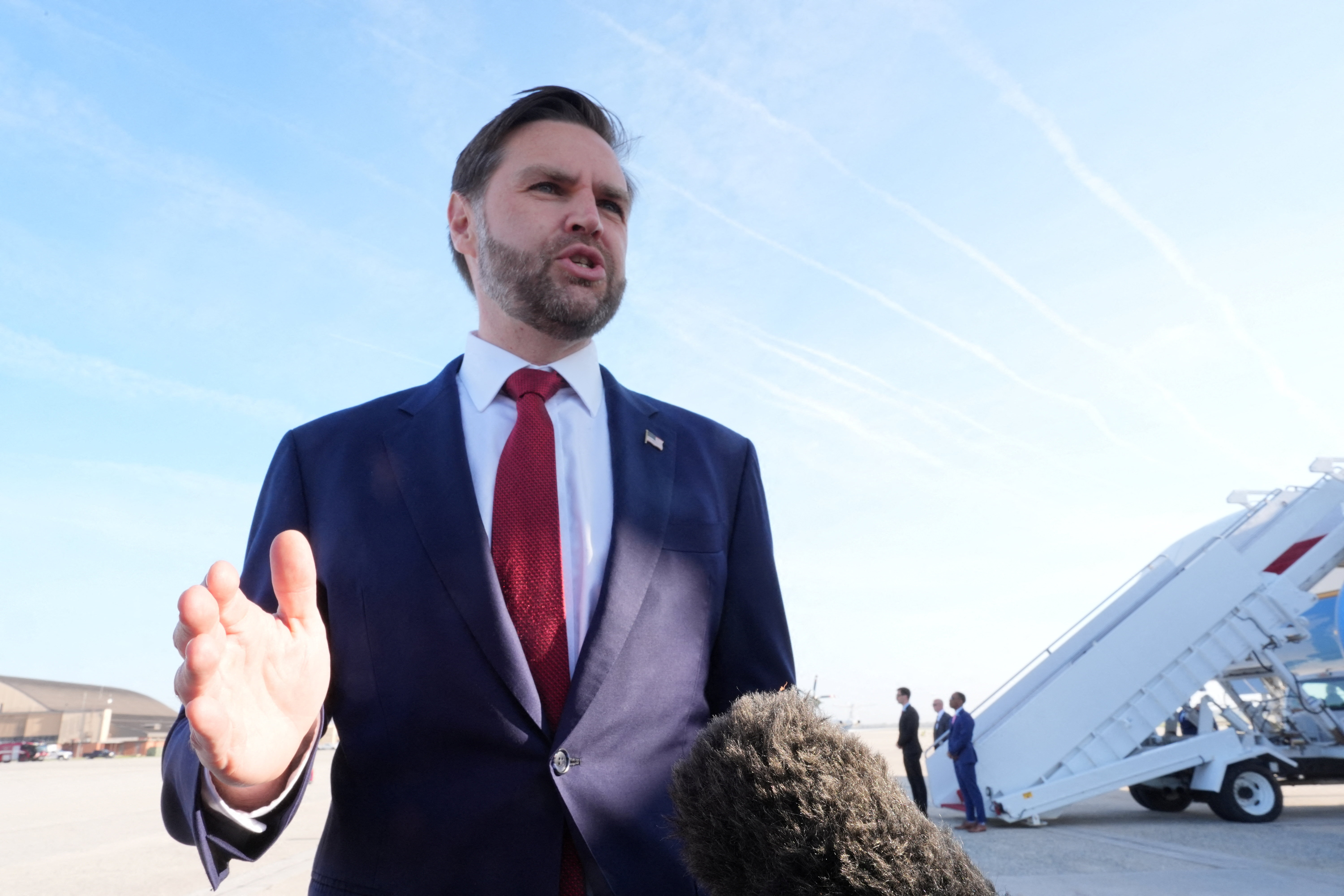
Vice President JD Vance, who will lead the US delegation, set off for the talks in Pakistan saying he expected a positive outcome, but “if they’re going to try to play us, then they’re going to find the negotiating team is not that receptive”.
The two day old ceasefire has halted the campaign of US and Israeli air strikes on Iran. But it has so far done nothing to end the blockade of the strait, which has caused the biggest ever disruption to global energy supplies, or to calm a parallel war waged by Israel against Iran’s Hezbollah allies in Lebanon.
Iran was doing a “very poor job” of letting oil through the strait, US President Donald Trump said in a social media post. He also warned Tehran against trying to collect fees from ships crossing it. “That is not the agreement we have!”
Iran, meanwhile, said ongoing Israeli attacks on Lebanon were a violation of the truce. Israeli forces launched the biggest attack of the war hours after the ceasefire was announced, killing more than 250 Lebanese in surprise strikes on heavily populated areas.
Israeli strikes continued across southern Lebanon on Friday, with more than a dozen people reported killed in various towns. One strike killed eight members of Lebanese state security forces, Lebanon’s state media said.
Iran says the truce was meant to apply to Lebanon, a position initially supported by Pakistan, which mediated it.
Israel and the US say Lebanon is not covered by the US Iran ceasefire. In a shift on Thursday, Israel said it would open separate talks with the Lebanese government aimed at ending the war there and disarming Hezbollah.
Still, a Pakistani source said “everything is on track” for the US Iran peace talks to start on Saturday as planned. Speaking before the reports of the latest Israeli strikes on Lebanon, he said a reduction in violence there was positive.
“It has de escalated. Good sign.”
Advance teams from both countries were already in place in the five star Serena hotel in central Islamabad where both delegations would stay for the duration of the talks. There were no face to face meetings planned for Friday but Pakistan was relaying messages between them, the source said.
The centre of Islamabad was placed under complete lockdown for a hastily announced public holiday, with a security perimeter thrown up for a three kilometre red zone around the hotel.
The disruption to energy supplies has fed inflation and slowed the global economy, with an impact expected to last for months even if negotiators succeed in reopening the strait.
US monthly inflation data released on Friday, the first to show the impact of the war, showed consumer prices rose by 0.9 percent in March, the fastest rate since the mid 2022 inflation shock that eroded support for Trump’s predecessor Joe Biden.
As has been the case throughout the war, Iran’s own ships were sailing through the strait unimpeded on Friday, while those of other countries remained hemmed inside.
Among the handful of vessels to cross on Friday was an Iranian supertanker capable of carrying two million barrels of crude. Before the war, 140 ships would cross in a typical day, including tankers carrying 20 million barrels.
Although Trump has declared victory, the war did not achieve the aims he set out at the start, to deprive Iran of the ability to strike its neighbours, dismantle its nuclear programme and make it easier for its people to overthrow their government.
Iran still possesses missiles and drones capable of hitting its neighbours and a stockpile of more than 400 kg of uranium enriched near the level needed to make a bomb. Its clerical rulers, who faced a popular uprising just months ago, withstood the onslaught with no sign of organised opposition.
Iran’s agenda at the talks now includes demands for major new concessions, including the end of sanctions that crippled its economy for years, and acknowledgment of its authority over the strait, where it aims to collect transit fees and control access in what would amount to a significant shift in regional power.
Its new Supreme Leader Mojtaba Khamenei, yet to be seen in public since taking over from his father who was killed on the war’s first day, released a defiant statement on Thursday saying Iran would demand compensation for all wartime damage.
“We will certainly not leave unpunished the criminal aggressors who attacked our country,” he said.
The United States, for its part, wants Iran to relinquish the uranium, forgo further enrichment, give up its missiles and end support for regional allies, years old demands left over from talks Trump abandoned two days before launching the war.
Israeli Prime Minister Benjamin Netanyahu’s announcement on Thursday that he had given instructions to start peace talks with Lebanon as soon as possible marked a shift after he rebuffed Lebanese calls last month for direct talks.
A US State Department official confirmed the US would host an Israeli Lebanese meeting next week.
Around a fifth of Lebanon’s population has been forced to flee homes since Israel’s invasion of the country last month in pursuit of Hezbollah, which fired at Israel in support of Iran.




Click here to change your cookie preferences