
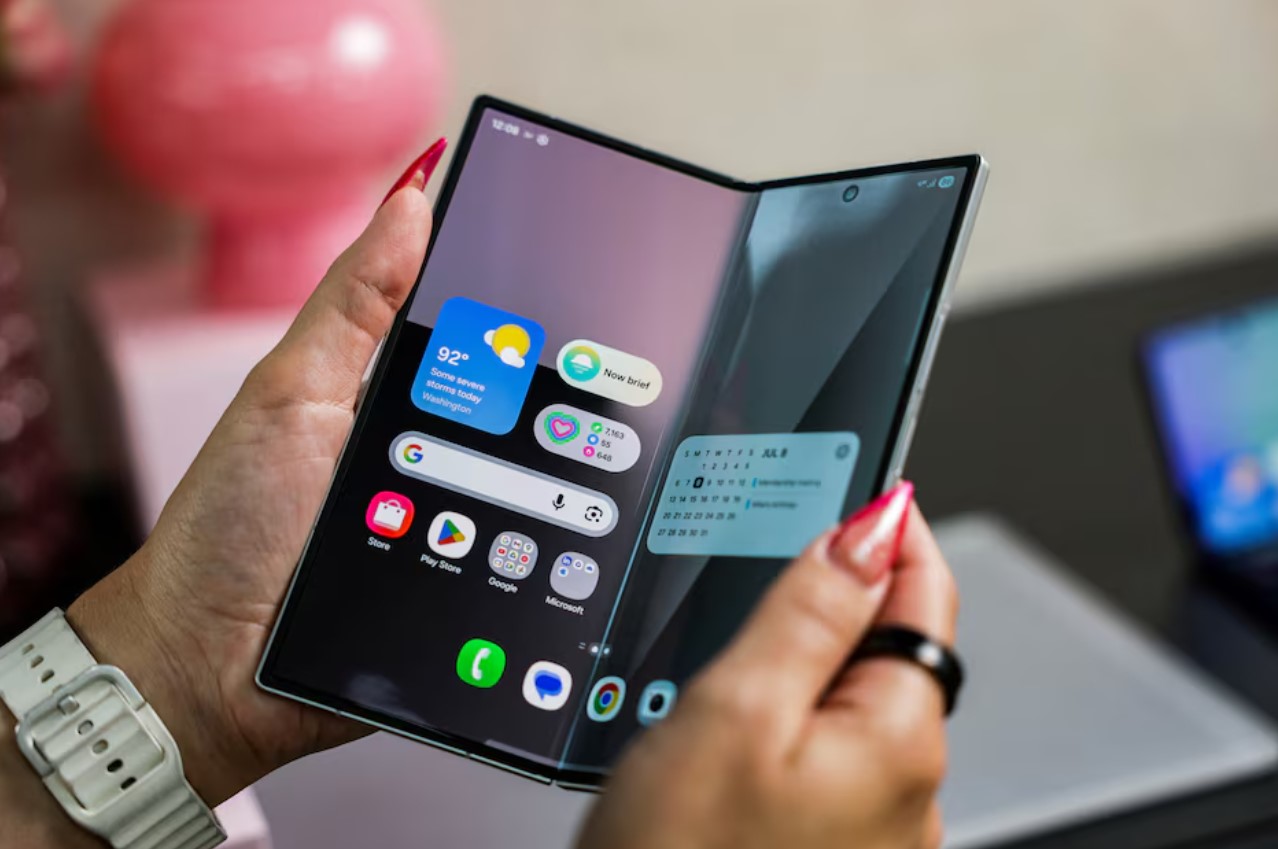
The global smartphone market grew by 1 per cent year-on-year in the first quarter of 2026, performing above expectations, despite mounting cost pressures, according to industry analysts Omdia.
The report found that shipment volumes were temporarily supported by vendor inventory frontloading, which masked the full impact of rising supply-side costs.
At the same time, memory and storage costs surged sharply, while vendors have yet to fully pass these increases on to consumers across all markets.
Mobile DRAM and NAND prices rose by around 90 per cent quarter-on-quarter in the first quarter, with a further increase of 30 per cent expected in the second quarter.
This has led to a significant rise in bill-of-materials for smartphone manufacturers, placing additional pressure on margins.
In parallel, early signs of logistics and trade flow disruption have begun to affect global supply chains, adding further complexity to the market environment.
Samsung regained the leading position globally in the first quarter, supported by strong flagship demand and robust Galaxy S26 series pre-orders, which rose by more than 10 per cent, compared with the previous Galaxy S25 series.
This performance came despite launch delays affecting Samsung’s mid-range refresh cycle, which limited broader portfolio expansion.
Apple also recorded a solid quarter, driven by stable pricing and steady demand for the iPhone 17 series, even as some regional supply disruptions persisted.
Beyond the top two manufacturers, most Android vendors are facing pressure on both volumes and margins, prompting adjustments to their strategies.
These include tighter product portfolios, selective launches, and more disciplined pricing approaches, as companies seek to maintain profitability.
Within the broader market, Huawei achieved strong domestic performance, supported by competitive pricing, while HONOR continued its overseas expansion, resulting in share gains within the “others” category.
“Vendors have little choice but to raise prices as cost pressures intensify,” said Sanyam Chaurasia, principal analyst at Omdia.
“While price increases are happening across the industry, the impact is not uniform,” he added.
“Vendors with greater exposure to entry and mid-tier segments, such as Xiaomi and TRANSSION, are more exposed due to thinner margins and limited pricing power,” he explained.
“In contrast, Apple has largely held pricing, while Samsung is taking a more market-selective approach,” he said.
“Beyond headline price increases, vendors are also managing margins through configuration changes, reduced promotions, and tighter channel pricing,” he continued.
“This is creating a more complex pricing environment, with financing and trade-ins playing a bigger role in supporting demand,” he stated.
“The worst is still ahead, as cost-driven headwinds weigh on the smartphone value chain,” said Runar Bjorhovde, principal analyst at Omdia.
“In the near term, higher pricing is creating a demand shock, with consumers delaying purchases, before gradually adapting as pricing stabilises,” he stated.
“At the same time, uncertainty around pricing and availability is prompting some channel partners to increase inventory, temporarily supporting shipments,” he added.
“However,” Bjorhovde continued, “this will delay rather than offset the impact for vendors, with pressure expected to intensify as the year progresses.”
“Vendors will need to focus on margin protection, tighter portfolios, and higher-value opportunities, while strengthening brand and channel execution,” he said.
Omdia expects that the global smartphone market outlook will weaken significantly in 2026, as cost pressures and macroeconomic uncertainty weigh on demand.
The firm projected that global smartphone shipments are likely to decline by around 1.5 per cent in 2026, reflecting the growing impact of higher costs and market volatility.




Click here to change your cookie preferences