
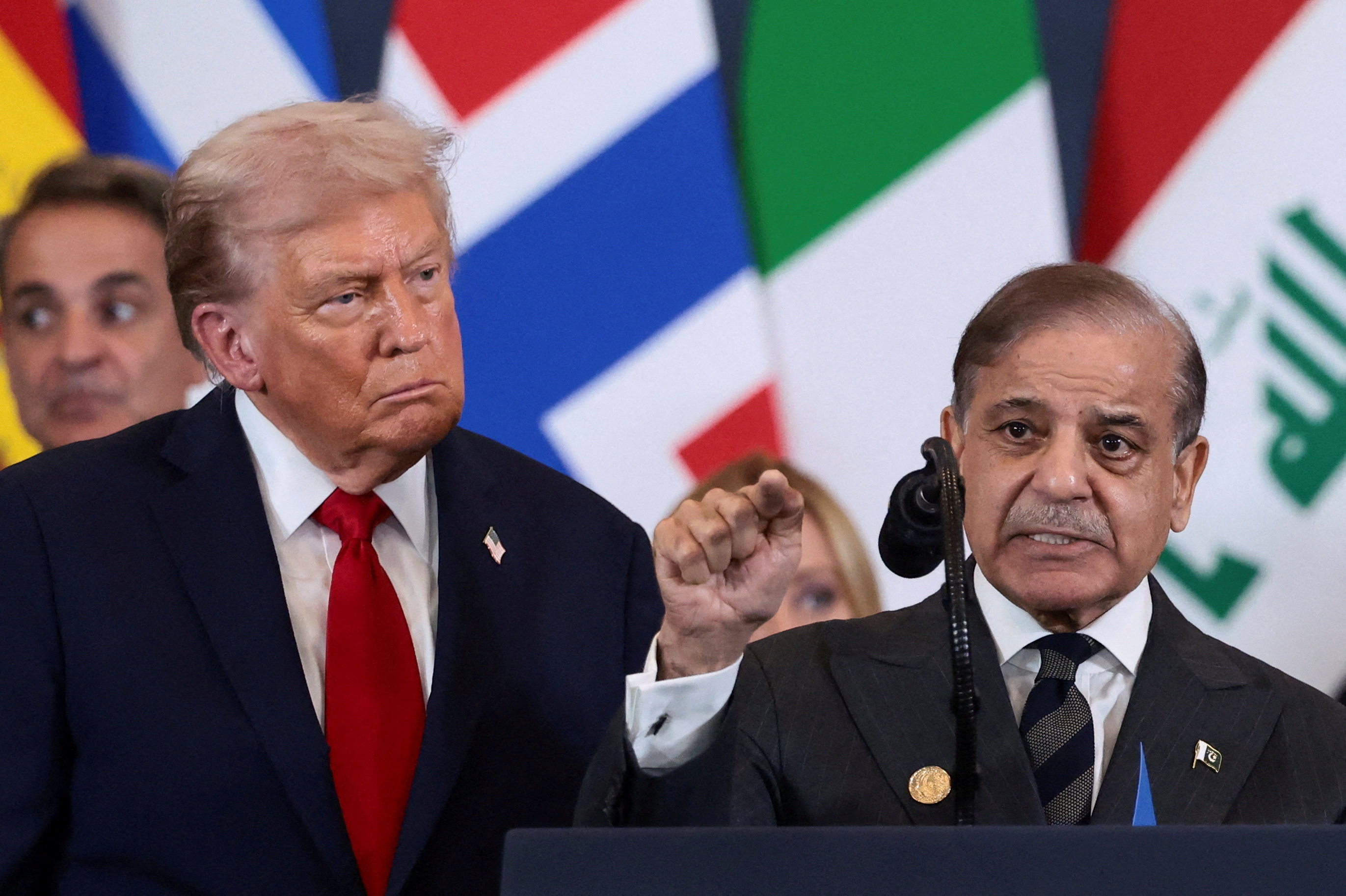
Talks to end the Iran war could resume in Pakistan over the next two days, US President Donald Trump said on Tuesday, after the collapse of weekend negotiations prompted Washington to impose a blockade on Iranian ports.
Gulf, Pakistani and Iranian officials also said negotiating teams from the US and Iran could return to Pakistan later this week, though one senior Iranian source said no date had been set.
“You should stay there, really, because something could be happening over the next two days, and we’re more inclined to go there,” Trump was quoted as saying in an interview with the New York Post.
While the US blockade drew angry rhetoric from Tehran, signs that diplomatic engagement might continue helped calm oil markets, pushing benchmark prices below $100 on Tuesday.
The highest-level talks between the two adversaries since the 1979 Islamic Revolution ended in Islamabad without a breakthrough, raising doubts over the survival of a two-week ceasefire that still has a week to run. Among the slew of issues at stake were access to the Strait of Hormuz, Iran’s nuclear programme and international sanctions on Tehran.
Since the United States and Israel began the war on February 28, Iran effectively shut the strait to nearly all vessels except its own, saying passage would be permitted only under Iranian control and subject to a fee. Nearly a fifth of global oil and gas supplies previously flowed through the narrow waterway, making the fallout from its closure widespread.
In a countermeasure, the US military said it began blocking shipping traffic in and out of Iran’s ports on Monday. Tehran has threatened to hit naval ships going through the strait and to retaliate against its Gulf neighbours’ ports.
IMF CUTS GROWTH OUTLOOK
US Central Command said the blockade of Iranian ports, which only applies to ships going to or from Iran, involved more than 10,000 US military personnel, more than a dozen warships and dozens of aircraft.
“During the first 24 hours, no ships made it past the US blockade and 6 merchant vessels complied with direction from US forces to turn around to re-enter an Iranian port on the Gulf of Oman,” CENTCOM said in a statement posted on X.
Shipping data showed the blockade had made little difference to Strait of Hormuz traffic on Tuesday, with at least eight ships crossing the waterway.
The latest standoff has further clouded the outlook for global energy security and the supply of goods that rely on petroleum.
The International Monetary Fund cut its growth outlook and said the global economy would teeter on the brink of recession if the conflict worsens and oil stays above $100 per barrel into 2027. The International Energy Agency meanwhile slashed its forecasts for global oil supply and demand growth.
The United States’ NATO allies including Britain and France said they would not be drawn into the conflict by taking part in the blockade, although they have offered to help safeguard the strait by drawing together a defensive multilateral mission to assist when an agreement is in place.
China, the main buyer of Iranian oil, said the US blockade was “dangerous and irresponsible” and would only aggravate tensions.
PROPOSAL FOR 20-YEAR SUSPENSION OF NUCLEAR ACTIVITY
US Vice President JD Vance, who led Washington’s delegation in Pakistan, has said Trump was adamant that any enriched nuclear material must be removed from Iran and a mechanism be established to verify that Iran is not developing nuclear weapons.
A source briefed on the matter confirmed reports that the US had proposed a 20-year suspension of all nuclear activity by Iran “with all sorts of restrictions.”
Two Iranian sources said Iran had rejected the proposal, suggesting a halt of just three to five years.
One source involved in the negotiations in Pakistan said backchannel talks since the weekend had produced good progress in closing the gap on the nuclear issue, bringing the two sides closer to a deal that could be put forward at a new round of talks.
It was unclear what kind of nuclear deal could be quickly agreed by the US and Iran, given the complexity of the 2015 nuclear deal between Tehran and world powers that Trump withdrew from in 2018, and the likely need for monitoring and verification by the International Atomic Energy Agency.
Iran also wants international sanctions removed, a move the US could only pledge with broader support.
Further complicating Pakistan’s mediation efforts, Israel has continued targeting Iran-backed Hezbollah in Lebanon. Israel and the United States say that campaign is not covered by the ceasefire, while Iran has insisted it is.
Israeli and Lebanese envoys met in Washington on Tuesday in talks hosted by Secretary of State Marco Rubio, the first direct negotiations between the two countries since 1983. Lebanon’s government sought the negotiations despite objections from Hezbollah, which Israel wants to see disarmed before any peace deal.
Israel killed more than 350 people in Lebanon in the war’s worst strikes hours after the Iran ceasefire was announced last week, but later said it was willing to discuss a separate ceasefire with the Lebanese government.
CEASEFIRE HOLDING
With the war unpopular at home and rising energy prices causing political blowback, Trump paused the US-Israeli bombing campaign last week after threatening to destroy Iran’s “whole civilisation” unless it reopened the strait.
A Reuters/Ipsos poll conducted from April 10 to 12 after the ceasefire was announced showed that 35% of Americans approve of US strikes against Iran, down from 37% a week earlier.
The ceasefire has largely held over its first week despite sharp rhetoric from both sides.
An Iranian military spokesperson called any US restrictions on international shipping “piracy”, while Trump said Iran’s navy had been “completely obliterated” and that only a small number of “fast-attack ships” remained.
“Warning: If any of these ships come anywhere close to our BLOCKADE, they will be immediately ELIMINATED,” Trump wrote on social media.




Click here to change your cookie preferences