
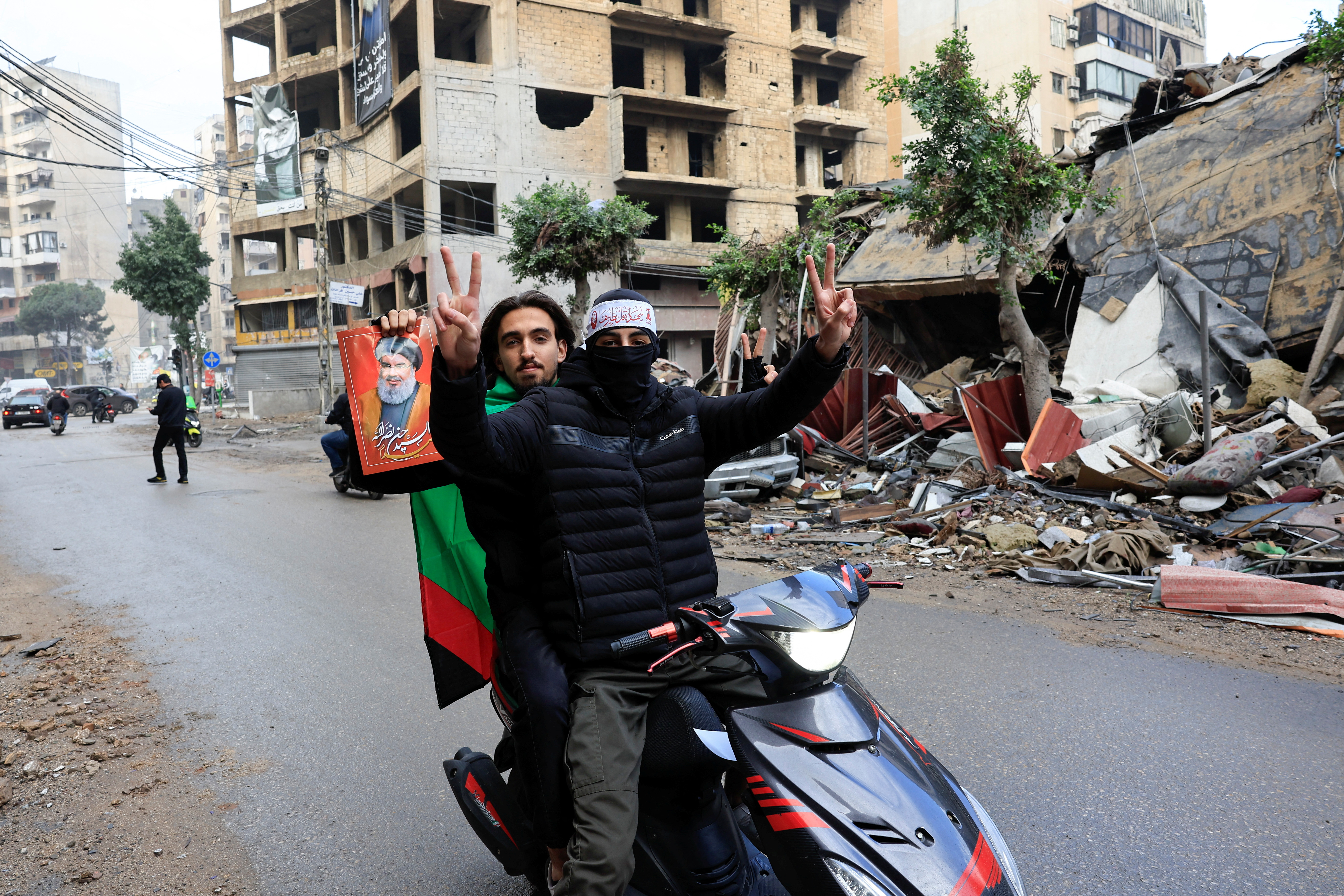
The Israeli military said Hezbollah fired rockets at Israeli troops in southern Lebanon on Tuesday, accusing the Iran-backed group of violating a ceasefire ahead of US-mediated talks between the Israeli and Lebanese governments this week.
There was no immediate comment from Hezbollah, which has said it has the “right to resist” Israeli forces occupying southern Lebanon.
A ten-day ceasefire between Israel and Lebanon’s Hezbollah mediated by Washington came into effect last Thursday, but Israeli forces remain deployed in a belt of Lebanese land 5-10 km deep along the entire border. Israel has said it aims to create a buffer zone to shield northern Israel from attacks by Hezbollah, an Iran-backed Shi’ite Muslim group.
The Israeli military said it struck the launcher from which the rockets were fired.
On Thursday the US will host ambassador-level talks between Israel and Lebanon, which was dragged into war on March 2 when Hezbollah opened fire in support of Tehran in the regional conflict.
Parliament Speaker Nabih Berri, Lebanon’s most senior Shi’ite statesman and a Hezbollah ally, earlier told Lebanese newspaper al-Joumhouria that Israeli forces occupying parts of the south would face resistance if they did not withdraw.
If Israel “maintains its occupation, whether of areas, positions, or by drawing yellow lines, it will smell the scent of resistance every day,” said Berri, leader of the Shi’ite Amal Movement.
The Israeli military and Prime Minister Benjamin Netanyahu both referred to Israel’s deployment line in Lebanon as the “Yellow Line” last week – the same term used by Israel for its deployment line in Gaza.
Israeli officials have since refrained from describing it in those terms, instead calling it a “forward defence line” that was marked in red in a military map published on Sunday that included a “naval forward defence area” extending from Lebanon’s coast into the sea.
The Israeli military has been carrying out demolitions in southern villages since the ceasefire, saying it is acting against infrastructure embedded by Hezbollah in civilian areas. Lebanon’s state-run National News Agency (NNA) on Tuesday reported new Israeli detonations in at least eight villages. NNA also reported Israeli artillery shelling in several areas.
BUFFER ZONE UNNECESSARY WITH LASTING PEACE, FRENCH SOURCE SAYS
“If they insist on remaining, they will face resistance, and our history bears witness to that,” Berri said.
Israel withdrew troops from southern Lebanon in 2000 after a 22-year occupation, during which Hezbollah, Amal and other groups carried out attacks against Israeli forces.
A French presidency source said a lasting solution must be reached and that this could not include the establishment of a permanent buffer zone in southern Lebanon. The zone would no longer be necessary for Israel’s security in the event of a lasting peace between Lebanon and Israel, the source said.
Israel responded to Hezbollah’s attack with an offensive that Lebanese authorities say has killed nearly 2,300 people since March 2.
The Lebanon conflict has complicated Pakistan’s efforts to mediate between the US and Iran. Tehran has demanded that Israel’s campaign against Hezbollah be included in any deal on the wider war.
US President Donald Trump announced the Lebanon ceasefire on April 16 after holding separate phone calls with Netanyahu and Lebanese President Joseph Aoun.
Iran said at the time the ceasefire was part of an understanding reached with the US and mediated by Pakistan.
Washington has said there is no link between the two sets of talks.
The US hosted talks between the Israeli and Lebanese ambassadors to Washington on April 14, the highest-level contacts between the states in decades, despite strong objections from Hezbollah.
NO NEED FOR DIRECT TALKS WITH ISRAEL, BERRI SAYS
Berri, in his comments to al-Joumhouria, reiterated his view that there was no need for direct talks with Israel, noting that he had been a party to several rounds of indirect negotiations with Israel over the years.
Aoun has listed Israeli withdrawal among the goals of Lebanon’s face-to-face talks with Israel.
His administration has sought Hezbollah’s peaceful disarmament for a year.
Israel has said it wants Hezbollah dismantled.
Israeli Defence Minister Israel Katz said on Tuesday that the ultimate goal of the campaign against Hezbollah was to see the group disarmed, by both military and diplomatic means.
“If the Lebanese government continues not to keep its commitment (to disarm Hezbollah), the IDF (Israel Defence Forces) will do so by continuing its military activity,” Katz said in Tel Aviv.
Netanyahu struck a softer tone last Friday, saying that disarming Hezbollah “will not be achieved tomorrow. It requires sustained effort, patience, and endurance, and it requires wise navigation of the diplomatic field.”


Click here to change your cookie preferences