
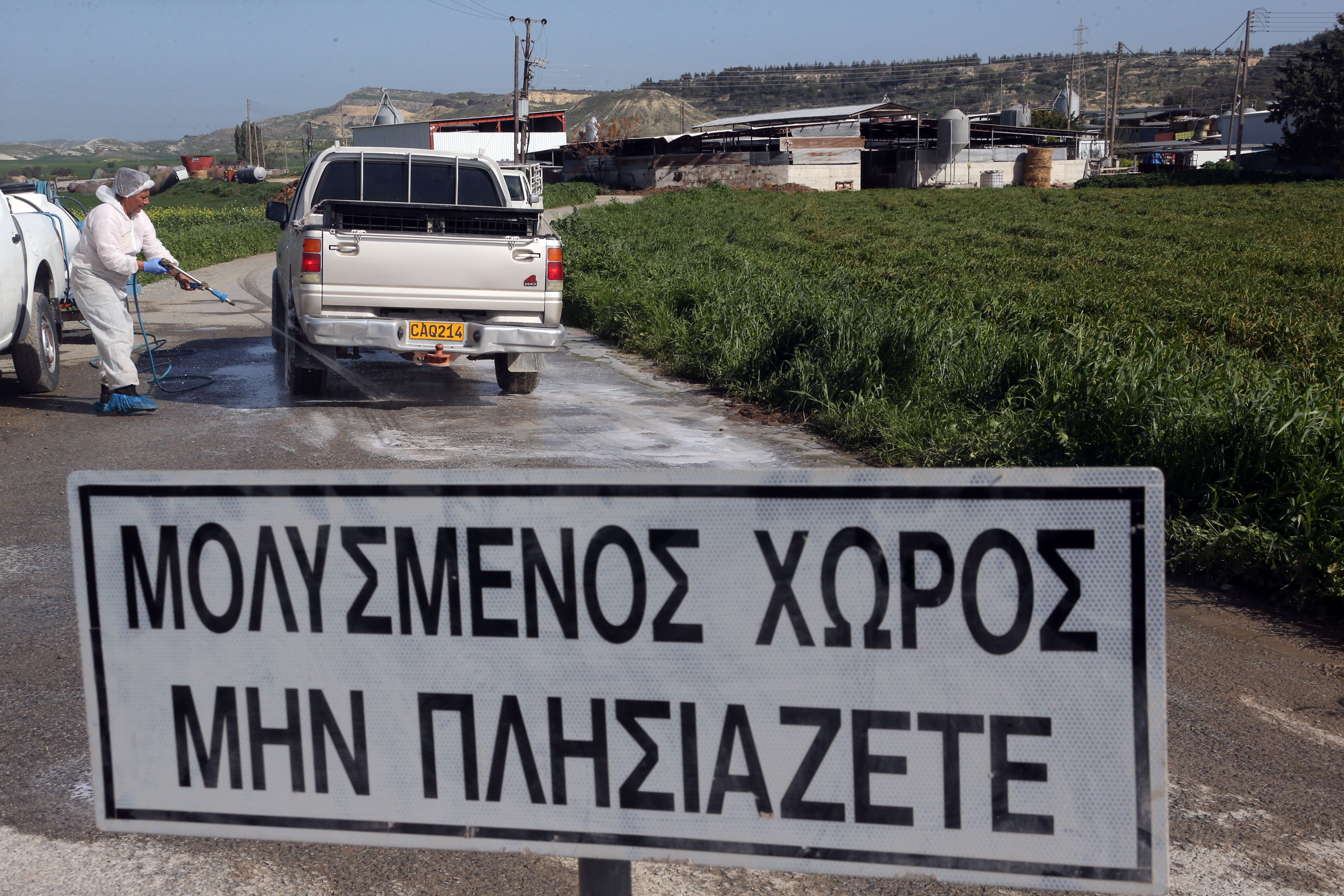
Decisions regarding animals infected with foot-and-mouth disease that belong to rare breeds fall exclusively under the jurisdiction of the Veterinary Services, special scientific committee head Stavros Malas said on Thursday, pointing out that there is only a “small window” for alternative handling, and even that comes with significant reservations.
Malas, speaking on the sidelines of an event at the Cyprus Institute, explained that authorities will weigh all available data, including the fact that the affected unit is only one, although other units with rare breeds remain disease-free. He added that a key consideration will be whether culling animals in the affected unit would impact the breed itself, given that another unit has fewer animals.
He clarified that “the breed itself is not at risk of extinction, but its genetic biodiversity is at risk – therefore, the more animals you have, the better for the breed.”
Experts have highlighted the risks facing traditional varieties such as the Cyprus fat-tailed sheep and the Red cattle, both of which have limited populations and significant genetic value. Breeders and conservationists have warned that the loss of even a small number of these animals could have lasting consequences.
Malas also urged livestock farmers to ignore claims suggesting there is an attempt to destroy the sector. “The message to farmers is to turn a deaf ear to calls by some who engage in scenarios that we are trying to undermine livestock farming in the country,” he said.
He stressed that science would stand by both small and large farmers, particularly sheep and goat breeders who require greater scientific support and understanding.
Malas added that he will meet with a group of farmers who are organised independently on Saturday. “My promise and mission is to provide transparency, explain exactly where we stand today regarding the disease and respond to all their concerns,” he said.
“We stand next to the farmers, not against them,” he concluded.
Meanwhile, vaccination against foot-and-mouth disease has proven effective, contributing to some containment of its spread, Malas said.
Responding to questions about the current situation, he noted that while the spread has slowed, checks in already affected areas must be completed to determine the final outcome.
He was speaking on the sidelines of an event at the Cyprus Institute, where he serves as president.
“Vaccination has worked, that should be taken as a given, because the spread is no longer at the rates we saw in the early stages,” he said, adding that there is cautious optimism the situation will stabilise, allowing planning to resume for full recovery.
However, Malas warned that the outbreak will leave a lasting impact, as Cyprus will lose its previous status as a foot-and-mouth disease-free country without vaccination.
“For the foreseeable future, we will be a country without foot-and-mouth disease but under a vaccination regime,” he explained, adding that this means Cyprus will not be able to export untreated fresh meat – a development expected to affect the pig farming sector, which previously held a share in export trade.
Meanwhile, the ongoing foot and mouth disease outbreak is reshaping the debate around Cyprus’ agricultural model with Employers and Industrialists Federation (OEV) President Giorgos Pantelides on Tuesday warning that food security and livestock resilience must now become national priorities.
More than 30,000 animals have already been culled, while industry representatives warn that up to half of livestock farmers may not restart operations after the crisis.




Click here to change your cookie preferences