
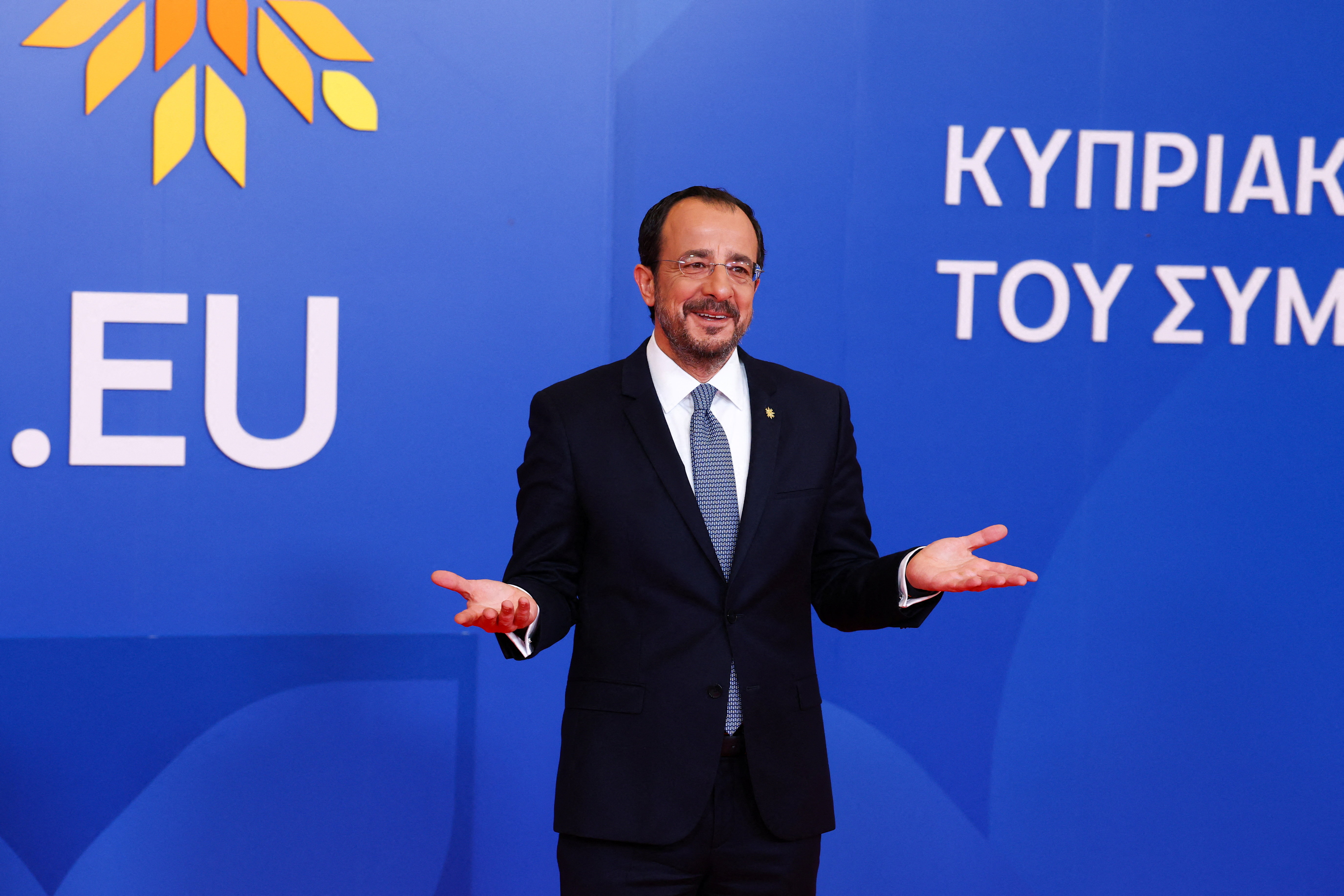
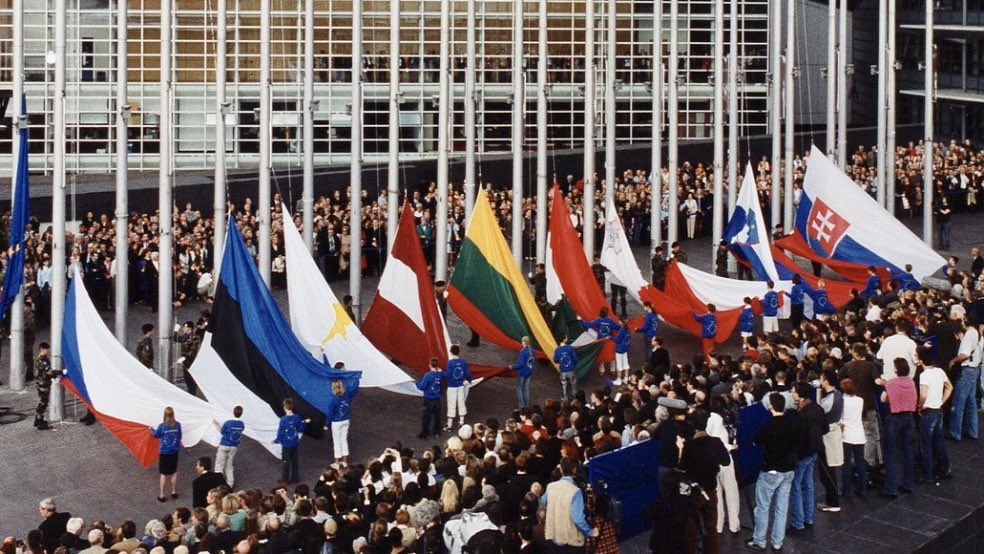
The European Union “is our common home”, President Nikos Christodoulides said on Friday, as Cyprus marked 22 years since its accession to the trading bloc.
He described Cyprus’ joining of the EU as “the most important political development of its modern history” and “a milestone for our country and for our people which serves as a reminder of the correct strategic choice which Cyprus made to belong to the core of the European family”.
This choice, he said, constituted “a choice of peace, democracy, cooperation, justice, solidarity, respect for human rights”, and “a guarantee of security, stability, prosperity, and opportunities”.
“With its accession to the European Union 22 years ago, our country entered a new era which made it stronger and more secure, through its participation in the largest political union of states,” he said.
He added that 22 years on, “the Republic of Cyprus is a mature, reliable, and beneficial member state of the EU, located at its core, contributing substantially and effectively to the formulation and adoption of common European decisions and policies”.
“This year’s anniversary is of particular importance as our country holds the presidency of the Council of the European Union for the current six-month period,” he said, before adding that during its term, “Cyprus has been working methodically and effectively, under the vision of an ‘autonomous union, open to the world’”.
This vision, he said, foresees “greater autonomy for the EU in all areas”.
“At the same time, Cyprus, as the member state located at the southernmost tip of the EU and the closest to the Middle East and to the Gulf region, is demonstrating in practice … its ability to further highlight its role as a bridge between the European Union and the wider region, which is today, once again, being tested,” he said.
On this front, he said that “a tangible example of this role our country has undertaken” was last month’s informal European Council summit in Nicosia, which was also attended by Egyptian President Abdel Fattah El-Sisi, Crown Prince Hussein of Jordan, Lebanese President Joseph Aoun, and Syrian President Ahmed al-Sharaa.
He said that that summit saw discussions centre of “the EU’s cooperation with countries of the region for deescalation” of the conflict which broke out in the Middle East earlier this year, “as well as specific ways to strengthen the EU’s strategic partnerships with these countries”.
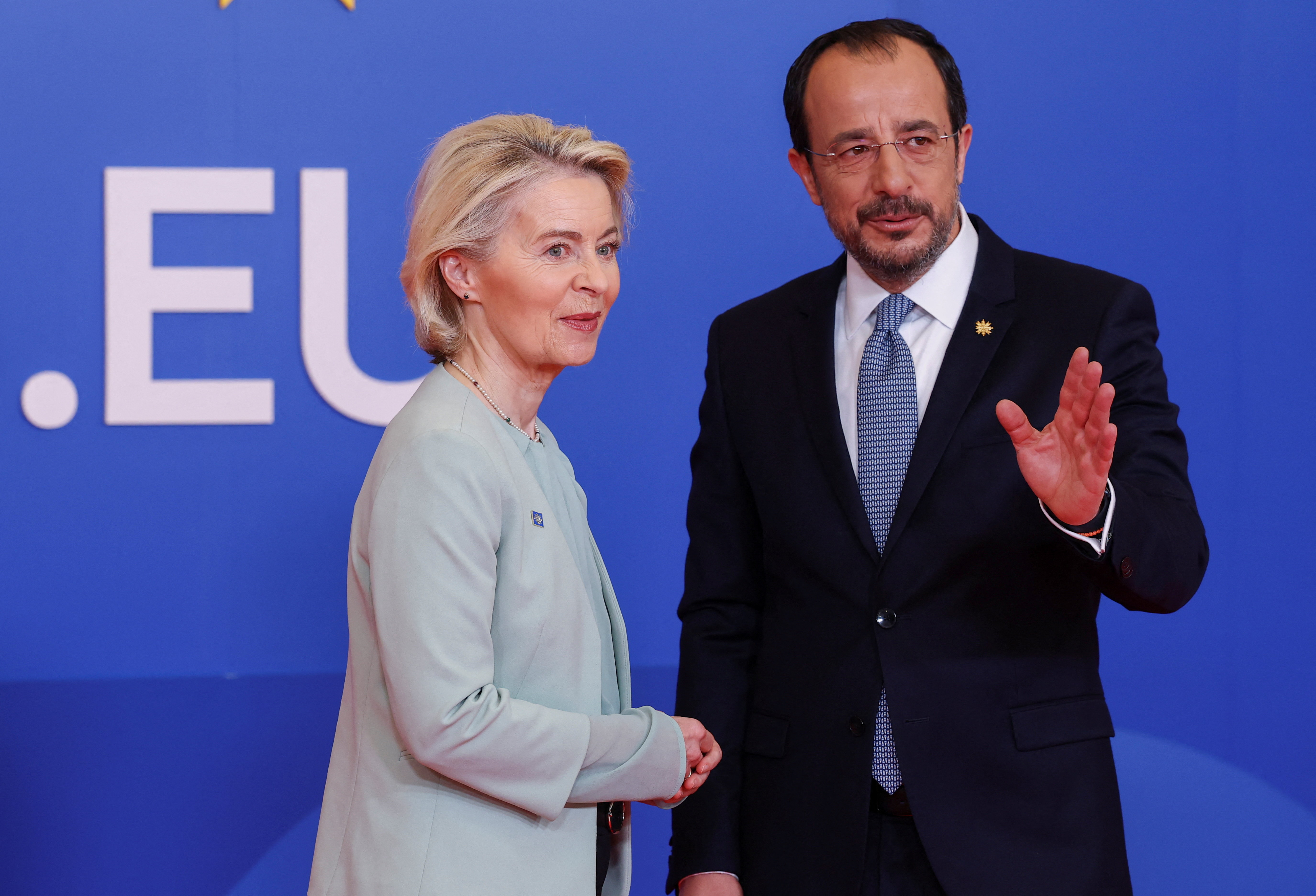
During the same summit, he said, Cyprus “succeeded in discussing and moving forward important issues related to the objective of the EU’s strategic autonomy”.
He said that this included efforts to create a “playbook” for mutual defence among member states, adding substance to Article 42.7 of the Treaty of the European Union, commonly referred to as the Lisbon Treaty, which is the EU’s mutual defence clause.
Additionally, he made reference to the “One Europe, One Market” roadmap, signed in Nicosia last month, which foresees reforms aimed at strengthening the European single market, and efforts towards the devising of the EU’s multiannual financial framework – its budget for the period covering the years between 2028 and 2034.
“The European Union is our common home. It is our political family, to which Cyprus has belonged since 2004. It is the common values which we share with the other 26 member states of the European Union, such as peace, democracy, justice, solidarity, progress, and prosperity,” he said.
He added that “particularly for Cyprus, which continues to suffer the consequences of the Turkish invasion and occupation of part of its territory”, the EU “is a space which offers security but also the prospect of liberation from occupation, of reunification through the resolution of the Cyprus problem”.

Click here to change your cookie preferences