
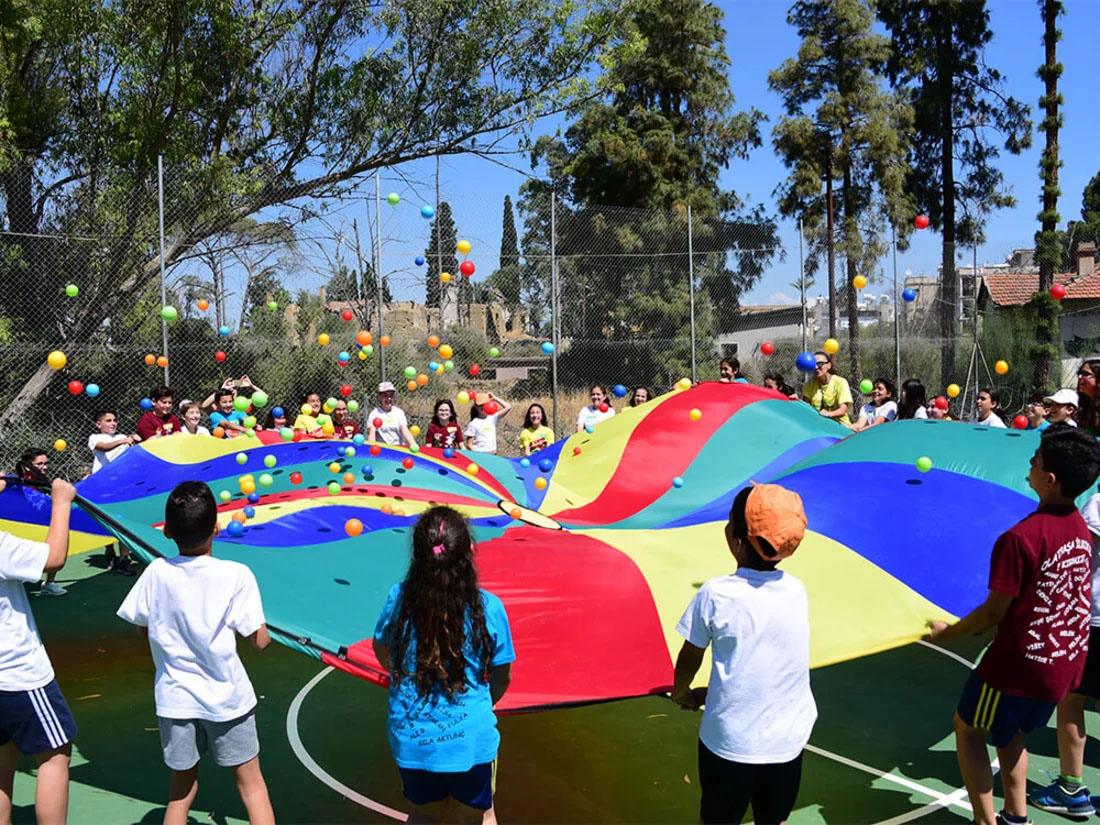
The United Nations has warned that Cyprus risks breaching international law over obstacles surrounding the Imagine bicommunal peace education programme, with three UN Special Rapporteurs raising concerns over delays, political interference and the suspension of participation in the north.
In letters made public on Tuesday, the independent experts urged both the Republic and the authorities in the north to restore and protect the programme, describing Imagine as “the single operational mechanism in Cyprus that systematically fosters trust” between the two communities.
The communications, signed by special rapporteurs Bernard Duhaime, Alexandra Xanthaki and Farida Shaheed, focus on separate actions taken by each side which the experts said were undermining peacebuilding and reconciliation efforts.
According to summaries of the letters, neither the Republic nor the north had submitted a public response by Monday, despite being given 60 days to reply before publication through the UN reporting system.
The communication addressed to the Republic focused on the delayed issuance of the education ministry circular authorising participation by schools for Imagine activities for the academic year, as well as public campaigns targeting the programme.
The circular was eventually issued on February 18, halfway through the academic year and for the first time since the programme’s establishment in 2016 had not been circulated before the start of the school year.
The rapporteurs said they had received information that media outlets, political parties, parliamentarians and nationalist groups had spread “divisive rhetoric and misinformation”, particularly regarding student visits to the north, creating what they described as a “climate of fear” which led schools to withdraw from planned bicommunal activities.
They asked the Republic to explain the reasons behind the delay, outline measures taken to counter misinformation and provide updates on the implementation of recommendations issued in 2017 by the technical committee on education.
The separate communication to the north addressed the continued suspension of the programme in Turkish Cypriot schools since October 2022, when participation was halted through a circular citing policies centred on “sovereign equality” and “two separate states”.
The rapporteurs said the suspension had “significantly hindered the delivery of the project” despite repeated calls by the UN Security Council and the UN secretary-general Antonio Guterres for cooperation on peace education initiatives.
Authorities in the north were asked to clarify whether any review of the suspension was underway and to explain what measures were being taken in education and institutional reform to prevent future human rights violations.
The experts framed the issue within a wider international human rights and peacebuilding context, stressing that education systems and public discourse can either contribute to reconciliation or deepen division.
“Measures in the field of education should help nurture dialogue, democratic citizenship and respect for human rights,” the rapporteurs wrote.
They also warned that “negligence in these matters, whether by action or omission, may lead to the state being in breach of international law”.
Imagine was established in 2016 and formally placed under the auspices of the bicommunal technical committee on education a year later with the agreement of both community leaders.
According to the UN experts, more than 8,000 students and 2,600 teachers have participated in the programme.
The UN Security Council has repeatedly referred to the initiative as an important confidence-building measure and in Resolution 2815 adopted earlier this year again called on both sides to strengthen peace education efforts.




Click here to change your cookie preferences