
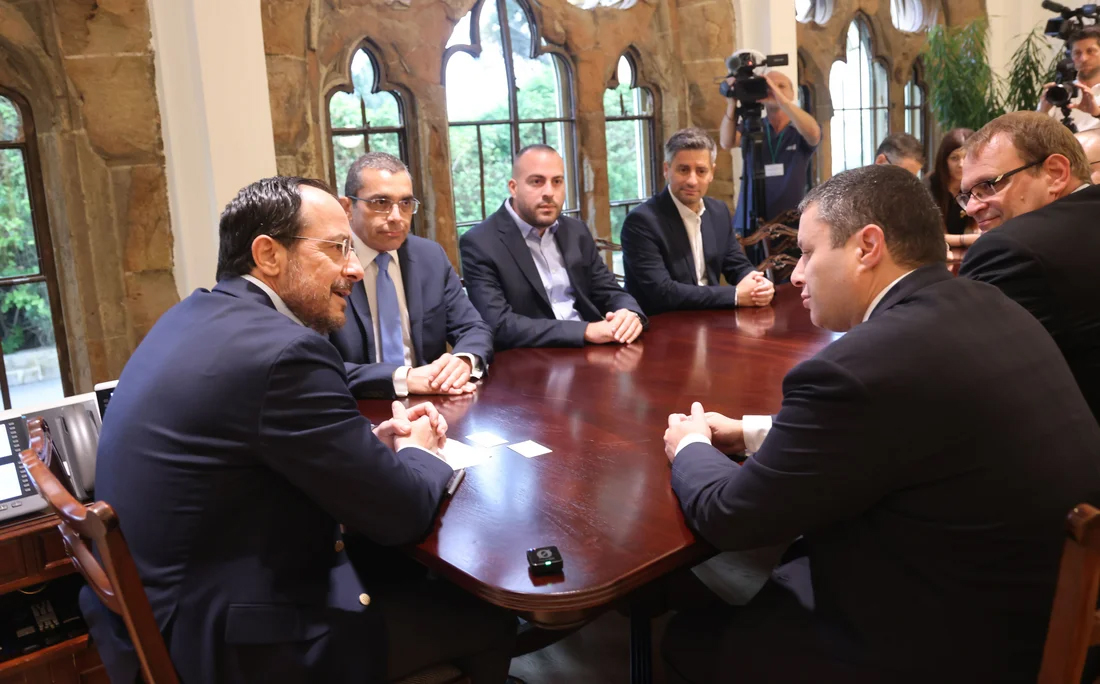
Farmers’ representatives will meet President Nikos Christodoulides on Tuesday after agreeing to his proposal for a meeting, bringing to an end seven hours of protests in Nicosia.
Representatives of the organisations had met government spokesman Konstantinos Letymbiotis, deputy minister to the president Irene Piki, and presidential press office director Victor Papadopoulos, eventually hashing out a deal to convene with Christodoulides next week.
Their demands currently include an immediate halt the culling of animals on farms where foot and mouth disease is detected, faster compensation payments to those impacted by the outbreak of the disease, and a meeting with Christodoulides.
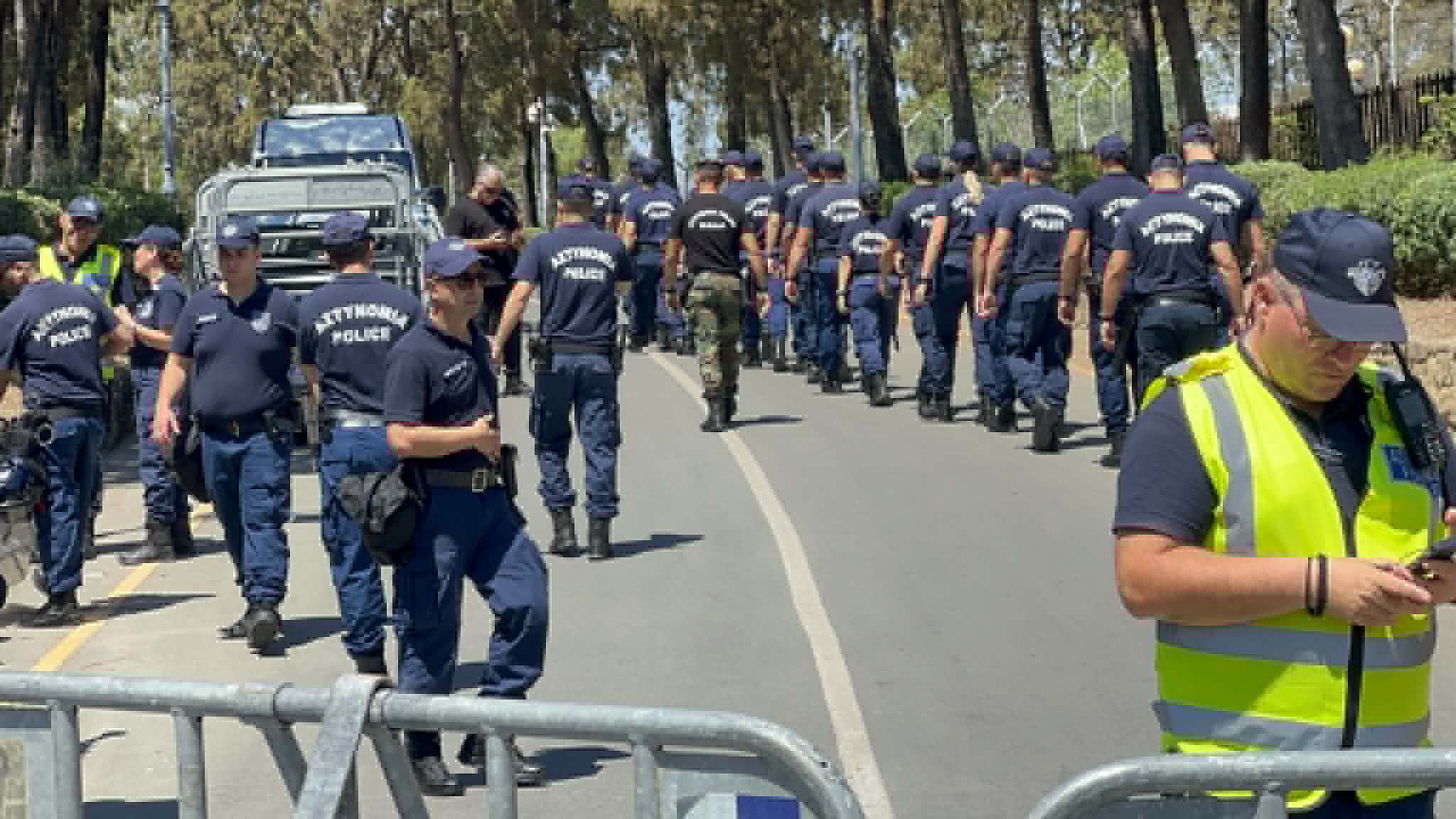
The farmers held a protest outside the presidential palace on Friday following an agreement with police under which tractors and other large vehicles remained at the GSP Stadium, where they had originally gathered, while demonstrators were transported to the palace by bus.
The arrangement followed early tensions outside the stadium. Once the agreement was reached, demonstrators began marching towards the presidential palace, accompanied by three pickup trucks, though Neophytos Neophytou, the chairman of the “voice of the livestock breeders” group, expressed his distaste at the restriction..
“We decided to come to the presidential palace, as we said from the start; it’s just that yesterday’s agreement with the police wasn’t honoured. We don’t know why they didn’t want to let the entire convoy of trucks and cars come, so we came only in small cars,” he said.
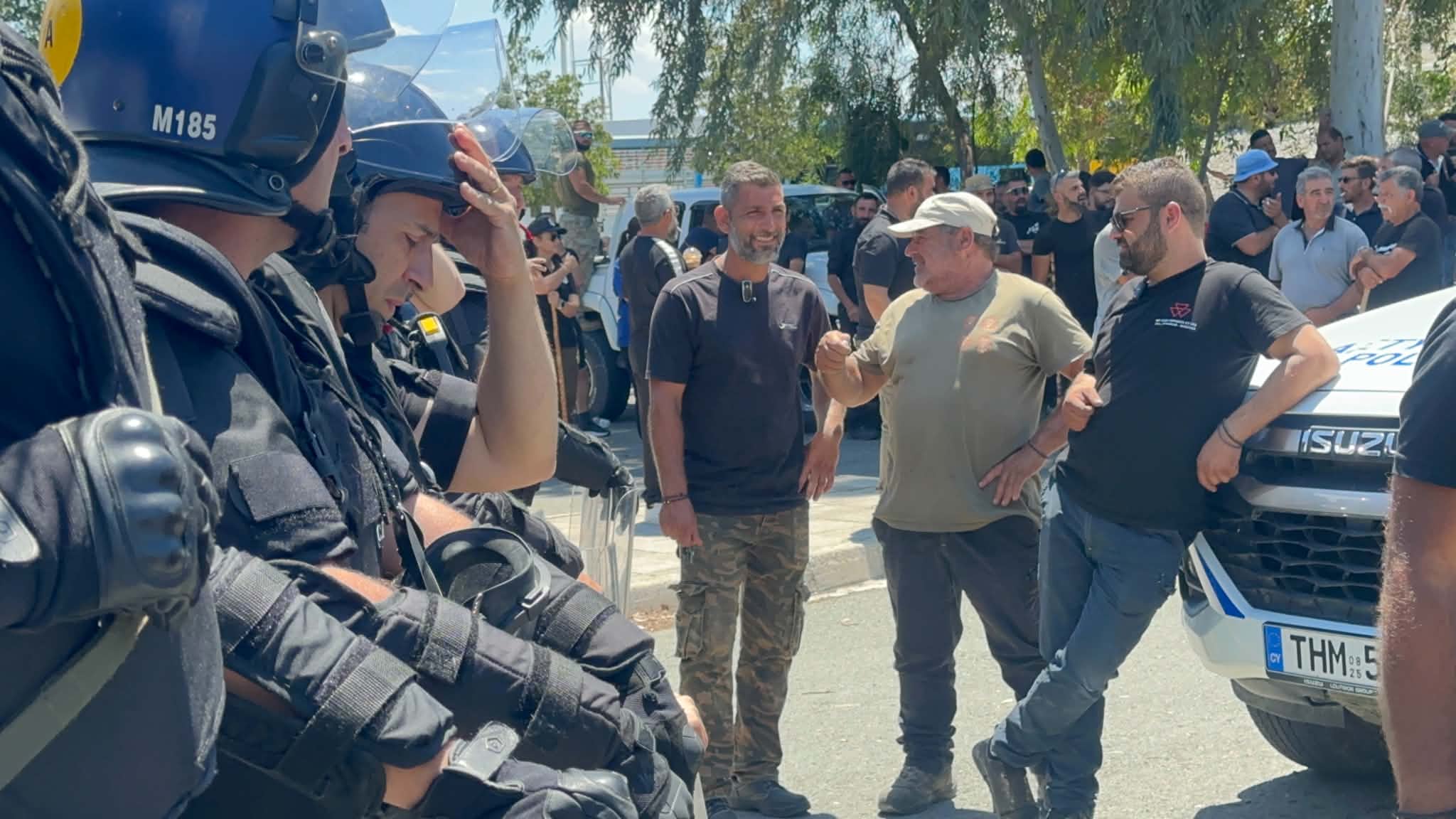
Earlier, he lamented that while “we gathered today to protest peacefully”, the police “came with barricades to suppress the gathering”.
The protest comes with foot and mouth disease having spread to 120 livestock units across the island, with 43,000 sheep and goats, 3,000 cows, and 24,000 pigs having been culled as part of efforts to contain the disease.
Despite the continued detection of infected animals and unrest among farmers, Christodoulides had earlier denied that “chaos” is prevailing in the government’s handling of the outbreak.
“I want to clarify that there is no chaos. We are in contact with all the livestock farmers’ groups. We are in contact with all the agricultural organisations. I want to say this publicly, and I hope it will continue, that there is a willingness from everyone to cooperate even more to face this specific challenge,” he said.
He added that he “truly” believes that “based on the planning we have, based on the plan we have, that if this cooperation continues, very soon, we will be able to say that we have successfully dealt with foot and mouth disease”.
Meanwhile, the government announced earlier this month that it will pay farmers between €43 and €178 per regular sheep and goat and between €47 and €420 per sheep and goat which is deemed to be of “high genetic value” as compensation if they are culled as a result of the disease.
Additionally, it will pay farmers between €150 and €1,500 per regular cow culled, with this figure rising to up to €2,500 for exceptional cattle.
Farmers have nonetheless remained opposed the culling of animals on farms where the disease is detected, but officials have repeatedly stated that the culling of all animals on a farm once it is infected with foot and mouth disease is a requirement of European Union law and as such, not negotiable.

Click here to change your cookie preferences