
The Thucydides Trap after the US-China summit
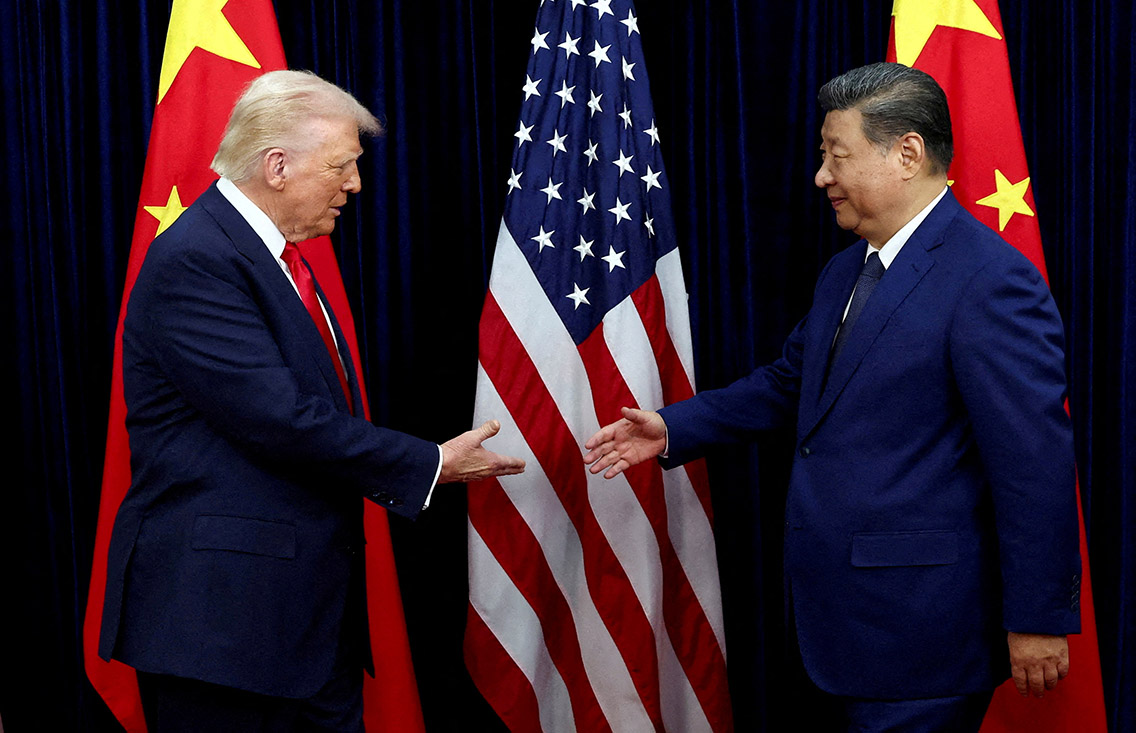
During President Donald Trump’s recent visit to Beijing, President Xi Jinping invoked the Thucydides Trap directly in his discussion with the American president.
Its use, for the first time during a summit with an American president, is symbolically important. Ideas matter in diplomacy. Words are never innocent at that level. They signal. They frame. They warn. They test intentions.
In two earlier articles on the Thucydides Trap, I argued that the US-China rivalry should be treated not as prophecy, but as a warning, particularly against hubris, misjudgement and strategic illusion.
The discussion has now evolved further.
The Thucydides Trap has moved from academic theory into the language of summit diplomacy and superpower strategic discourse.
My former professor Graham Allison popularised the term. In his analysis, when a rising power threatens to displace an established one, states can fall into the Trap and war often follows. Of 16 historical cases he examined, 12 ended in conflict. Yet Allison never argued that war was inevitable. His warning was subtler: structural rivalry generates pressure; pressure breeds fear; fear can produce miscalculation; and miscalculation can lead states into the Trap itself.
Xi’s invocation of the Trap must therefore be read carefully. It should not be dismissed as historical reflection. Nor should it be accepted uncritically as strategic wisdom. It was strategic communication. Beijing was signalling to Washington: do not treat China’s rise as a threat that must be contained. Do not mishandle Taiwan. Do not turn competition into collision. In the carefully calibrated language of Chinese diplomacy, little if anything is accidental.
Trump’s public response, as reported, was also revealing. He appeared to interpret Xi’s reference primarily through the prism of American decline – one he immediately redirected toward his predecessors – rather than as a broader reflection on structural great-power rivalry.
The Beijing summit unfolded against the backdrop of the continuing Iran crisis, wider instability in the Middle East, the tariff and trade war that has intensified since President Trump returned to office, and growing competition over advanced technologies.
Despite their rivalry, both Washington and Beijing share important systemic interests: preventing nuclear proliferation, avoiding regional conflagration, preserving the free flow of commerce and energy through the Strait of Hormuz, and managing the risks associated with AI, cyber operations and strategic instability.
President Xi repeatedly emphasised the importance of stability. That, too, was revealing. China may challenge aspects of the existing international order, but it also depends heavily on global economic continuity, maritime trade, technological access and strategic predictability. Rivalry and interdependence now coexist.
Taiwan remains the core – and perhaps the thorniest – issue.
For Beijing, Taiwan touches sovereignty, legitimacy and national rejuvenation. For Washington, the stakes are equally profound: credibility, alliance commitments, semiconductor resilience, freedom of navigation and the regional balance of power in the Indo-Pacific.
The longstanding American policy of “strategic ambiguity” was designed precisely to deter both a unilateral declaration of independence by Taipei and the use of force by Beijing. That ambiguity is now under growing strain.
Questions surrounding US arms sales to Taiwan, military posture, technological restrictions and deterrence signalling increasingly shape the wider US-China relationship. Neither side can retreat easily. Neither side can afford reckless escalation.
Yet the case against treating the Thucydides Trap as a deterministic template must also be taken seriously.
Not every rivalry between a rising and an established power leads to war. History is neither mechanical nor perfectly repeatable. China is not Athens. America is not Sparta. At the same time, the deeper forces identified by Thucydides – fear, honour, interest, alliance politics, ideology, geography and leadership failure – remain strikingly relevant to contemporary great-power rivalry.
The relevance of Thucydides therefore lies not in historical determinism, but in the enduring dangers of miscalculation, hubris, strategic overreach and the intoxication of power.
The lesson is not inevitability, but strategic prudence.
Classicist and military historian Victor Davis Hanson has argued against deterministic interpretations of the Trap. In his view, China is not inevitably ascendant, the US remains stronger in several key domains, and deterrence, alliances and resilience matter more than fatalistic theories. That argument deserves attention. China faces serious structural challenges of its own: demographics, debt, economic slowdown and growing external suspicion.
But the opposite error is equally dangerous.
It would be naïve to underestimate China’s industrial depth, technological progress, strategic discipline and long-term planning. China has built power patiently. It thinks historically. It thinks in strategic depth. It carries a civilisational memory of humiliation and recovery. It plays a long game.
The real danger is strategic miscalculation.
International relations scholar Joshua Rovner has added an important layer to this debate. In his view, the deeper Thucydidean lesson is not only the fear generated by power transition, but the illusion of quick victory. Athens and Sparta each believed they could avoid confronting the other’s core strength and still prevail. Both were wrong. The war became long, ruinous and destructive.
That insight feels unsettlingly contemporary.
China and the US may be tempted by the same illusion as Athens and Sparta: that war can be fast, precise and manageable.
History, and Thucydides, warn otherwise.
Wars rarely follow the script written before the first shot. They begin with confidence and often end in exhaustion. Prestige becomes a prison. Leaders who believe they can control escalation often find themselves controlled by it.
Artificial Intelligence (AI) compresses strategic time. Cyber operations blur attribution. Autonomous systems can act faster than political authority can deliberate. Satellites, undersea cables, data centres and semiconductor supply chains increasingly become strategic targets.
During the Cold War, fear imposed caution. In the AI age, speed may undermine it.
The United States and the Soviet Union avoided direct war because nuclear deterrence – the logic of Mutual Assured Destruction (MAD) – imposed caution on both sides. The Cuban Missile Crisis of 1962 brought the world close to nuclear disaster. But it also taught Washington and Moscow that communication, restraint and crisis management were not signs of weakness. They were instruments of survival.
The US-China rivalry is different. It is more economically entangled. More technologically complex. Less ideologically binary than the Cold War, but potentially more diffuse. The two powers are rivals and trading partners, competitors and co-dependents, adversaries in some domains and stakeholders in others. That makes the relationship harder to manage, not easier.
A US-China conflict would not remain confined to the Pacific. It would disrupt global trade, energy flows, financial markets, supply chains, food security, shipping routes and digital infrastructure. The entire world would face immediate economic, security and political consequences.
The post-Cold War international order is fraying at the seams. Trust is eroding. Rules are increasingly contested. International law, arms control, military hotlines and confidence-building mechanisms remain part of the architecture of strategic survival.
The world does not need rhetorical diplomacy. It needs disciplined diplomacy.
This means recognising red lines without turning them into traps. Competing without demonising. Deterring without humiliating.
The challenge is not to abolish rivalry. That is impossible. The challenge is to civilise it.
The real danger today is not that the US and China are destined for war. They are not. The danger is that each may believe it can manage escalation, exploit technology, shape perceptions and compel the other to retreat without crossing the threshold into catastrophe.
That is the modern trap.
Thucydides warned us once. Beijing has now repeated the warning.
Euripides Evriviades is ambassador (Ad Honorem) and senior fellow at the Cyprus Centre for European and International Affairs, University of Nicosia.




Click here to change your cookie preferences