
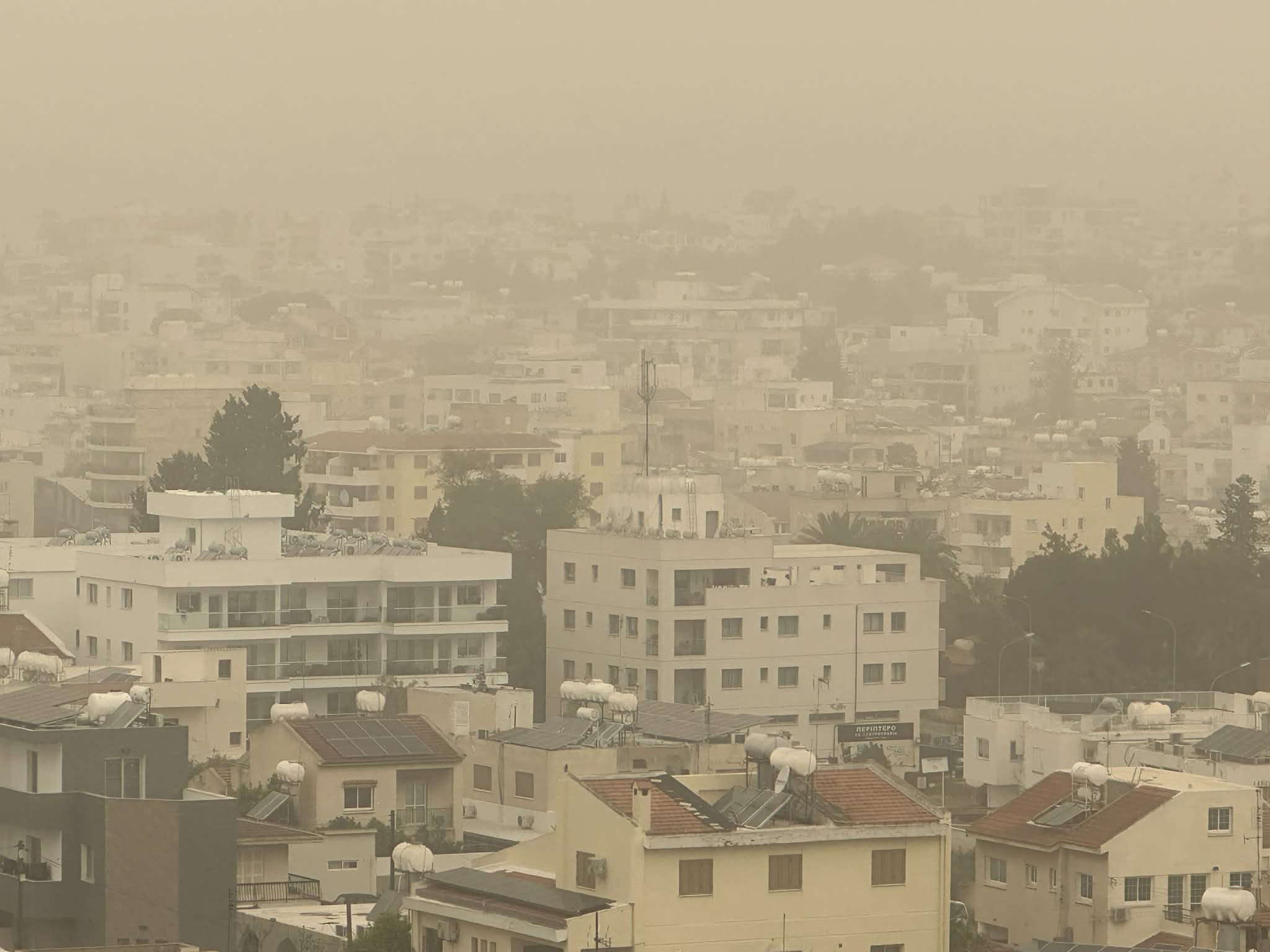
Cyprus is experiencing increasingly intense desert dust episodes as climate change accelerates changes in atmospheric conditions across the Levant.
According to an international study involving researchers from the Cyprus Institute published on Thursday in the journal Nature, Cyprus was one of the European regions most affected by desert dust transport, with the Levant recording some of the largest increases in the intensity of dust episodes over the past decade.
Researchers found that rising drought and desertification in North Africa, together with changing atmospheric systems, are driving stronger transport of dust from the Sahara and other desert regions towards Europe.
The findings show that climate change is affecting not only temperatures and extreme weather but also air quality.
Southern Europe experiences around 46 desert dust events each year, with dust responsible for about one third of the annual average PM10 particulate pollution considered acceptable under World Health Organisation guidelines.
According to the researchers, elevated dust concentrations can have serious health consequences, with recent desert dust episodes across southern Europe associated with an estimated 0.67 per cent increase in daily mortality and a 2.5 per cent rise in respiratory hospital admissions among children.
The research also found that average desert dust concentrations in southern Europe are more than double those recorded in central and northern Europe.
Evidence from Alpine glacier records further shows that transported dust has gradually increased across the continent over the past century.
Researchers from the Cyprus Institute’s Centre of Excellence for Climate and Atmospheric Research said desert dust is “a natural phenomenon” in the region.
However, they said the study demonstrates that both the intensity of dust episodes and their impacts are increasing over time as climate change alters the conditions that drive them.
They warned that desert dust is likely to become an even greater challenge for air quality and public health in Cyprus and across the region in the coming years.
Researchers stressed that “better preparation and adaptation” to more intense dust events, alongside continued efforts to tackle climate change, will be essential to protect public health and improve air quality.




Click here to change your cookie preferences