
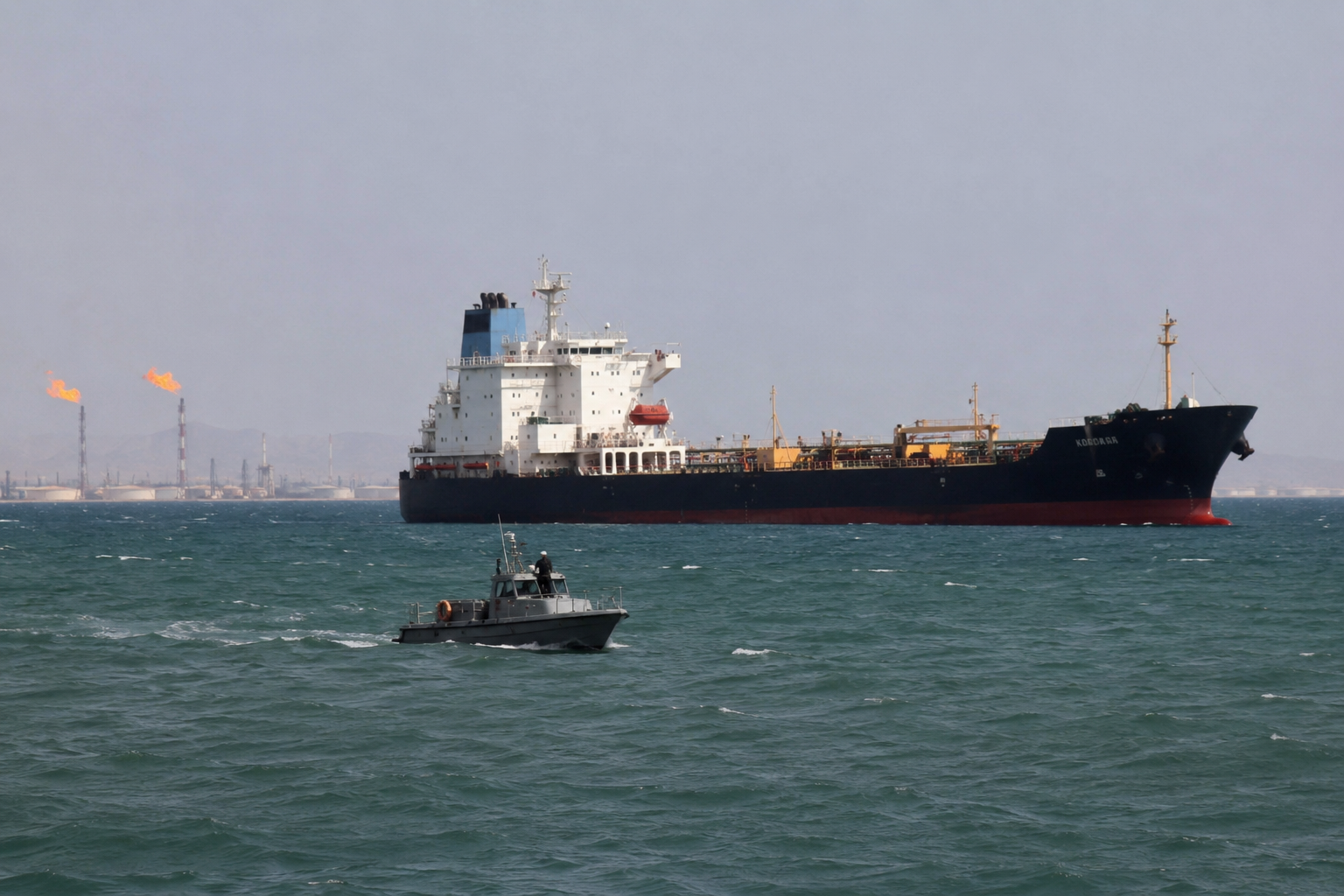
Global shipping is entering a period of deeper and more sustained geopolitical instability, as crises from the Strait of Hormuz to the Black Sea and Libya increasingly form part of a wider threat environment affecting merchant vessels, energy flows and critical infrastructure.
As mentioned at newmoney, the risks now facing shipping are no longer limited to traditional conflict or oil disruption. Instead, military tensions, cyber threats, sea mines, drone attacks, energy shocks and hybrid operations are becoming increasingly connected, creating a more complex operating landscape for shipowners and crews.
“For the international shipping industry, the question is no longer whether there is a risk. The question is how quickly a regional crisis can turn into a global shipping shock,” said Nikolas–Alketas Drosos, of Maritime Commercial Manager & Country Representative for Greece and Cyprus at EOS Risk Group.
The main focus of concern remains the Middle East, and particularly the Strait of Hormuz, one of the world’s most important maritime chokepoints.
Drosos said the region is gradually evolving into a modern “hybrid choke point”, where the threat concerns not only energy flows but also the functioning of the global digital economy.
“Drone attacks, electronic interference in GPS/GNSS, increased military presence and cyber threats create an extremely unstable operating environment for commercial ships,” he said.
According to analyses by EOS Risk, the crisis in Hormuz is no longer confined to oil traffic. Critical undersea fibre optic cables also run beneath the region’s waters, carrying an estimated 99 per cent of global internet traffic.
These systems support banking, logistics, cloud infrastructure and international communications. As a result, a major disruption, whether caused by military action or accident, could trigger wider consequences not only for energy markets but also for global supply chains and digital services.
At the same time, while international attention remains focused on the Persian Gulf, the Black Sea continues to become one of the most dangerous environments for international shipping.
EOS Risk’s latest analysis of the Black Sea says the risk of Russian attacks on Ukrainian ports has risen to “High”, while the risk to commercial vessels linked to Ukrainian or Russian interests is also considered high. The risk of misidentification or collateral damage to third-party merchant ships operating in the area is also seen as significant.
Drone and missile attacks on port facilities and merchant vessels have increased, while the threat from sea mines and unexploded ordnance continues to affect shipping routes. EOS Risk has warned that drifting mines may even be carried towards the coasts of Romania, Bulgaria and Turkey as a result of weather conditions and sea currents.
“The most worrying element is that the conflict has now exceeded the limits of a conventional land war,” Drosos said.
“Russia and Ukraine are targeting energy facilities, ports and maritime infrastructure, while drones and USVs (unmanned seagoing vessels) are dramatically increasing the complexity of the threat to commercial ships,” he added.
The risks are not limited to the Black Sea. Drosos said that Libya remains another source of instability in the Mediterranean, with ports and oil infrastructure vulnerable to sudden disruption.
“Libya continues to be another hotbed of instability in the Mediterranean. Recent clashes in Zawiya even led to the temporary evacuation of tankers from the port and the suspension of operations at the country’s largest refinery,” he said.
He added that “the clashes between militias have been accompanied by the use of suicide drones in urban environments, a development that demonstrates that asymmetric warfare technologies are now spreading to North Africa.”
For shipping, the situation in Libya is particularly important, as ports and oil facilities remain exposed to sudden shutdowns, force majeure declarations and clashes between armed groups.
In the business and shipping environment, a force majeure declaration is used when a company or contracting party says it is unable to meet obligations due to extraordinary and unforeseen events, including war, natural disasters, sanctions or strikes.
EOS Risk said that even areas considered operationally stable may be affected by sudden outbreaks of violence or political upheaval.
Against this backdrop, several Greek-owned vessels continue to operate in, or remain exposed to, areas of increased risk. From Hormuz to the Black Sea and Libya, Greek shipowners are having to manage an environment in which operational risk is increasingly linked to geopolitical, military and cyber threats.
“And here a crucial question arises: Can Greece, one of the world’s largest maritime powers, remain a simple observer in an environment that directly affects the Greek-owned fleet?” Drosos said.
He explained that Greek-owned shipping remains a strategic pillar of global trade, meaning that developments in these regions directly affect freight markets, war risk premiums, energy flows and the wider stability of international shipping.
“The need for more active participation in international security initiatives, in the exchange of maritime security information, the so-called maritime intelligence sharing, and in the protection of critical maritime infrastructure, is now becoming increasingly evident,” he said.
According to Drosos, international shipping is now entering a new era in which maritime security can no longer be treated as a separate or isolated issue.
Instead, he said security based on information and data analysis, cyber resilience, geopolitical forecasting and real-time crisis management has become essential for operational survival.




Click here to change your cookie preferences